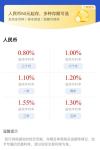
三年期存款

Search documents
存款是一年一存,还是直接三年一存?内行人说出实情
Sou Hu Cai Jing· 2025-11-12 05:39
Core Insights - The article highlights the increasing trend of savings among residents, with a significant deposit increase of 9.22 trillion yuan in the first quarter of 2025, averaging over 3 trillion yuan per month, driven by concerns over unemployment, unexpected medical expenses, and retirement costs [1] Summary by Sections Savings Trends - Residents are motivated to save due to potential risks such as unemployment, sudden illnesses, and retirement expenses, leading to a preference for bank deposits over riskier investment options like stocks and funds [1] One-Year vs. Three-Year Deposits - One-year deposits offer three main advantages: higher liquidity, allowing for easier access to funds in emergencies; more investment opportunities, as funds can be reinvested annually; and protection against inflation by allowing partial withdrawals for consumption [4][5][7] - In contrast, three-year deposits lock in interest rates, which can be beneficial in a declining interest rate environment, with current rates around 1.9% for three-year deposits compared to 1.5% for one-year deposits, resulting in a difference of 1200 yuan in interest for a 100,000 yuan deposit over three years [7] Decision Factors - The choice between one-year and three-year deposits should be based on individual circumstances. For uncertain future expenses like housing or medical costs, one-year deposits are recommended. For long-term savings goals such as education or retirement, three-year deposits may be more suitable [8]


中小银行存款降息步伐加快
Zhong Guo Zheng Quan Bao· 2025-10-21 20:18
Core Viewpoint - The recent trend of lowering deposit rates among small and medium-sized banks is driven by the need to optimize liability structures and control funding costs, amidst a backdrop of anticipated interest rate declines and the phenomenon of inverted deposit rates for different maturities [1][2][3][4] Group 1: Deposit Rate Adjustments - Several small and medium-sized banks, including Suzhou Commercial Bank and Pingyang Pudong Development Village Bank, have announced reductions in deposit rates, with some three-year and five-year rates decreasing by as much as 80 basis points [1][2] - Suzhou Commercial Bank will lower its three-year deposit rate from 2.2% to 2.1% starting October 22, with a minimum deposit requirement of 100,000 yuan [1] - The trend of rate reductions is not isolated, as multiple banks have made similar announcements, indicating a broader industry shift [2] Group 2: Inverted Deposit Rates - The phenomenon of inverted deposit rates, where shorter-term deposit rates exceed those of longer-term deposits, is becoming increasingly common across various types of banks, including state-owned and joint-stock banks [2][3] - For instance, China Construction Bank offers a three-year deposit rate of 1.55%, which is higher than its five-year rate of 1.3% [3] - This inversion is attributed to market expectations of further interest rate declines, leading banks to adjust their deposit offerings accordingly [3] Group 3: Liability Structure Adjustments - Industry experts suggest that the inverted deposit rates are linked to banks' efforts to adjust their liability structures in response to increasing pressure on the funding side [3][4] - Banks are actively lowering long-term deposit rates to optimize their funding costs and mitigate the impact of narrowing net interest margins [3] - The anticipated future decline in interest rates is prompting banks to reassess their deposit strategies to maintain operational efficiency [4]



多家银行下调存款利率 有的直降80个基点
Zhong Guo Jin Rong Xin Xi Wang· 2025-10-21 05:25
Core Viewpoint - Several banks in China are reducing deposit interest rates, with a notable example being Suzhou Bank, which plans to lower its three-year deposit rate from 2.2% to 2.1% [1]. Group 1: Deposit Rate Adjustments - Multiple regional banks have accelerated the pace of deposit rate cuts, with some products seeing reductions of up to 80 basis points [1]. - Pingyang Pudong Rural Commercial Bank announced a reduction in various deposit rates, effective October 21, with the new rates for demand deposits dropping to 0.05% and significant cuts across different term deposits [1]. - The current three-year deposit rates at major banks like China Construction Bank and China Merchants Bank are significantly lower than the rates offered by smaller banks, with rates as low as 1.55% and 1.25% respectively [2][4]. Group 2: Interest Rate Inversion Phenomenon - There is a noticeable "inversion" in deposit rates, where shorter-term deposits offer higher rates than longer-term ones, leading to situations where "storing for three years is less beneficial than storing for one year" [1]. - This inversion is attributed to expectations of declining interest rates and banks' need to adjust their liability structures [6]. - Experts suggest that the pressure on the liability side is prompting banks to lower long-term deposit rates to optimize their funding costs [6].