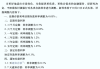
存款利率长短期倒挂

Search documents
中小银行仍需平衡好净息差
Jing Ji Ri Bao· 2025-11-03 02:25
Core Viewpoint - The phenomenon of inverted deposit rates, where long-term deposit rates are lower than short-term rates, reflects the operational pressures on banks and changing market expectations, particularly affecting small and medium-sized banks [1][2]. Group 1: Deposit Rate Adjustments - Several small and medium-sized banks have recently adjusted their deposit rates, leading to instances of inverted rates, such as Shanghai Huari Bank's five-year deposit rate being 2.1%, lower than the three-year rate of 2.15% [1]. - The core reasons for the phenomenon of "three-year deposits yielding less than one-year deposits" include narrowing net interest margins and strong expectations of further rate declines, prompting banks to lower long-term product rates to avoid locking in high-cost liabilities [2]. Group 2: Market Dynamics and Competition - The current trend shows a significant outflow of retail deposits as investors prefer higher-yielding bank wealth management products, indicating a shift in investment preferences [3]. - The competition among banks is intensifying, with some banks adjusting short-term rates to maintain market share and manage funding costs amid increased deposit competition [2][3]. Group 3: Wealth Management and Product Innovation - To enhance competitiveness, banks need to focus on wealth management services, offering a wider range of products to attract depositors, including innovative financial products linked to equities and precious metals [4]. - The expectation of potential monetary policy easing, such as rate cuts, could provide a favorable environment for banks to manage their net interest margins and optimize their liability structures [4].
长短期利率“倒挂” 中小银行仍需平衡好净息差
Zhong Guo Jing Ji Wang· 2025-11-03 00:39
Core Viewpoint - Recent adjustments in deposit rates by several small and medium-sized banks have led to a phenomenon where short-term deposit rates exceed long-term rates, indicating a shift in market behavior and bank strategies in response to external pressures and internal conditions [1][2][3] Group 1: Deposit Rate Adjustments - Multiple small and medium-sized banks have announced adjustments to their deposit rates, resulting in varying reductions across different maturities [1] - For instance, Shanghai Huari Bank has set its five-year fixed deposit rate at 2.1%, which is lower than the three-year rate of 2.15%, illustrating the occurrence of "inverted" rates [1] - This inversion is attributed to banks adjusting rates based on market conditions and their operational pressures, particularly in the context of narrowing net interest margins [1][2] Group 2: Market Dynamics and Competition - The phenomenon of short-term rates being higher than long-term rates is influenced by factors such as increased liquidity pressure and heightened competition for deposits among banks [2] - As banks ramp up lending towards the year-end, the demand for funds increases, while wealth management and asset management sectors are diverting some deposits away from banks [2] - The trend of declining retail deposits is evident, with investors increasingly favoring higher-yielding bank wealth management products over traditional deposits [2] Group 3: Implications for Wealth Management - The long-term effects of interest rate cuts may encourage a shift of deposits to wealth management products, although this effect is not currently pronounced due to the limited scale of small banks' deposit bases and their slow development in wealth management [3] - Small and medium-sized banks need to enhance their wealth management offerings to remain competitive, focusing on low-risk, stable-return products [3] - Innovations in product offerings, such as equity-linked and precious metal-related wealth management products, are suggested to better serve customer needs and improve transparency in returns [3] Group 4: Future Challenges and Opportunities - Maintaining a balanced net interest margin remains a significant challenge for small and medium-sized banks, which must optimize their liability structures to reduce long-term costs [4] - Favorable market conditions, including potential monetary policy easing, may provide opportunities for banks to adjust their strategies effectively [4] - The expectation of further monetary policy support, both domestically and globally, could create a conducive environment for banks to navigate current challenges [4]
经济日报:中小银行仍需平衡好净息差
Bei Jing Ri Bao Ke Hu Duan· 2025-11-02 23:38
Core Viewpoint - Recent adjustments in deposit rates by several small and medium-sized banks have led to a phenomenon where short-term deposit rates exceed long-term rates, indicating a shift in market behavior and bank strategies in response to external pressures and internal conditions [1][2][3]. Group 1: Deposit Rate Adjustments - Multiple small and medium-sized banks have announced adjustments to their deposit rates, resulting in varying reductions across different maturities [1]. - For instance, Shanghai Huari Bank has set its five-year fixed deposit rate at 2.1%, which is lower than the three-year rate of 2.15%, illustrating the occurrence of "inverted" rates [1]. - This inversion contradicts the traditional pricing logic where longer terms typically yield higher rates [1]. Group 2: Factors Influencing Rate Changes - The narrowing of banks' net interest margins to historical lows is a significant factor driving the reduction in long-term deposit rates, particularly affecting small and medium-sized banks [1][2]. - Strong expectations for further declines in interest rates have prompted banks to lower long-term rates to avoid locking in high-cost liabilities [1][2]. - Additionally, banks are optimizing their liability structures by reducing the proportion of medium- to long-term deposits to enhance flexibility in asset-liability management [1]. Group 3: Market Dynamics and Competition - The current market environment shows increased short-term liquidity pressure, with banks ramping up credit issuance as the year-end approaches [2]. - Wealth management and asset management sectors are diverting some deposits away from banks, leading to heightened competition for deposits [2]. - Retail deposits are showing signs of significant outflow, as investors are increasingly favoring higher-yielding bank wealth management products over traditional deposits [2]. Group 4: Future Outlook and Challenges - Balancing net interest margins remains a critical challenge for small and medium-sized banks, which must continue to optimize their liability structures while managing the pressure of declining margins [4]. - The potential for further monetary policy easing, including rate cuts, could provide favorable conditions for the banking sector [4]. - Innovations in wealth management products, such as those linked to equities or precious metals, are necessary for banks to enhance their offerings and attract depositors [3].
中小银行再迎一轮存款利率调降
Mei Ri Shang Bao· 2025-10-21 22:53
Core Viewpoint - A new round of interest rate cuts has emerged among small and medium-sized banks in China, driven by the ongoing pressure on net interest margins, with several banks announcing reductions in deposit rates [1][2][4]. Group 1: Recent Rate Adjustments - Shanghai Huari Bank has reduced its three-year fixed deposit rate from 2.3% to 2.15%, marking the eighth rate cut this year [1][2]. - Other regional banks, including Pingyang Pudong Village Bank and Fujian Huato Bank, have also announced similar reductions, with some rates dropping by as much as 80 basis points [3][4]. - Fujian Huato Bank has adjusted its six-month and one-year deposit rates to 1.5% and 1.6%, respectively, representing its fifth rate adjustment this year [4]. Group 2: Impact on Deposit Rates - The net interest margin for commercial banks has decreased from 1.52% at the end of last year to 1.42% by the second quarter of this year, prompting the current wave of deposit rate cuts [4]. - Some banks are experiencing a phenomenon of "inverted yield curves," where short-term deposit rates exceed long-term rates, leading to potential shifts in consumer behavior towards shorter-term deposits [5][6]. Group 3: Future Outlook - Industry experts anticipate that the ongoing rate cuts may create room for further monetary policy easing, including potential reductions in reserve requirements and interest rates later this year [6]. - Analysts predict that the central bank may implement another round of rate cuts in the fourth quarter, which could influence the Loan Prime Rate (LPR) [6].
有的直降80个基点 有的“存三年不如存一年” 中小银行存款降息步伐加快
Zhong Guo Zheng Quan Bao· 2025-10-21 20:25
Core Viewpoint - The recent trend of small and medium-sized banks in China is to lower deposit interest rates, with a notable occurrence of interest rate inversion between short-term and long-term deposits, indicating a shift in banks' strategies to optimize their liability structures and manage funding costs [1][4][5]. Group 1: Deposit Rate Adjustments - Suzhou Commercial Bank plans to lower its three-year deposit rate by 10 basis points to 2.1% starting October 22, with new customers still eligible for a 2.2% rate [2]. - Other regional banks, such as Pingyang Pudong Development Village Bank and Fujian Huato Bank, have also announced significant reductions in their deposit rates, with some long-term rates dropping by as much as 80 basis points [2][3]. - The frequency of rate adjustments has increased, with some banks like Huixian Zhujiang Village Bank making multiple changes within a short period [3]. Group 2: Interest Rate Inversion Phenomenon - The phenomenon of interest rate inversion is becoming more pronounced across various types of banks, including state-owned, joint-stock, and rural commercial banks [4]. - For instance, China Construction Bank offers a three-year deposit rate of 1.55%, which is higher than its five-year rate of 1.3%, showcasing the inversion [4]. Group 3: Factors Behind Rate Changes - Industry experts attribute the inversion and rate reductions to expectations of declining interest rates and the need for banks to adjust their liability structures [5][6]. - The anticipated further cuts in interest rates by the central bank may compel banks to continue lowering deposit rates to manage their funding costs effectively [6].
中小银行存款降息步伐加快
Zhong Guo Zheng Quan Bao· 2025-10-21 20:18
Core Viewpoint - The recent trend of lowering deposit rates among small and medium-sized banks is driven by the need to optimize liability structures and control funding costs, amidst a backdrop of anticipated interest rate declines and the phenomenon of inverted deposit rates for different maturities [1][2][3][4] Group 1: Deposit Rate Adjustments - Several small and medium-sized banks, including Suzhou Commercial Bank and Pingyang Pudong Development Village Bank, have announced reductions in deposit rates, with some three-year and five-year rates decreasing by as much as 80 basis points [1][2] - Suzhou Commercial Bank will lower its three-year deposit rate from 2.2% to 2.1% starting October 22, with a minimum deposit requirement of 100,000 yuan [1] - The trend of rate reductions is not isolated, as multiple banks have made similar announcements, indicating a broader industry shift [2] Group 2: Inverted Deposit Rates - The phenomenon of inverted deposit rates, where shorter-term deposit rates exceed those of longer-term deposits, is becoming increasingly common across various types of banks, including state-owned and joint-stock banks [2][3] - For instance, China Construction Bank offers a three-year deposit rate of 1.55%, which is higher than its five-year rate of 1.3% [3] - This inversion is attributed to market expectations of further interest rate declines, leading banks to adjust their deposit offerings accordingly [3] Group 3: Liability Structure Adjustments - Industry experts suggest that the inverted deposit rates are linked to banks' efforts to adjust their liability structures in response to increasing pressure on the funding side [3][4] - Banks are actively lowering long-term deposit rates to optimize their funding costs and mitigate the impact of narrowing net interest margins [3] - The anticipated future decline in interest rates is prompting banks to reassess their deposit strategies to maintain operational efficiency [4]



存款降息加速,银行业喜忧参半
Mei Ri Jing Ji Xin Wen· 2025-10-21 06:05
Core Viewpoint - Several regional banks in China have accelerated the pace of deposit rate cuts, with some products seeing reductions of up to 80 basis points, indicating a trend of decreasing deposit interest rates across various banks [1] Group 1: Deposit Rate Cuts - Banks such as Pingyang Pudong Development Rural Bank, Fujian Huatong Bank, and Huixian Zhujiang Rural Bank have announced reductions in deposit rates since October [1] - There is a phenomenon of "inverted yield" on deposit rates across different bank types, with some banks offering better rates for shorter-term deposits compared to longer-term ones, exemplified by China Construction Bank's three-year deposit rate at 1.55% and five-year rate at 1.3% [1] Group 2: Impact on the Banking Industry - The reduction in deposit rates may lead to a "deposit migration" where funds shift towards mid-risk low-volatility dividend ETFs, which have seen significant net inflows over the past 20 trading days [1] - Conversely, the rate cuts could alleviate pressure on banks' interest margins, helping to stabilize net interest income, which has shown improvement compared to previous negative growth trends [1] - According to China International Capital Corporation, the net profit of listed banks is expected to grow by 1% year-on-year by Q3 2025, indicating overall profitability remains stable [1]
中小银行,调降存款利率!有产品直降80个基点
Zhong Guo Zheng Quan Bao· 2025-10-21 04:36
Core Insights - The recent trend shows a significant reduction in deposit rates among various regional banks, with some banks announcing cuts of up to 80 basis points [1][2][4] - A notable phenomenon of "inversion" in deposit rates is occurring, where short-term deposit rates exceed long-term rates, indicating a shift in the banking sector's approach to managing liabilities [5][13] Group 1: Deposit Rate Reductions - Several regional banks, including Pingyang Pudong Rural Bank and Fujian Huatong Bank, have announced reductions in deposit rates, with three-year and five-year rates dropping by as much as 80 basis points [2][4] - For instance, Pingyang Pudong Rural Bank's new rates effective from October 21 show a decrease in various term deposits, with three-year rates falling to 1.4% [2][4] - The trend of rate cuts has accelerated, with some banks adjusting rates multiple times within a short period, reflecting a responsive approach to market conditions [4] Group 2: Rate Inversion Phenomenon - The occurrence of "inversion" in deposit rates is evident across different types of banks, including state-owned, joint-stock, and city commercial banks, where shorter-term deposits offer higher rates than longer-term ones [5][10] - For example, China Construction Bank offers a three-year deposit rate of 1.55%, while the five-year rate is lower at 1.3% [6][10] - Industry experts attribute this inversion to expectations of declining interest rates and the need for banks to adjust their liability structures to manage costs effectively [13]