
三星Micro RGB电视

Search documents
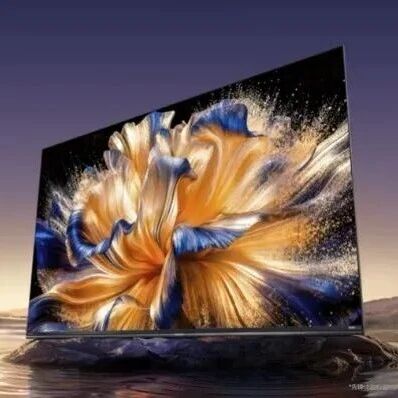
9999元起,海信新款RGB Mini LED电视发布
WitsView睿智显示· 2026-01-20 06:37
Core Viewpoint - Hisense has launched the E8S series of televisions featuring RGB-Mini LED technology, marking a significant advancement in display technology aimed at enhancing color accuracy and performance in high-end gaming and cinematic experiences [4][6][13]. Group 1: Product Features - The E8S series utilizes self-developed RGB true color backlighting, achieving 100% BT.2020 color gamut coverage and improving color reproduction by over 20% compared to traditional monochrome backlighting [4]. - It incorporates the RISC-V architecture-based AI image quality chip H7, enabling 3D light and color control with a precision of over 10240 levels, resulting in a professional-grade color accuracy of ΔE<1 [4][6]. - The display features a low-reflection black crystal screen with a peak brightness of 5300 nits and supports native 4K 180Hz refresh rates, significantly enhancing the gaming experience with reduced input lag of 4.7ms [6]. Group 2: Pricing and Market Strategy - The official prices for the E8S series are set at 12,999 yuan for the 75-inch model, 17,999 yuan for the 85-inch model, and 24,999 yuan for the 100-inch model, with promotional subsidies bringing the effective prices down to 9,999 yuan, 14,999 yuan, and 21,999 yuan respectively [7]. - Hisense aims to make RGB-Mini LED technology more accessible by pricing the E8S competitively with traditional monochrome backlighting quantum dot Mini LED products [6][11]. Group 3: Industry Context - The launch of the E8S series reflects a broader trend in the global television industry towards RGB-Mini LED technology, which is seen as a key innovation for enhancing display quality amid increasing market saturation and competition [13][15]. - Major brands including Samsung, TCL, Sony, and LG are also entering the RGB-Mini LED market, indicating a collective industry shift towards this advanced display technology [13][14].


CES 2026群雄逐鹿,海信首创玲珑4芯突围
Guan Cha Zhe Wang· 2026-01-08 02:51
Core Viewpoint - The CES 2026 showcases a competitive landscape in display technology, with major brands like Samsung, LG, Sony, TCL, and Hisense unveiling their latest innovations, particularly in RGB-MiniLED and OLED technologies [1][2]. Group 1: Display Technology Developments - The CES 2026 features a competitive environment characterized by the "explosion of RGB-MiniLED and continuous iteration of OLED" technologies [2]. - Samsung introduces its "Micro RGB" technology, offering a product range from 55 inches to 115 inches, achieving 100% BT.2020 color coverage with its Micro RGB AI Engine Pro chip for precise color temperature control [2]. - LG adopts a dual strategy by upgrading its OLED product line and entering the RGB-Mini LED market with its Micro RGB evo series, achieving near-OLED light control precision [2]. - Sony focuses on commercializing RGB-Mini LED technology with its Bravia 9 II and Bravia 7 II series, featuring "True RGB" backlight technology and peak brightness of 4000 nits [2]. - TCL emphasizes its Mini-LED offerings with the X11L SQD Mini-LED TV, achieving 100% BT.2020 color coverage and peak brightness of 10000 nits [3]. Group 2: Hisense's Innovations - Hisense's new RGB-Mini LED technology features a groundbreaking "玲珑4芯真彩背光" architecture, enhancing color gamut and achieving 110% BT.2020 color coverage, surpassing current QD-Mini LED and QD-OLED technologies [4][5]. - The introduction of the信芯AI画质芯片H7 enhances color precision to 134 bits, allowing for superior color performance across various brightness levels while reducing harmful blue light by 60% compared to QD-OLED [6][7]. - Hisense's RGB-Mini LED technology includes a comprehensive color management system, ensuring accurate color reproduction and enhancing the viewing experience for consumers [7]. Group 3: Market Positioning and Launch Plans - Major brands are adopting differentiated strategies for product positioning, with Samsung aiming to make Micro RGB TVs more accessible, while TCL has already launched its X11L model [9]. - Hisense plans to launch its UX series TV, featuring the new 玲珑4芯 technology, in March 2026, following its recognition at CES 2026 [9]. - The 116-inch version of Hisense's UX series has garnered significant attention, positioning it as a strong competitor in the high-end TV market [9].
消费电子行业周报:AppleGlass于2026年发布,XREAL1S将搭载X1空间计算芯片-20251224
Huaxin Securities· 2025-12-24 14:33
Investment Rating - The report maintains a recommendation for investment in the consumer electronics sector, particularly highlighting opportunities in AI glasses and related technologies [1]. Core Insights - Apple plans to release its first smart glasses, Apple Glass, in 2026, which will feature the same SiP chip as the Apple Watch, emphasizing lightweight design and low power consumption [3][4]. - The XREAL 1S, a new consumer-grade AR glasses product, was launched on December 18, 2025, featuring the X1 spatial computing chip and innovative 2D to 3D conversion capabilities, targeting a younger audience [5][15]. - The AR/AI glasses industry is expected to experience significant growth, with major companies entering the market, indicating a potential shift in consumer electronics towards new smart devices [5][15]. Summary by Sections Industry Performance - The consumer electronics sector has shown varied performance over different time frames, with a 1-month decline of 0.4%, a 3-month decline of 5.6%, and a 12-month increase of 35.5% [2]. Key Companies and Earnings Forecast - Notable companies in the sector include: - GoerTek (未评级) with an EPS forecast of 0.79 for 2024 and a PE ratio of 37.52 [8][17]. - Luxshare Precision (未评级) with an EPS forecast of 1.86 for 2024 and a PE ratio of 31.45 [8][17]. - Yujing Technology (Buy) with an EPS forecast of -1.83 for 2024 and a PE ratio of -19.43 [8][17]. - Rockchip (未评级) with an EPS forecast of 1.42 for 2024 and a PE ratio of 124.30 [8][17]. - Hengxuan Technology (未评级) with an EPS forecast of 3.86 for 2024 and a PE ratio of 78.57 [8][17]. Industry Dynamics - The smartphone market in China saw a 13% increase in sales for foreign brands in October 2025, with total smartphone sales reaching 32.27 million units, a growth of 8.7% [20]. - Apple is planning to expand its iPhone product line significantly, with at least seven new models expected by 2027, indicating a strategic shift in its product offerings [21][24].
