且慢AI小顾

Search documents
从“财富管理+AI”到“AI原生”,且慢开启智能投顾2.0
Zhong Guo Zheng Quan Bao· 2026-02-11 12:23
Core Insights - The article discusses the upgrade of the AI investment advisory platform "Qie Man" under Yingmi Fund, transitioning from a "Wealth Management + AI" 1.0 tool application phase to an "AI-native" 2.0 service model, redefining the product form of intelligent investment advisory [1][12] - The upgraded AI Xiaogu now integrates multiple expert agents and tools to provide comprehensive wealth management services, enhancing user experience and addressing complex investment scenarios [2][3] Group 1: AI Xiaogu Upgrade - The AI Xiaogu 2.0 version features a "central command hub" that dynamically plans and coordinates multiple expert agents, allowing for more flexible responses to complex investment situations [2] - The platform has upgraded its underlying framework to enhance service capabilities and cover a wider range of service scenarios, having resolved millions of investment queries since its launch [1][12] Group 2: Service Features - The upgraded AI Xiaogu combines functions of market analysis, wealth planning, investment behavior coaching, and ongoing investment companionship, providing a holistic advisory experience [2][3] - The service has evolved from simple Q&A to a more sophisticated "expert consultation" model, utilizing over 30 financial expert agents and nearly 80 tools to deliver precise data and analysis [3][4] Group 3: User Experience - The AI Xiaogu offers a complete service loop, from account diagnostics to dynamic adjustments, ensuring users receive comprehensive investment advice [3][4] - Users can interact with the AI Xiaogu for real-time responses, eliminating the need for appointments with human advisors, thus enhancing accessibility and user engagement [9][10] Group 4: Market Position and Future Outlook - As one of the earliest intelligent investment advisory platforms in China, Qie Man has served over a million advisory sessions, with a total advisory asset scale exceeding 51 billion [12] - The continuous integration of AI into wealth management signifies a transformative direction for the industry, positioning AI as a core component rather than a supplementary tool [13]

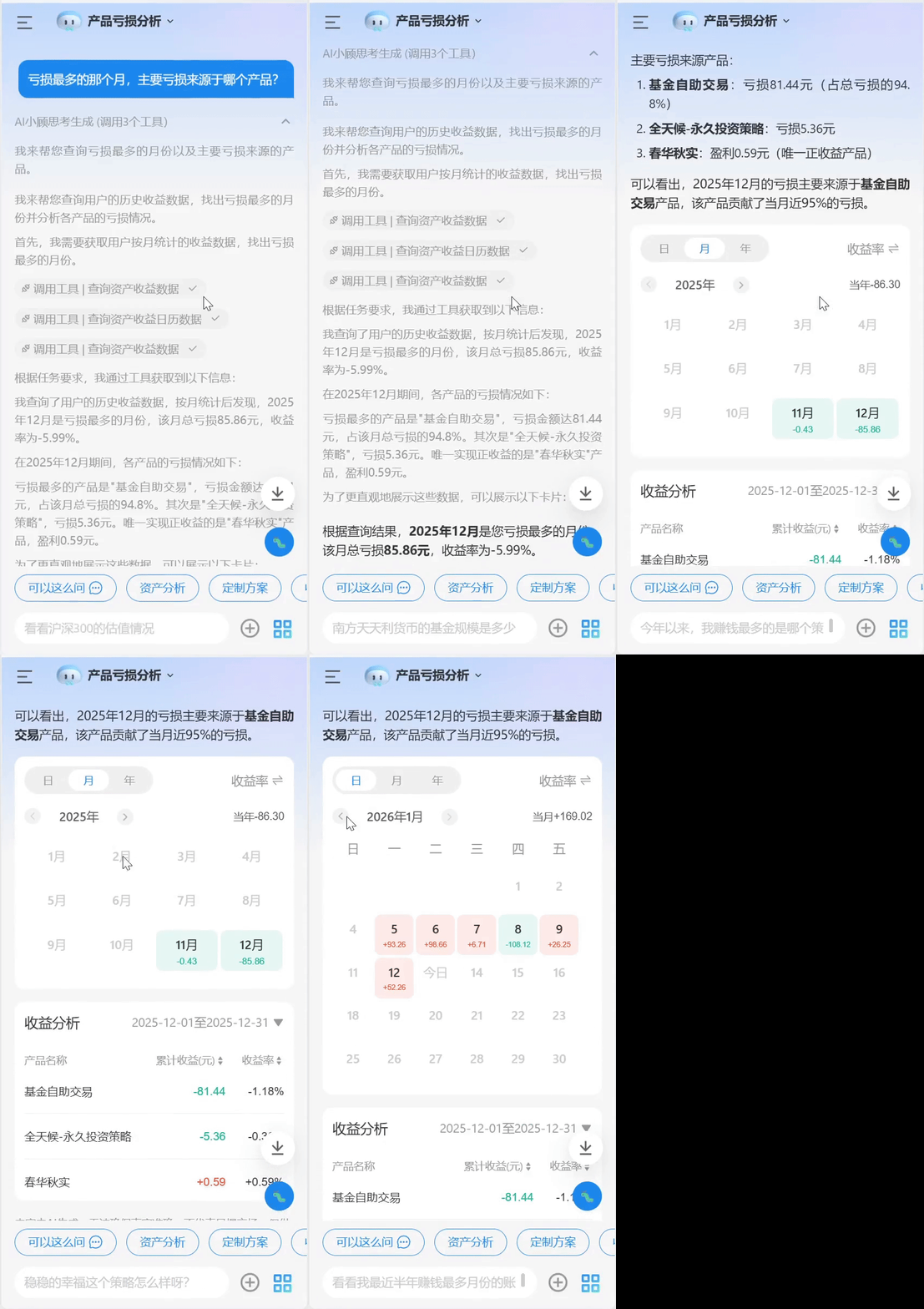
盈米基金旗下且慢AI小顾全面升级
Zheng Quan Ri Bao Wang· 2026-02-10 13:40
Core Insights - The article discusses the upgrade of the AI advisory platform "Qie Chuan" under Yingmi Fund, transitioning from "AI + Wealth Management" version 1.0 to a fully integrated AI-native 2.0 service model [1] - The upgraded AI service aims to deeply integrate AI capabilities into wealth management, enhancing user experience and service capabilities [1] Company Developments - "Qie Chuan" has been operational since May 2024, providing answers to millions of investment queries, indicating its established presence in the market [1] - The platform's upgrade includes a comprehensive overhaul of its underlying framework to support a wider range of services [1] Service Features - The upgraded AI service can assist investors in analyzing holdings, interpreting market conditions, planning funds, and customizing investment strategies [1] - It offers continuous advisory support with instant responses and 24/7 availability, allowing users to consult without prior appointments [1] - The platform emphasizes a "teach a man to fish" philosophy, making the thought process transparent and data sources traceable, thus educating users on the rationale behind investment decisions [1]
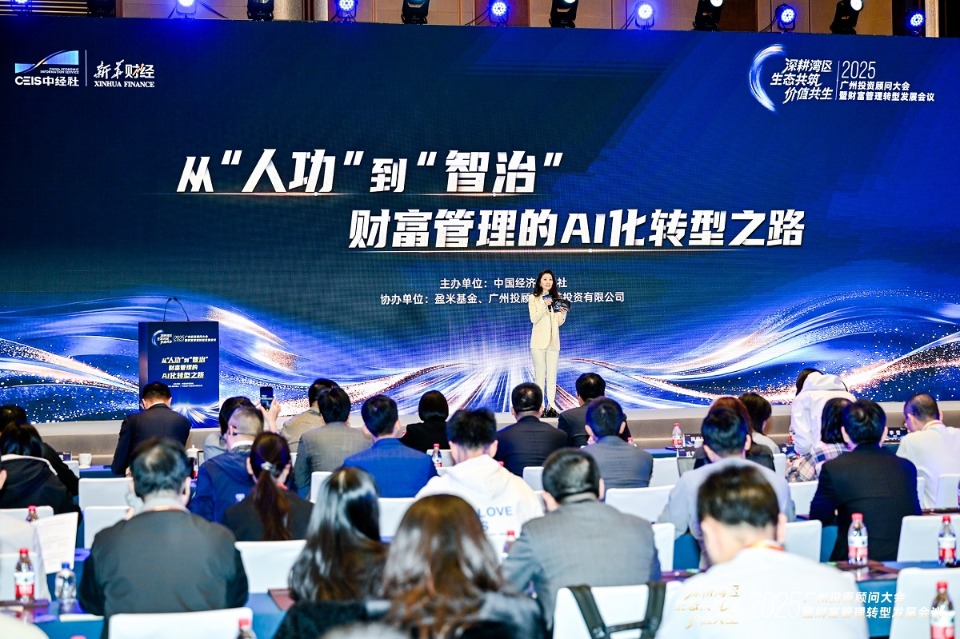
从“人功”到“智治” 业内共议财富管理AI化转型之路
Xin Hua Cai Jing· 2025-11-27 14:29
Core Insights - The "2025 Guangzhou Investment Advisory Conference and Wealth Management Transformation Development Meeting" was held in Guangzhou, focusing on the AI transformation in wealth management [1] - Experts discussed how AI is reshaping the wealth management industry, emphasizing the need for practitioners to embrace change and enhance their services through AI technology [3] Group 1: AI in Wealth Management - Lin Jiecai from Yingmi Fund highlighted the rapid development of AI technology and the necessity for wealth management professionals to undergo a comprehensive transformation, including product AI integration [4] - He introduced the AI investment advisory product "Qie Man AI Xiao Gu," which utilizes a full-agent architecture to overcome traditional service limitations, advocating for transparency in AI decision-making to build client trust [4] - Gu Min from Alibaba Cloud pointed out a significant supply-demand gap in China's wealth management market, with 720 million investors and only 200,000 registered financial advisors, leading to a ratio of 3600:1 [6] Group 2: Technological Advancements - Gu Min also discussed the application of post-training technology in wealth management, enhancing service capabilities and accuracy through structured knowledge extraction [6] - McKinsey's partner Ma Ben emphasized that AI's integration with other technologies will lead to personalized services and improved operational efficiency in the financial sector [8] - Wang Fengyi from Xun Tu Technology presented a three-stage evolution of AI capabilities, aiming to assist users in high-dimensional decision-making by 2027-2028 [12] Group 3: Practical Applications and Innovations - Chen Ping from Yingmi Fund mentioned the company's efforts in digital transformation for financial institutions, creating a knowledge base project to enhance content creation and compliance scenarios [13] - Sun Mingzhan from Pu Lan highlighted the importance of AI as a comprehensive solution for family wealth management, focusing on training simulations for advisors [15] - Xu Guoxing from Doufu Wencai described their platform as a "Zhihu for finance," utilizing AI algorithms to match users with personalized financial advice, significantly increasing service efficiency [19]
美国私人财富管理协会|财富管理AI,上新
Sou Hu Cai Jing· 2025-09-29 06:26
Core Insights - The launch of the first wealth management AI assessment benchmark "FinMCP-Bench" and the advisory AI model "Dianjin-Qieman-FA-Agentic" aims to address the need for specialized AI applications in the wealth management sector [1][4][6] - The "FinMCP-Bench" focuses on quantifying the tool utilization capabilities of AI models specifically for wealth management, differentiating it from general financial AI benchmarks [4][6] - The "Dianjin-Qieman-FA-Agentic" model is designed to effectively tackle common challenges in financial vertical AI models, enhancing decision-making capabilities in complex scenarios [5][6] Group 1: AI in Wealth Management - The financial services sector has high demands for the professionalism, rigor, and accuracy of AI, necessitating a specialized evaluation standard for AI models [4] - The assessment benchmark utilizes real user interaction data from the "Qieman" app, reflecting diverse and personalized wealth management needs [4][6] - The model emphasizes not only semantic understanding but also the accuracy of tool utilization and the standardization of advisory service processes [4][6] Group 2: Industry Trends and Developments - AI is increasingly seen as a valuable tool in wealth management, providing 24/7 availability, lowering service barriers, and offering personalized advice [8] - Recent upgrades in AI wealth management assistants, such as "蚂小财" and "京小贝," have significantly improved user engagement and satisfaction metrics [8][9] - The industry is witnessing a shift towards more practical and efficient AI applications, with platforms like Ant Group's open platform enhancing service capabilities for financial institutions [9]

AI重塑金融版图!从投研革命到人机共生,中国基金业数智化转型如何破局
Hua Xia Shi Bao· 2025-05-27 09:08
Core Insights - The digital transformation in the financial sector is being driven by artificial intelligence (AI), with 88% of U.S. financial institutions already implementing AI applications [2] - China's financial market is exploring AI in unique ways, focusing on internal efficiency rather than direct customer-facing services [2][3] - The public fund industry in China is leveraging digitalization for upgrades in investment research, advisory services, and software development [3] AI Implementation in Chinese Financial Institutions - Leading public funds like Huatai-PB and E Fund are integrating AI into their advisory services, with Huatai-PB's "Help You See" service utilizing AI for portfolio analysis and fund diagnostics [3][4] - Debon Fund has developed the "Haina Baichuan" model aggregation platform to enhance research efficiency by quickly capturing industry trends [4] - Bosera Fund has completed the private deployment of the DeepSeek series models, enhancing their capabilities in investment research and advisory services [5] AI's Impact on Quantitative Investment - The quantitative investment sector is experiencing a surge in AI adoption, with firms investing heavily in talent and technology [5][6] - AI's multi-modal processing capabilities are expected to reshape quantitative investment by integrating non-standard data for better decision-making [6] AI in Wealth Management - By 2025, AI-driven wealth management is projected to reach approximately $4.5 trillion, contributing 10%-15% of that growth [8] - Generative AI is transforming customer acquisition, service, and internal knowledge management across the entire value chain [8][9] - Companies like Yingmi Fund are pioneering AI applications in personal advisory services, significantly improving efficiency in client interactions [9] Challenges and Perspectives on AI - There is an ongoing debate about the role of AI versus human advisors, with some firms like E Fund opting for a purely human advisory model [11][12] - While AI can enhance service efficiency and provide 24/7 support, concerns about AI hallucinations and algorithmic bias remain [12][13] - Many financial institutions are initially focusing on internal applications of AI to improve operational efficiency [13][14] Regulatory and Future Outlook - The Chinese regulatory framework is evolving to support high-quality development in the public fund sector, emphasizing the need for responsible AI use [14] - The financial industry is poised for significant transformation as it embraces technological advancements while navigating associated risks [14]