
智能投顾

Search documents
荣获两项数据知识产权证书 广东博众以数据升级智能投顾
Sou Hu Wang· 2026-02-26 08:49
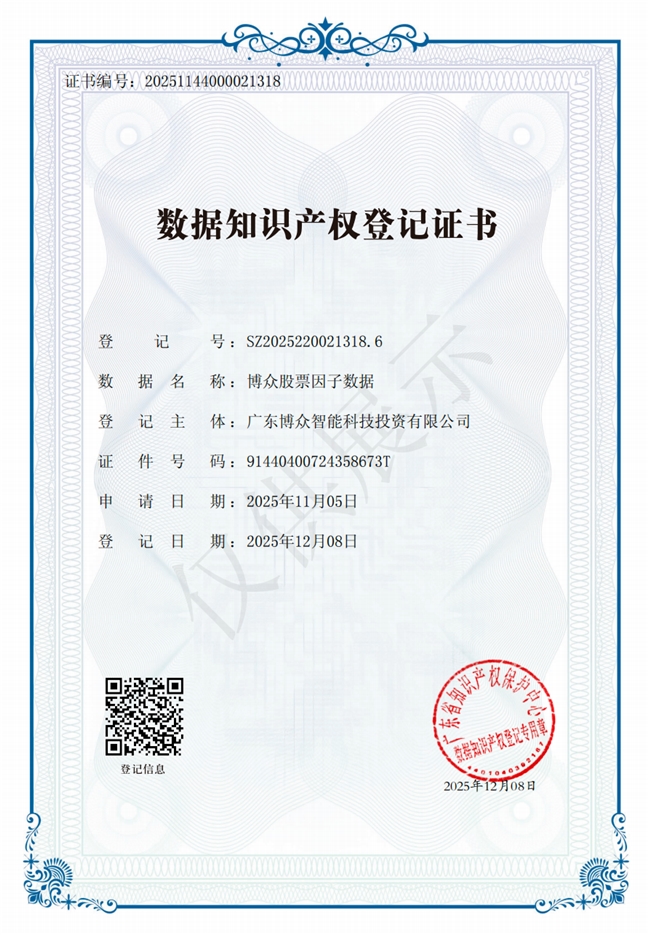
Core Insights - Guangdong Bozhong Intelligent Technology Co., Ltd. has recently achieved significant milestones by obtaining two data intellectual property registration certificates, highlighting its technological innovation and data asset operation capabilities in the fintech sector [1][3][5] Group 1: Data Intellectual Property Achievements - On December 8, 2025, Guangdong Bozhong's "Bozhong Stock Factor Data" became the first to pass the review by the Guangdong Intellectual Property Protection Center, marking a milestone in data asset development [1] - The first data product utilizes text analysis and machine learning, establishing a high-quality dataset that serves as a foundation for quantitative strategy model training [1] - On January 21, 2026, the company received another data intellectual property registration for its "Stock Selection Strategy Risk and Return Evaluation Data," which integrates advanced technologies like deep learning for enhanced risk management and return assessment [3] Group 2: Strategic Implications and Future Directions - The dual recognition of data intellectual property underscores the company's research and development capabilities and commitment to data asset operation, reflecting its philosophy of "technology innovation leading, data assets at the core" [5] - As a player in the fintech sector, Guangdong Bozhong focuses on continuous R&D investment to build a diversified intelligent strategy system [5] - The successful certification of these data products enriches the company's data asset matrix and strengthens its core competitiveness, facilitating a transition from "manual experience" to "intelligent decision-making" in investment services [5]

中信建投证券新春送“画像”:北极星赋能,让投资更“懂你”
Zhong Guo Zheng Quan Bao· 2026-02-12 04:44
Core Viewpoint - The launch of the "Investment Portrait One-Click Check" New Year theme activity by CITIC Securities aims to help investors understand their investment behavior and clarify their wealth management direction for the new year [1][2]. Group 1: Activity Overview - The activity utilizes CITIC Securities' Polaris account diagnosis product to create personalized investment portraits for both existing and new users, allowing them to identify their investment "DNA" [1][2]. - Existing customers receive a detailed analysis based on their actual trading data, while new users can participate by completing a questionnaire to obtain a behavior-based investment report [2][4]. Group 2: Technology and Service Model - The Polaris account diagnosis product represents CITIC Securities' advancements in financial technology, transforming complex investment logic into accessible services for ordinary investors [3]. - The product employs a comprehensive diagnostic approach, linking macro market conditions to individual behaviors, thus enhancing the wealth management service model from "single-point service" to "full-cycle value companionship" [3][5]. Group 3: User Engagement and Insights - The activity emphasizes deep interaction and value resonance with users, moving beyond traditional promotional methods to foster self-discovery among investors [5]. - Participants reported gaining insights into their investment blind spots, highlighting the meaningfulness of the experience compared to typical festive giveaways [5]. Group 4: Future Developments - CITIC Securities plans to further develop the "Investment Portrait" and "Account Health Score" as core features of the Polaris product, continuously iterating to include more data dimensions and smarter algorithms [6].

从“财富管理+AI”到“AI原生”,且慢开启智能投顾2.0
Zhong Guo Zheng Quan Bao· 2026-02-11 12:23
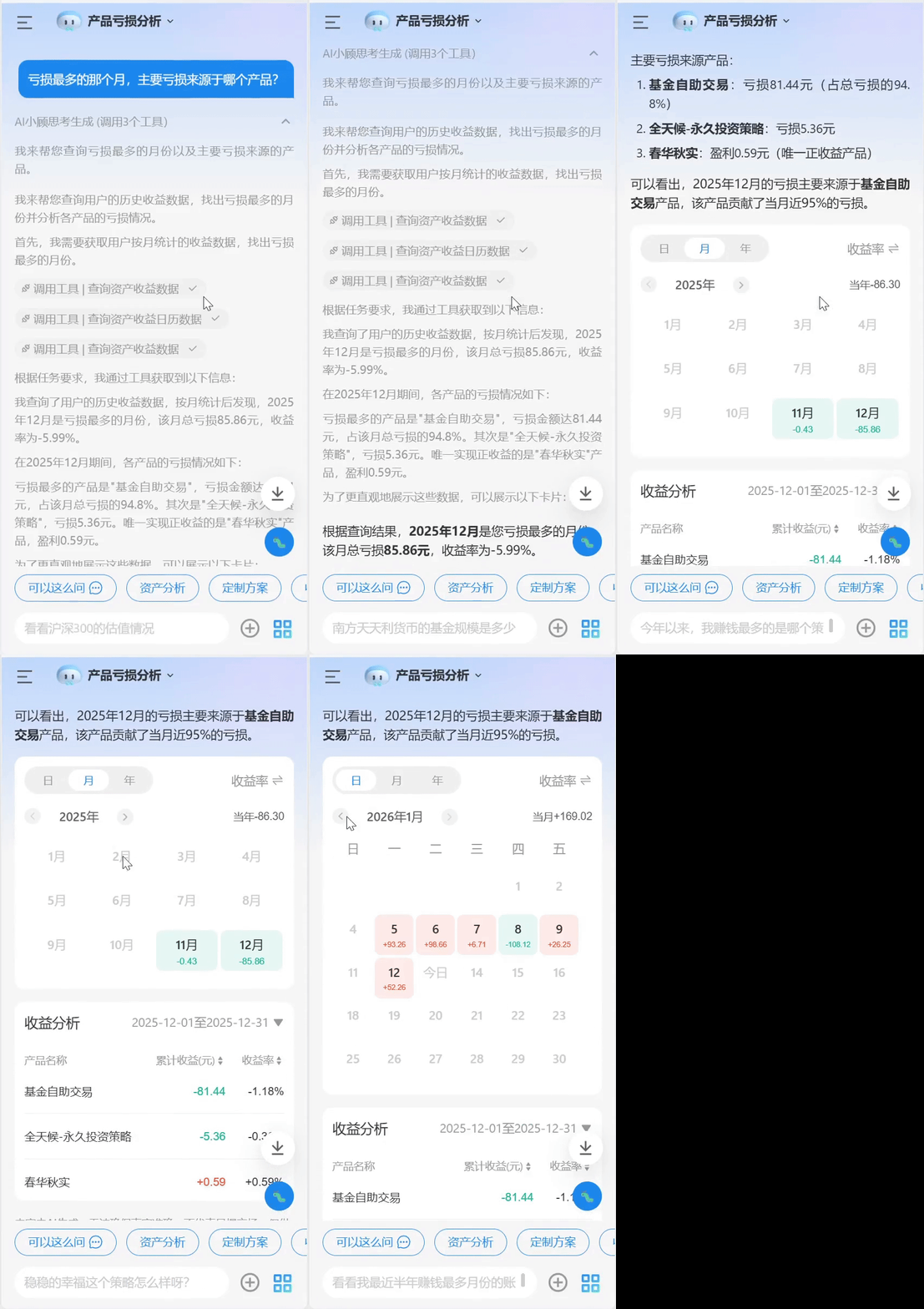
Core Insights - The article discusses the upgrade of the AI investment advisory platform "Qie Man" under Yingmi Fund, transitioning from a "Wealth Management + AI" 1.0 tool application phase to an "AI-native" 2.0 service model, redefining the product form of intelligent investment advisory [1][12] - The upgraded AI Xiaogu now integrates multiple expert agents and tools to provide comprehensive wealth management services, enhancing user experience and addressing complex investment scenarios [2][3] Group 1: AI Xiaogu Upgrade - The AI Xiaogu 2.0 version features a "central command hub" that dynamically plans and coordinates multiple expert agents, allowing for more flexible responses to complex investment situations [2] - The platform has upgraded its underlying framework to enhance service capabilities and cover a wider range of service scenarios, having resolved millions of investment queries since its launch [1][12] Group 2: Service Features - The upgraded AI Xiaogu combines functions of market analysis, wealth planning, investment behavior coaching, and ongoing investment companionship, providing a holistic advisory experience [2][3] - The service has evolved from simple Q&A to a more sophisticated "expert consultation" model, utilizing over 30 financial expert agents and nearly 80 tools to deliver precise data and analysis [3][4] Group 3: User Experience - The AI Xiaogu offers a complete service loop, from account diagnostics to dynamic adjustments, ensuring users receive comprehensive investment advice [3][4] - Users can interact with the AI Xiaogu for real-time responses, eliminating the need for appointments with human advisors, thus enhancing accessibility and user engagement [9][10] Group 4: Market Position and Future Outlook - As one of the earliest intelligent investment advisory platforms in China, Qie Man has served over a million advisory sessions, with a total advisory asset scale exceeding 51 billion [12] - The continuous integration of AI into wealth management signifies a transformative direction for the industry, positioning AI as a core component rather than a supplementary tool [13]
“智能投顾鼻祖”Wealthfront资产规模大928亿美元,美股牛市下营收创新高
Hua Er Jie Jian Wen· 2026-01-13 00:55
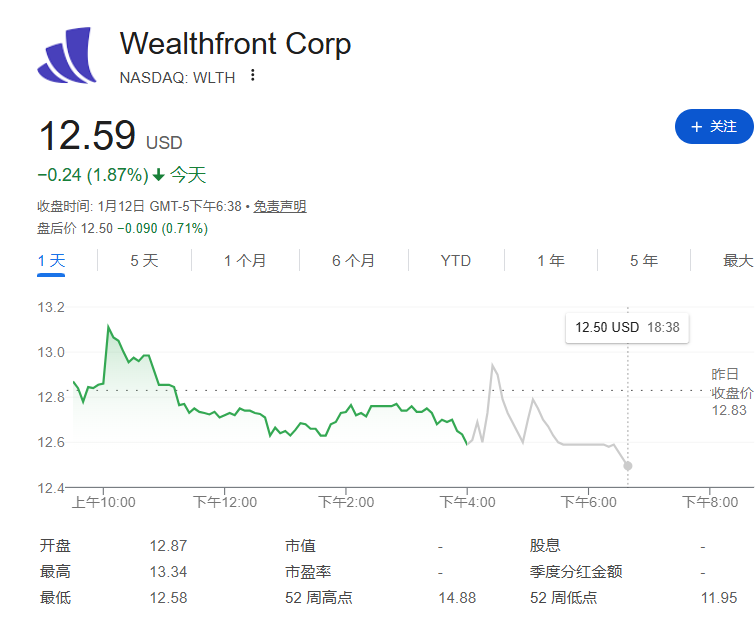
Group 1 - The core viewpoint of the articles highlights that the bull market in the U.S. stock market is driving growth in the robo-advisory industry, as evidenced by Wealthfront's strong quarterly performance [1] - Wealthfront reported a net profit of $30.9 million for the quarter ending October 31, representing a 3% year-over-year increase, and record revenue of $93.2 million, up 16% year-over-year [1] - The total assets under management for Wealthfront grew by 21% year-over-year to $92.8 billion, reflecting an increase in investor risk appetite as funds shift from savings accounts to investment accounts [1] Group 2 - Despite the increase in total assets, Wealthfront experienced a decline in net deposit inflows, which were $1.6 billion for the quarter, down from $4.4 billion in the same period last year [2] - The company's cash management business, which has been a growth engine, currently offers a 3.9% annualized yield for new customers, making it sensitive to interest rate fluctuations [2] - Wealthfront is diversifying its product offerings to attract affluent, tech-savvy clients, including expanding tax-loss harvesting services and launching mortgage services in states like Colorado [2]
70后财富管理一姐徐海宁转身创业
Xin Lang Cai Jing· 2026-01-12 02:03
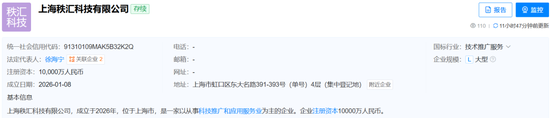
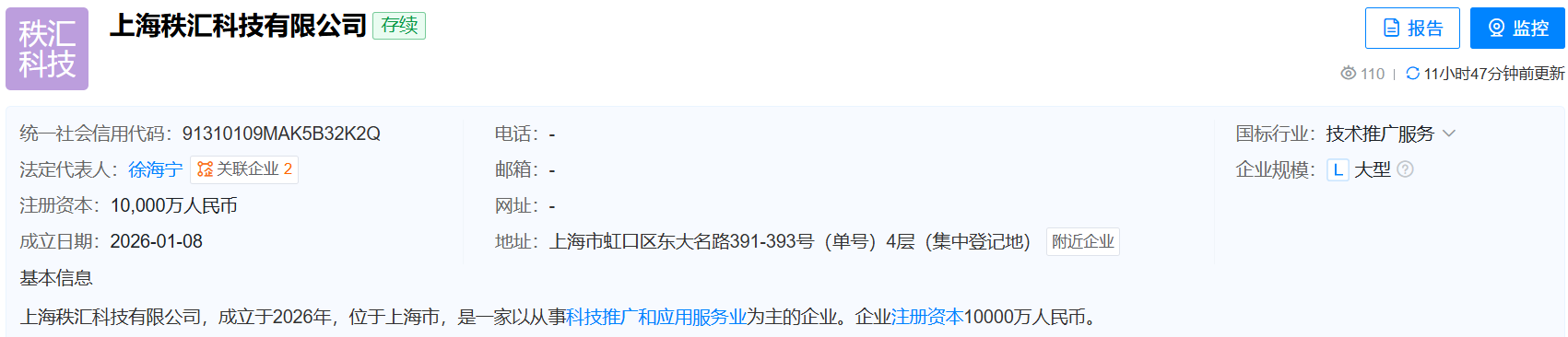
Core Viewpoint - Xu Haining, a prominent figure in wealth management, has transitioned from her role at Dongfang Securities to establish Shanghai Zhihui Technology Co., focusing on wealth management and technology integration [1][2][10]. Company Establishment - Shanghai Zhihui Technology Co. was officially established on January 8, 2026, with a registered capital of 100 million yuan, located in Hongkou District, Shanghai [1][3]. - The company is co-founded by Xu Haining and Zhonglian Heavy Industry Capital, indicating a strategic partnership with a strong financial backing [3][12]. Business Focus - The core positioning of Shanghai Zhihui Technology is "Wealth Management + Technology + Industry-Finance Collaboration," with three main business directions: 1. Development of intelligent investment advisory systems and AI-driven investment ecosystems [3][11]. 2. Establishment of a specialized training system for investment advisors to enhance professional capabilities [3][11]. 3. Customized consulting services for financial institutions to support their wealth management transformation [3][11]. Background of Xu Haining - Xu Haining has over ten years of experience in the wealth management sector, previously serving as the Vice President of Dongfang Securities and leading the company's wealth management transformation [2][5][10]. - Her career includes significant roles in various industries, including real estate and securities, showcasing her diverse expertise [5][14]. Industry Impact - Under Xu's leadership, Dongfang Securities initiated its investment advisory business in June 2021, emphasizing the importance of professional service capabilities and addressing investor pain points [6][15]. - Xu has articulated that investment advisory services represent the future of wealth management, focusing on aligning with investor interests and improving returns [6][15]. Financial Backing - Zhonglian Heavy Industry Capital, a wholly-owned subsidiary of Zhonglian Heavy Industry, has a registered capital of 4 billion yuan, providing substantial financial support for the new venture [12]. - The partnership with Shanghai Zhihui Mingde Enterprise Management Center, which has a registered capital of 15 million yuan, further strengthens the company's resource network [12].



券业知名女将徐海宁转身创业 锚定财富管理赛道再出发
2 1 Shi Ji Jing Ji Bao Dao· 2026-01-09 14:45
Core Viewpoint - Xu Haining, a prominent figure in wealth management, has transitioned from her role at Dongfang Securities to establish a new venture, Shanghai Zhihui Technology Co., Ltd, focusing on wealth management integrated with technology [1][3][6]. Company Establishment - Shanghai Zhihui Technology was officially established on January 8, with a registered capital of 100 million yuan, located in Hongkou District, Shanghai, and Xu Haining serves as the legal representative [1][6]. - The company aims to combine wealth management with technology and industrial-financial collaboration, focusing on three main business directions: developing intelligent advisory systems, creating a professional training system for investment advisors, and providing customized consulting services for financial institutions [6]. Background of Xu Haining - Xu Haining has over ten years of experience in the wealth management sector and previously held significant positions at Dongfang Securities, including Vice President and head of the wealth management committee [4][5][11]. - She resigned from Dongfang Securities on November 20, 2024, citing personal career development reasons, after contributing significantly to the company's wealth management transformation and the development of its fund advisory business [5][12]. Investment and Partnerships - The shareholders of Shanghai Zhihui Technology include Zhonglian Heavy Industry Capital, Xu Haining, and Shanghai Zhihui Mingde Enterprise Management Center, with Zhonglian Heavy Industry being a major player in the machinery industry [7]. - The partnership with Zhonglian Heavy Industry Capital, which has a registered capital of 4 billion yuan, adds substantial financial strength to the new venture [7]. Industry Impact - Xu Haining's return to the wealth management sector as an entrepreneur is seen as a significant move, potentially reshaping the landscape of wealth management services in China [3][6][12]. - Her previous experience and insights into the industry are expected to drive innovation and enhance the quality of wealth management services offered by Shanghai Zhihui Technology [6][11].
券业知名女将徐海宁转身创业,锚定财富管理赛道再出发
2 1 Shi Ji Jing Ji Bao Dao· 2026-01-09 14:40
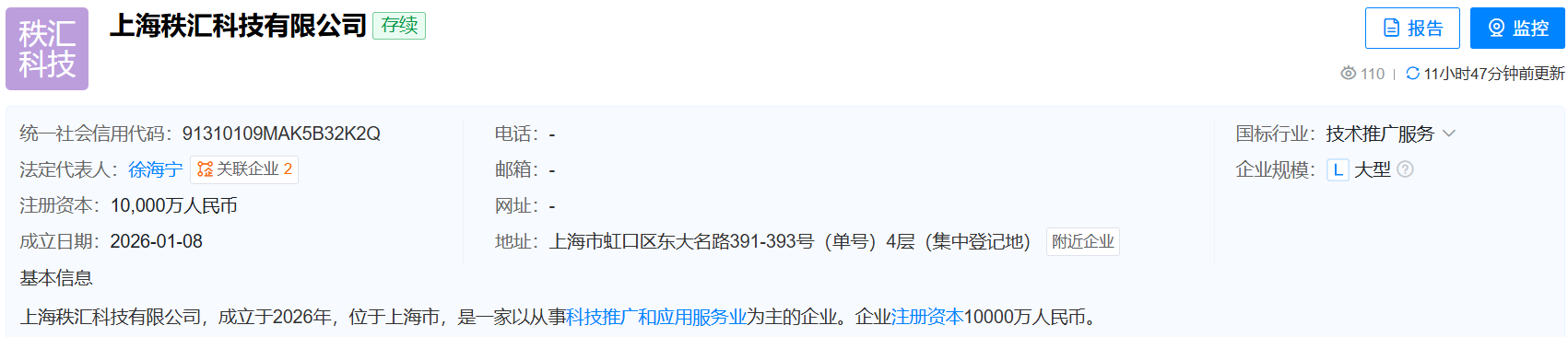
Core Viewpoint - Xu Haining, a prominent figure in wealth management, has officially returned to the industry by founding Shanghai Zhihui Technology Co., Ltd. after resigning from her position at Dongfang Securities [1][6][13]. Group 1: Company Establishment - Shanghai Zhihui Technology Co., Ltd. was established on January 8, 2026, with a registered capital of 100 million RMB [2][6]. - The company is located in Hongkou District, Shanghai, and is co-founded by Xu Haining and Zhonglian Heavy Industry Capital [1][6]. Group 2: Business Focus - The core positioning of Shanghai Zhihui Technology is "Wealth Management + Technology + Industry-Finance Collaboration," focusing on three main business directions: developing intelligent advisory systems, creating a professional training system for investment advisors, and providing customized consulting services for financial institutions [6][12]. - The company aims to address the core needs of industry transformation through its innovative approach [6]. Group 3: Xu Haining's Background - Xu Haining has over ten years of experience in the wealth management sector and previously served as the Vice President of Dongfang Securities, where she significantly contributed to the company's wealth management transformation [4][5][10]. - She has a diverse professional background, having worked in various sectors before joining the financial industry, including real estate and securities investment [11][12]. Group 4: Industry Impact - Xu Haining's departure from Dongfang Securities was noted for her contributions to the company's brand and wealth management business, particularly in promoting inclusive finance and enhancing the competitive advantage of the investment advisory sector [5][12]. - Her new venture is expected to bring fresh perspectives and innovations to the wealth management industry, particularly in the area of investment advisory services [15].
不靠规模靠什么?金禧奖“基金公司创新奖”表彰行业先锋力量
Sou Hu Cai Jing· 2026-01-09 05:53
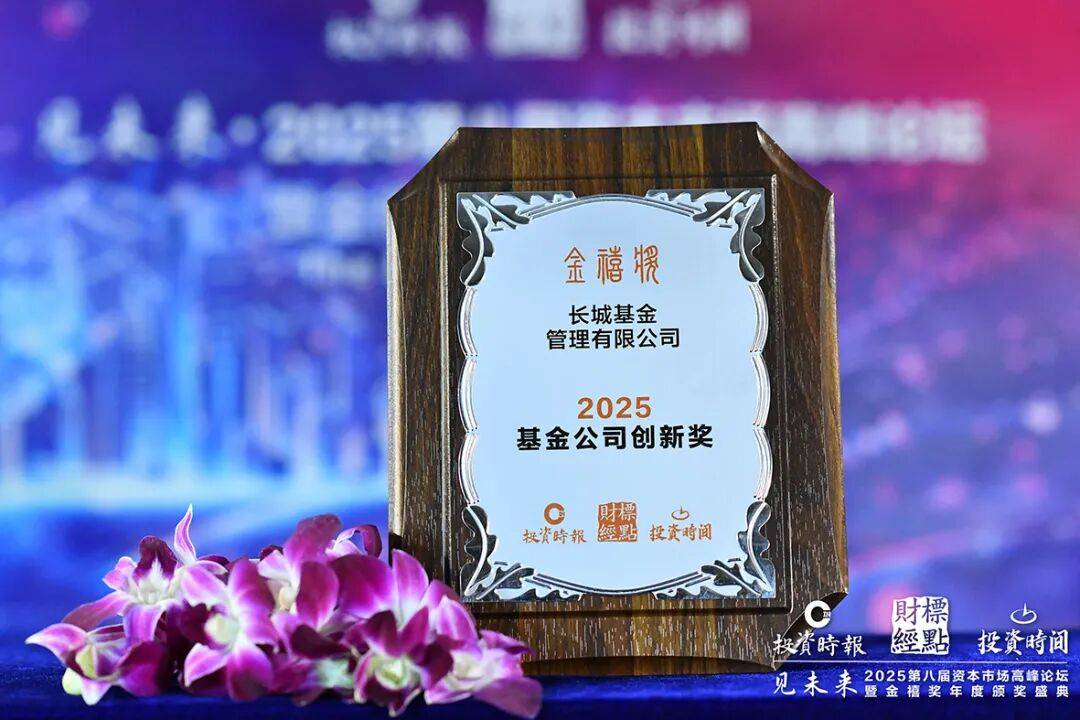
Group 1 - The core viewpoint of the articles highlights the proactive positioning of Changcheng Fund in capitalizing on the new productivity development dividends, with a focus on high-quality growth in the fund industry by 2025 [1][2] - The fund industry is shifting from a "scale-oriented" approach to one that emphasizes "returns," driven by policy changes such as the implementation of a floating management fee mechanism linked to performance and long-term assessments [1] - The ETF market is experiencing explosive growth, with expansions in bond, cross-border, and niche theme ETFs, as well as the introduction of multi-asset ETF pilots to meet diverse investor needs [1] Group 2 - Changcheng Fund Management Co., Ltd. won the "2025 Fund Company Innovation Award," reflecting its successful efforts in enhancing its technology investment product line to provide efficient tools for investors in the Sci-Tech Innovation Board [2] - The company has developed a platform-based, team-oriented, multi-strategy investment research model, promoting long-term, value, and responsible investment philosophies while fostering a culture of simplicity, efficiency, and happiness within its team [2] - The investment team at Changcheng Fund is designed to leverage individual strengths and accommodate diverse investment styles, thereby enabling investors to share in the growth of China's technology industry [2]
ETF盘中资讯|互联网券商异动,同花顺领涨超8%!金融科技ETF(159851)再涨超2%放量八连阳!
Sou Hu Cai Jing· 2026-01-06 02:39
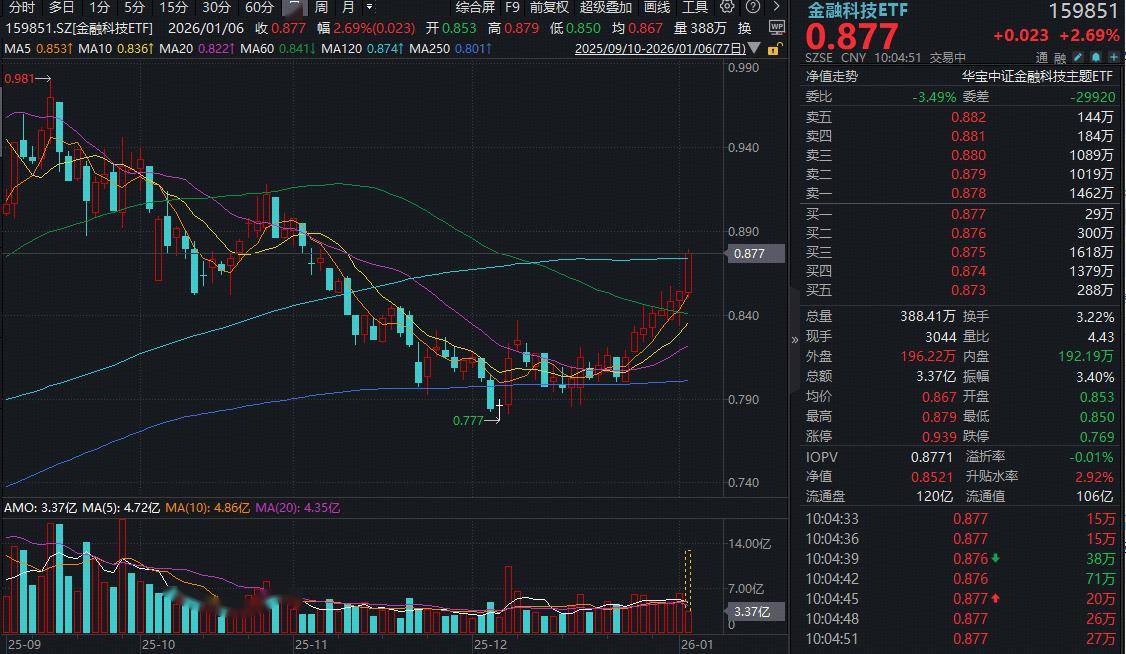
Core Viewpoint - The financial technology sector is experiencing a significant upward trend, with the Shanghai Composite Index reaching a ten-year high, driven by strong performance in internet brokerage stocks and financial technology ETFs [1][3]. Group 1: Market Performance - On January 6, the Shanghai Composite Index surpassed 4050 points, marking a ten-year high, with the financial technology sector achieving an eight-day consecutive rise [1]. - Internet brokerage concepts saw substantial gains, with stocks like Tonghuashun rising over 8% and other companies like Zhinan Zhen and Wealth Trend increasing by more than 4% [1]. - The financial technology ETF (159851) also experienced a rise of over 2%, with trading volume exceeding 300 million yuan [1][2]. Group 2: Catalysts for Growth - A record high annual trading volume of 400 trillion yuan in A-shares for 2025 indicates a vibrant capital market, suggesting that internet brokerages will see performance releases in 2025 and the first half of 2026 [3]. - The integration of AI in financial IT is creating new growth opportunities, enhancing product value and customer loyalty through applications like smart investment advisory and big data risk control [3]. - The financial technology ETF (159851) and its associated funds are recommended for investment, as they cover a wide range of themes including internet brokerages, financial IT, cross-border payments, and AI applications [3].

全球资管深研系列(四):全球智能投顾全景图
Guoxin Securities· 2025-12-25 15:25
Core Insights - The rise of robo-advisors is driven by the integration of financial technology and traditional wealth management, offering low costs, high accessibility, and convenience. Post-global financial crisis, stricter regulations and technological advancements have facilitated the emergence of non-bank fintech companies, with robo-advisors serving as a cost-effective alternative to human advisors. They utilize algorithms to automatically construct investment portfolios, significantly reducing advisory fees and breaking geographical barriers, allowing investors to access professional services anytime and anywhere. Robo-advisors particularly attract low-income groups and younger users by minimizing trading costs through passive investment strategies, enhancing capital market participation for long-term goals like retirement and emergency savings. The evolution of robo-advisors has progressed through four stages: early online questionnaires and static advice, full automation and passive management, establishment of hybrid models, and AI-driven hyper-personalization and intelligent agents [2][9][10]. - The global robo-advisory market is experiencing rapid expansion, with the U.S. maintaining a dominant position while emerging markets like China show significant potential for growth. The market size is projected to increase from $7.7 billion in 2023 to approximately $116.4 billion by 2033, with the U.S. accounting for 81% of global assets under management (AUM). The competitive landscape in the U.S. has formed a "three giants and many strong" scenario, with Vanguard, Schwab, and Fidelity as the major players, while independent unicorns like Betterment and Wealthfront continue to thrive. In Europe, the market share remains relatively small, with key players categorized into pan-European super platforms, market consolidators, and regional champions. China's robo-advisory market is expected to exceed $2 billion by 2028 and $4 billion by 2030, contributing to the development of passive investment strategies and long-term capital market participation [2][15][21][25][30]. - The business model of robo-advisors is evolving towards platformization and ecosystem integration, with revenue models shifting from single asset management fees to layered charging and technology empowerment. Robo-advisors have expanded from B2C to B2B and ecosystem models, exemplified by Ant Wealth's scenario collaboration for traffic conversion. Revenue diversification includes pure digital models relying on AUM management fees, tiered subscription models offering premium services, B2B tool empowerment models generating profits through technology output, and ecosystem platform models depending on product distribution commissions. This evolution highlights the industry's transition from scale expansion to value extraction [2][35][39]. - The core competitive advantages of leading robo-advisors include comprehensive strength, digital experience, and user-friendliness for beginners. Platforms with strong comprehensive capabilities often excel in long-term performance and service quality, while the best digital planning platforms possess robust personal asset aggregation tools that create automated financial management loops. User-friendly platforms may excel in brand trust or community ecosystem development. In the competitive landscape, Betterment and Wealthfront not only survive but thrive, embodying the pure fintech spirit by creating value through technological innovation and exceptional user experience [2][39][50]. - The development trend of robo-advisors is characterized by a philosophical debate between "active" and "passive" investment strategies. Analyzing the portfolio data of various robo-advisors reveals a shift in the industry towards this philosophical contention, categorized into MPT believers (Vanguard & Betterment), potential active managers (SoFi & Axos), and tech-driven alpha harvesters (Wealthfront) [2][11]. - Looking ahead, the industry is poised for significant restructuring and a new journey. By 2025, the robo-advisory sector will have transitioned from rapid growth to a phase of integration and iteration. Three major trends are expected to continue: industry consolidation, a shift from scale to sustainable profitability, and AI reshaping robo-advisory services. The complete withdrawal of bank-affiliated robo-advisors reflects ongoing industry consolidation, as the mismatch between customer acquisition costs and lifetime value necessitates substantial new scale to cover technology and compliance costs. Independent platforms are now focusing on sustainable profitability rather than blind scale expansion, as exemplified by Robinhood's acquisition of AI financial planning company Pluto and the launch of its own robo-advisory service, which aims to provide genuinely personalized financial consulting through large language models [2][15][30].
