中国鲎

Search documents
肖辉跃:海滩的曙光
Zhong Guo Huan Jing Bao· 2026-02-02 08:04
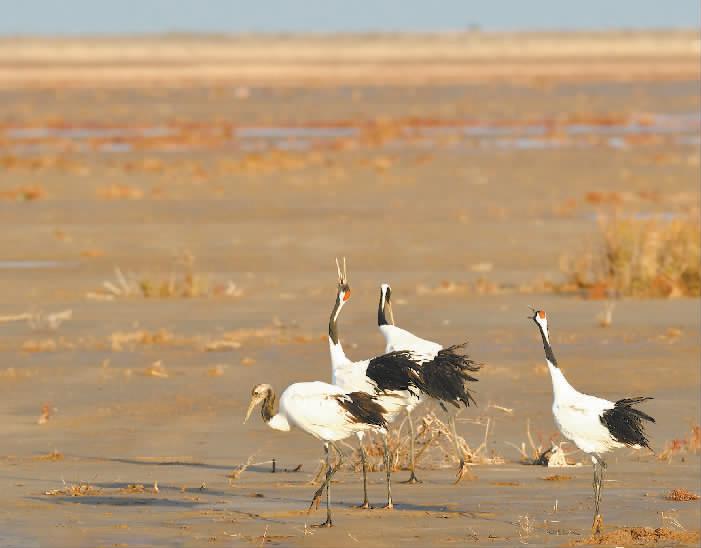
Core Viewpoint - The article highlights the resurgence of the critically endangered Chinese Crested Tern, symbolizing hope for biodiversity along China's coastline and the importance of wetland conservation efforts [3][5][7]. Group 1: Bird Conservation - The reappearance of the Chinese Crested Tern in the Minjiang River estuary marks a significant moment in the conservation of this species, which had been absent for 63 years [3]. - The article emphasizes the decline of various shorebird species along the East Asia-Australasia flyway, with many species facing critical threats [5][7]. - Systematic conservation efforts, such as the inclusion of Yellow and Bohai Sea migratory bird habitats in the World Heritage list, are crucial for protecting these species [7]. Group 2: Ecological Balance - The Minjiang River estuary serves as a vital habitat for migratory birds, providing essential resources for their survival during migration [5][8]. - The article discusses the interconnectedness of various species within the coastal ecosystem, highlighting the importance of maintaining ecological balance [7]. - The increase in populations of certain species, such as the Black-headed Gull, indicates positive outcomes from conservation efforts [7]. Group 3: Human Impact and Awareness - The narrative reflects on the human tendency to exploit natural resources, contrasting it with the growing awareness and actions taken towards conservation [7]. - The author calls for reflection on the responsibilities of current generations in preserving biodiversity for future generations [3][5]. - The article suggests that the coastal environment is not only a refuge for birds but also a home for countless marine organisms, emphasizing the need for holistic environmental protection [8].

共护蔚蓝 北部湾生态焕新
Yang Shi Wang· 2026-02-01 11:46
Core Viewpoint - The North Bay is a vital fishing ground and a rich area of marine biodiversity in China's northern South China Sea, facing ecological challenges due to human activities and climate change [1] Group 1: Marine Ecosystem and Biodiversity - The North Bay hosts typical marine ecosystems such as mangroves, seagrass beds, and coral reefs, which are crucial for the survival of various marine species, including key protected species like the Chinese horseshoe crab and the Chinese white dolphin [1][3] - Recent efforts in Guangxi Hepu focus on the artificial cultivation of seagrass beds, which are essential habitats for marine life and contribute to biodiversity [3] - The protection of the Chinese horseshoe crab has shown significant improvement, with a maximum density exceeding 70 individuals per 100 square meters by 2025, nearly five times the 2021 monitoring results [5] Group 2: Conservation Efforts - The Chinese white dolphin, a first-class protected species, is primarily found in the San Niang Bay area of Guangxi Qinzhou, where researchers conduct extensive observation and protection efforts [6] - Local regulations have been established to protect the habitat of the white dolphin, including guidelines for responsible dolphin watching and the separation of industrial development areas from dolphin activity zones [8] - Continuous investigations since 2020 have provided scientific data for the protection of endangered species, with plans to restore 195 kilometers of coastline and over 3,000 hectares of coastal wetlands by 2025, alongside an increase in the population of both the Bryde's whale and the Chinese white dolphin [8]