中科羊草

Search documents
(乡村行·看振兴)内蒙古乡村“一株草”染绿盐碱地 农牧民收获“意外之喜”
Xin Lang Cai Jing· 2026-01-10 11:13
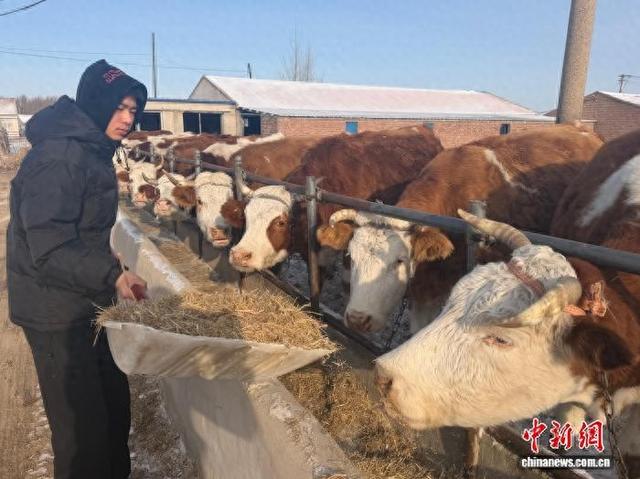
Core Viewpoint - The introduction of "sheep grass" in Inner Mongolia's saline-alkali land has led to ecological improvement and unexpected financial benefits for local herders, showcasing a successful model of agricultural innovation and collaboration between Beijing and Inner Mongolia [1][4][8]. Group 1: Agricultural Innovation - The region of Tongliao, known for its beef cattle, faces a "more cattle, less grass" dilemma, leading to high costs for purchasing quality forage [3][4]. - The introduction of "sheep grass," a high-protein forage that can thrive in saline-alkali conditions, has been identified as a solution to both improve cattle nutrition and rehabilitate degraded land [4][5]. - A collaborative model involving research, corporate investment, and local farmers has been established, transforming the agricultural landscape from individual efforts to a cooperative approach [4][6]. Group 2: Economic Benefits - The first batch of sheep grass planted in 2023 has resulted in significant ecological changes, with improved soil conditions and increased grassland coverage [5][6]. - Farmers have reported substantial savings on feed costs, with one farmer noting a yield of over 40,000 pounds of dry grass from 62 acres of saline-alkali land [5][6]. - The financial model includes profit-sharing for local residents, with each household potentially earning around 4,000 yuan from the project, enhancing their economic situation [6][8]. Group 3: Future Prospects - The establishment of a 40,000-acre sheep grass base has led to the development of related industries, including forage processing and organic fertilizer production, promoting a circular agricultural economy [8]. - Local government officials express intentions to further innovate and optimize support cooperation, aiming for standardization and branding of the sheep grass industry [8].

北京市朝阳区为通辽市留下一座“草银行”
Xin Lang Cai Jing· 2026-01-08 20:05
Core Viewpoint - The article highlights the successful implementation of a sustainable agricultural model in the Saihan District of Inner Mongolia, focusing on the introduction of "Zhongke grass" to combat land degradation and improve local livestock farming [2][3][4]. Group 1: Ecological and Economic Challenges - The region faces severe land degradation, with over 5,000 acres of grassland suffering from salinization and desertification, impacting local livestock farming and leading to high feed costs for farmers [2][3]. - The local economy, particularly in livestock farming, is heavily reliant on external feed sources, which increases operational costs for farmers [2][3]. Group 2: Introduction of Zhongke Grass - In 2022, a pilot project was initiated to cultivate Zhongke grass on 1,000 acres, utilizing a collaborative model involving research institutions, local government, and farmers [3]. - The grass has a long lifespan of nearly 30 years and is effective in improving saline-alkali land, while also serving as high-quality feed for livestock [2][3]. Group 3: Economic Impact and Job Creation - By 2025, the project aims to cover 40,000 acres with Zhongke grass, creating over 300 local jobs and stabilizing annual income at over 500 yuan per acre [4]. - The initiative has led to significant cost savings for farmers, reducing feed expenses from approximately 5,000 yuan to just 7 yuan per bundle for mechanical costs [3][4]. Group 4: Ecotourism Development - The restored grasslands have become a tourist attraction, with over 50,000 visitors in the summer of 2024, generating over 8 million yuan in local economic activity [4]. - The project serves as a model for integrating ecological restoration with economic development, showcasing the potential for replicable rural revitalization strategies [4][5].
北京送到内蒙古的一株羊草,入选了全球最佳减贫案例
Xin Lang Cai Jing· 2026-01-03 22:19
Core Insights - The introduction of "Zhongke Sheep Grass" in Chaoyang District has significantly improved agricultural productivity in Inner Mongolia's Kezuohouqi, with each acre generating over 1,000 yuan in additional income [1][2] - The project has been recognized as one of the top global poverty alleviation cases, showcasing the effectiveness of collaborative efforts between research institutions, enterprises, and local communities [1] Group 1 - The "Zhongke Sheep Grass" variety, developed by the Chinese Academy of Sciences, is drought-resistant, salt-tolerant, and can survive for nearly 30 years after a single planting [2] - Before the project, saline-alkali land in Kezuohouqi experienced an average annual yield reduction of 40%, leading to direct economic losses of 230 million yuan [1] - The project has led to the cultivation of approximately 40,000 acres of sheep grass, with over 50 million yuan invested in collaborative efforts between Beijing and Inner Mongolia [1][3] Group 2 - The innovative profit-sharing model involves research institutions providing seeds and technology, enterprises managing operations, and local communities investing in facilities and pastureland [2] - The cost of planting sheep grass ranges from 800 to 1,200 yuan per acre, which initially deterred farmers and enterprises due to high upfront costs [2] - The sheep grass cultivation has resulted in improved soil pH levels, increased vegetation coverage, and restoration of degraded saline-alkali land [1][3]
“中科羊草”以科技助力生态治理
Xin Lang Cai Jing· 2025-12-22 20:23
Core Insights - The project of introducing "Zhongke Sheep Grass" in Chaoyang District has been recognized as a successful case in global poverty alleviation, significantly improving vegetation coverage and restoring saline-alkali land [1][2] Group 1: Project Overview - The project aims to combat soil salinization, which previously caused an annual economic loss of 230 million yuan in the Keshiketeng Banner [1] - The initiative has led to the promotion of approximately 40,000 acres of sheep grass planting in Inner Mongolia, with over 50 million yuan invested from the Beijing-Mongolia cooperation fund [1][2] Group 2: Economic Impact - The average yield per acre of sheep grass is significantly higher than traditional forage, with an additional income of over 1,000 yuan per acre once the grass reaches maturity [2] - The project has created around 300 job opportunities for local residents, enhancing their income and employment prospects [2][3] Group 3: Technical Aspects - "Zhongke Sheep Grass" is a high-quality variety developed by the Chinese Academy of Sciences, known for its adaptability, drought resistance, and ability to thrive in saline-alkali conditions [2][4] - The grass can survive for nearly 30 years after a single planting, offering a long-term solution for ecological restoration [2] Group 4: Implementation Strategy - The project employs a targeted model that does not require herders to invest, with government funding for infrastructure and professional companies managing planting [3] - Herders receive subsidies and can participate in profit-sharing once the grass generates income, ensuring their existing income is not reduced [3] Group 5: Cost Efficiency - The cost of the "Zhongke Sheep Grass" management system is 55% lower than traditional methods, with a longer improvement cycle of 8 to 10 years [4] - This ecological enhancement model provides a viable solution for saline-alkali land management globally [4]
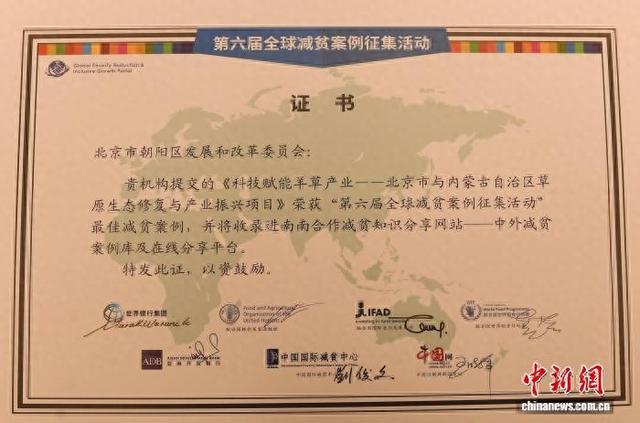
北京朝阳科技赋能羊草产业入选全球最佳减贫案例
Zhong Guo Xin Wen Wang· 2025-12-11 13:53
Core Viewpoint - The "Sheep Grass Planting Project" in Chaoyang District, Beijing, has been recognized as a successful case in global poverty alleviation, showcasing the integration of technology and industry collaboration to enhance ecological governance and increase local income [1][7]. Group 1: Project Overview - The project aims to combat soil salinization in the Keshiketeng Banner, where salinization has caused an average annual crop yield loss of 40%, equating to a direct economic loss of 230 million yuan [1][2]. - The project has introduced the "Zhongke Sheep Grass," a high-quality variety developed by the Chinese Academy of Sciences, which is well-suited for saline-alkali land and can survive for nearly 30 years after a single planting [3][8]. Group 2: Economic Impact - The project has led to an increase in local income, with an average additional income of over 1,000 yuan per mu (approximately 0.067 hectares) once the sheep grass reaches maturity [2][4]. - Approximately 300 local residents have been employed through the project, contributing to job creation and economic development in the region [2][4]. Group 3: Implementation Strategy - A four-party collaboration mechanism has been established, involving research institutions, enterprises, local collectives, and farmers, to ensure effective project implementation [2][4]. - The project provides financial support to farmers, including subsidies for land use and guaranteed income increases, while also offering training in sheep grass cultivation techniques [4][5]. Group 4: Environmental Benefits - The project has significantly improved soil conditions, with a decrease in soil pH and an increase in vegetation coverage, contributing to the restoration of degraded saline-alkali land [2][8]. - The ecological restoration model developed through this project demonstrates a dual benefit of economic gain and environmental improvement, aligning with the United Nations Sustainable Development Goals [8][9]. Group 5: Future Prospects - The success of the "Zhongke Sheep Grass" project is expected to inspire further innovations in ecological governance and rural development, contributing to the construction of a significant ecological safety barrier in northern China [8][9]. - The Chaoyang District plans to continue enhancing the project by improving production and marketing connections, aiming for standardization and branding of the sheep grass industry [9].