
京蒙协作

Search documents
京蒙携手为兴安盟乡村振兴注入强劲动能
Xin Lang Cai Jing· 2026-01-14 20:46
Core Viewpoint - The collaboration between Beijing and the Xing'an League has significantly contributed to rural revitalization and economic development in the region, showcasing a successful model of inter-regional cooperation and resource sharing [4][5][15]. Group 1: Economic Development and Investment - Since the initiation of the Beijing-Xing'an collaboration in 2017, a total of 2.7 billion yuan has been invested in various projects, resulting in 982 implemented projects across multiple sectors including industry cultivation, consumption promotion, employment support, talent exchange, and cultural tourism integration [5][8]. - The collaboration has led to the establishment of key projects such as the Alshan Deer Horn Bay Hot Spring Resort and the Zhalai Nuoer Beef Industry Cluster, which have bolstered local economies and created significant employment opportunities [8][15]. - The tourism sector in Alshan has seen a remarkable increase, with 6.14 million visitors and total tourism revenue reaching 7.68 billion yuan from January to October 2025, marking substantial year-on-year growth [6][8]. Group 2: Agricultural and Seafood Development - The collaboration has also focused on modern facility aquaculture, with an investment of 20.4 million yuan supporting the establishment of a seafood farming project in the Keshiketeng Banner, which is expected to fill local industry gaps and provide fresh seafood to the market [7][8]. - The Xing'an League has successfully developed a comprehensive agricultural product marketing strategy, resulting in 7.3 million tons of rice sold in Beijing, generating sales of 1 billion yuan, and establishing a pathway for agricultural product upgrades [10][12]. Group 3: Employment and Skills Training - The collaboration has facilitated the creation of 51,000 job opportunities through various recruitment events and skills training programs, significantly enhancing local employment rates [11][12]. - A total of 2,769 rural laborers have received targeted skills training, contributing to the development of labor brands such as "Xing'an Housekeeping" and "Tuqian Welder" [12][13]. Group 4: Education and Healthcare - The partnership has led to the integration of educational resources, with 652 Beijing support personnel aiding in the development of 160 local schools, benefiting over 50,000 students [13][15]. - In healthcare, 389 Beijing medical experts have provided assistance to local hospitals, enhancing the quality of medical services and establishing a sustainable healthcare workforce in the region [13][15]. Group 5: Cultural and Tourism Integration - The collaboration has promoted cultural tourism by developing attractive rural areas and creating a comprehensive tourism route that has gained recognition and increased visitor numbers [14][15]. - Various promotional activities have been conducted to enhance the visibility of Xing'an products in major markets, resulting in significant sales and partnerships with businesses in Beijing [10][15].

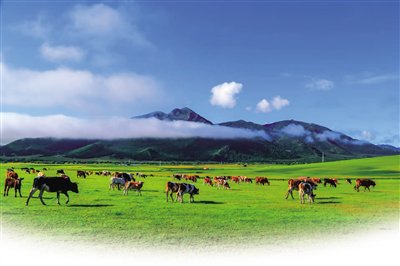
15载区域协作,北京助塞北小城“命运转折”
Xin Lang Cai Jing· 2026-01-10 10:14
Core Viewpoint - The collaboration between Beijing and Inner Mongolia, known as "京蒙协作," has significantly transformed the economic landscape of the small city of Balinzuoqi over the past 15 years, fostering local industries and enhancing self-sufficiency [3][4][7]. Group 1: Economic Development - Balinzuoqi has developed 11 pillar industries, a notable increase compared to the typical 2-3 industries in similar regions, due to the support from "京蒙协作" [3]. - The total funding directed towards Balinzuoqi from the collaboration has exceeded 700 million yuan, facilitating the establishment of 216 projects focused on specialty industry development and labor assistance [3][4]. - The introduction of advanced management practices and market perspectives has led to the establishment of production facilities, such as six broom-making factories and a fresh corn industry in Halahada Town [4][6]. Group 2: Community Impact - Local entrepreneurs, like Wang Feng, have seen their businesses thrive, with his mineral water factory's sales increasing significantly, now 80% of which come from Beijing [6]. - The collaboration has empowered local residents, providing opportunities for many to become business owners, transforming their economic prospects [6][7]. - The sentiment among local officials and entrepreneurs reflects a deep emotional connection and commitment to mutual success, emphasizing the collaborative spirit of the initiative [6].
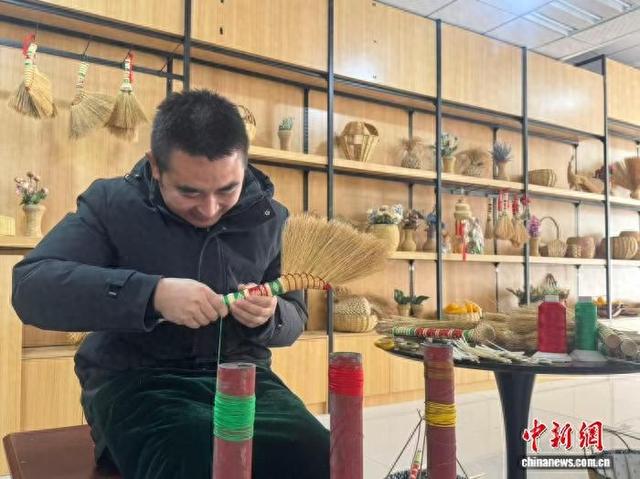
北京市朝阳区为通辽市留下一座“草银行”
Xin Lang Cai Jing· 2026-01-08 20:05
Core Viewpoint - The article highlights the successful implementation of a sustainable agricultural model in the Saihan District of Inner Mongolia, focusing on the introduction of "Zhongke grass" to combat land degradation and improve local livestock farming [2][3][4]. Group 1: Ecological and Economic Challenges - The region faces severe land degradation, with over 5,000 acres of grassland suffering from salinization and desertification, impacting local livestock farming and leading to high feed costs for farmers [2][3]. - The local economy, particularly in livestock farming, is heavily reliant on external feed sources, which increases operational costs for farmers [2][3]. Group 2: Introduction of Zhongke Grass - In 2022, a pilot project was initiated to cultivate Zhongke grass on 1,000 acres, utilizing a collaborative model involving research institutions, local government, and farmers [3]. - The grass has a long lifespan of nearly 30 years and is effective in improving saline-alkali land, while also serving as high-quality feed for livestock [2][3]. Group 3: Economic Impact and Job Creation - By 2025, the project aims to cover 40,000 acres with Zhongke grass, creating over 300 local jobs and stabilizing annual income at over 500 yuan per acre [4]. - The initiative has led to significant cost savings for farmers, reducing feed expenses from approximately 5,000 yuan to just 7 yuan per bundle for mechanical costs [3][4]. Group 4: Ecotourism Development - The restored grasslands have become a tourist attraction, with over 50,000 visitors in the summer of 2024, generating over 8 million yuan in local economic activity [4]. - The project serves as a model for integrating ecological restoration with economic development, showcasing the potential for replicable rural revitalization strategies [4][5].
告别“马路等活”,两地携手推动零工群体“市场选岗”
Xin Lang Cai Jing· 2026-01-01 19:47
Core Insights - The collaboration between Tongzhou District in Beijing and Naiman Banner in Inner Mongolia has significantly improved labor cooperation and employment services over the past five years, benefiting over 13,000 farmers and impoverished individuals [1][2] Group 1: Employment Service Development - A modern labor market covering 300 square meters has been established in Naiman Banner, serving as a connection point for employers and job seekers [1] - In 2023, Tongzhou allocated 300,000 yuan to support the construction of the labor market and employment service stations in Naiman Banner, which officially began operations on May 17, 2023 [2] - The market features three functional areas: comprehensive service area, labor waiting area, and life service area, creating a public employment guarantee platform [2] Group 2: Operational Mechanisms - A "employment coordinator + grid worker" service mechanism has been established to address information asymmetry in employment services, consisting of 15 employment coordinators and 217 grid workers [3] - The grid workers collect job-seeking and recruitment information monthly, which is then categorized and matched at the labor market, forming an invisible employment supply-demand information network [3][4] Group 3: Service Network Expansion - A three-tier service network comprising "central market + stations + workshops" has been developed to provide employment assistance, especially targeting special groups [5] - By August 2025, 4,500 job placements were achieved through labor stations and community workshops, with over 120,000 yuan in wages distributed to more than 290 special group members [5] Group 4: Digital Integration - The introduction of an online labor service system and the "Tongliao Labor" WeChat mini-program has enhanced job information accessibility for job seekers [6] - Weekly live-streaming recruitment sessions have been conducted, attracting over 105,000 viewers and significantly improving job matching efficiency [6] - The integration of online and offline services has led to an average daily consultation of 30 people at the labor market, with job postings and recommendations increasing significantly [6]
顺义的京蒙协作新答卷
Xin Lang Cai Jing· 2025-12-20 01:35
Core Viewpoint - The collaboration between Beijing and Inner Mongolia is enhancing logistics, agricultural product sales, and local employment, showcasing a successful model of mutual benefit and development [1][9]. Group 1: Logistics and Agricultural Products - The "Beijing Shunyi Logistics Transfer Warehouse" in Zhaoquanying Town has become a crucial hub connecting high-quality agricultural products from Inner Mongolia to the Beijing market, reducing delivery costs by 35% [1]. - By 2025, the logistics center will feature 20 categories and 380 products, with over 30 enterprises participating and partnerships with major platforms like JD.com and Taobao [3]. Group 2: Technological Advancements in Agriculture - The introduction of enzyme fermentation feed technology is transforming traditional livestock farming, improving feed conversion rates and reducing costs by approximately 1,200 yuan per cow annually [7]. - This technology is being applied to 12,846 cattle across multiple towns and villages, enhancing immunity and meat quality, thus supporting rural revitalization [7]. Group 3: Employment and Economic Development - In 2025, Shunyi District allocated 149 million yuan for 33 assistance projects, resulting in 7.3 billion yuan in sales of Inner Mongolian agricultural products and creating over 6,000 local jobs [1][9]. - The collaboration has led to significant investments, with 8,760 million yuan brought in by teams working in Ba Lin Zuoqi, creating local employment opportunities [9]. Group 4: Cultural and Educational Exchange - Educational initiatives include sending 43 teachers from Shunyi to Inner Mongolia and receiving 73 local educators for training, fostering strong emotional connections between teachers and students [13]. - Cultural promotion activities have increased tourism and consumption in key scenic areas, with a 15% rise in visitor numbers and nearly one million yuan in increased cultural spending [11]. Group 5: Healthcare Collaboration - The healthcare partnership involves sending 34 medical professionals to Inner Mongolia and receiving 48 local staff for training, improving medical services and filling gaps in various specialties [15]. - The collaboration has led to the standardization of treatment processes and the introduction of new medical technologies in local hospitals [15].
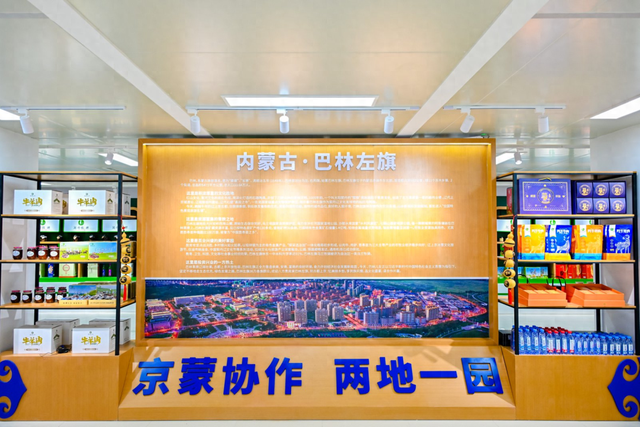
“京蒙协作”送医上门 内蒙古东部小城享首都诊疗服务
Zhong Guo Xin Wen Wang· 2025-12-14 01:19
Core Insights - The "Jing-Mong Cooperation" medical service initiative has successfully provided healthcare support to the residents of Hohhot, Inner Mongolia, with over 300 patients treated during a recent event [1][2][3] - The collaboration between Beijing and Inner Mongolia has been ongoing for 29 years, resulting in significant improvements in local healthcare capabilities, including the establishment of 92 clinical specialties and the introduction of over 1,051 new medical technologies [2][3] Group 1 - The recent medical service event included 11 experts from Beijing's top hospitals who provided consultations, training, and health education to local residents [1] - Patients reported significant improvements in their health conditions after receiving treatment from Beijing experts, highlighting the effectiveness of the initiative [1] - Local healthcare professionals benefited from hands-on training and shared knowledge from visiting experts, enhancing their skills in managing complex health issues [1][2] Group 2 - The "Jing-Mong Cooperation" has facilitated the exchange of over 12,000 medical professionals from Inner Mongolia to Beijing for training, and more than 3,500 Beijing medical experts have provided assistance in the region [2] - The initiative aims to create a sustainable healthcare model by establishing long-term interactive guidance mechanisms between the two regions [3] - The ongoing collaboration is expected to further enhance the quality of medical services available to local residents, making access to expert care more routine [3]
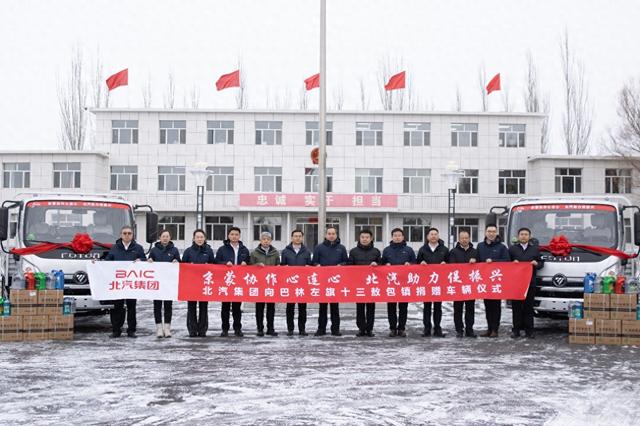
京蒙协作创新务实 北汽集团以产业赋能绘就乡村振兴新画卷
Huan Qiu Wang· 2025-11-28 09:11
Group 1 - The core idea of the news is the collaboration between Beijing and Inner Mongolia, marked by a donation event led by the Beijing Shunyi District Government and BAIC Group, aimed at exploring new paths for east-west cooperation and demonstrating the commitment of state-owned enterprises to national strategies [1][3][5]. Group 2 - The event breaks traditional assistance models by focusing on the actual needs of rural areas, promoting precise resource allocation, and enhancing logistics capabilities through the donation of vehicles, which serve as tools for agricultural production and market connectivity [3][6]. - BAIC Group integrates social responsibility into its development strategy, donating vehicles and educational materials, and supporting the sale of handicrafts made by special needs children, showcasing a combination of humanitarian care and market mechanisms [5][6]. - The two donated vehicles symbolize the reduction of urban-rural disparities and the promotion of common prosperity, with BAIC Group planning to continue leveraging its industrial and resource advantages to support sustainable development in western regions [6].

京蒙协作推动乡村产业振兴
Zhong Guo Jing Ji Wang· 2025-11-18 02:45
Core Insights - The "Jing-Mong" Carnival held in Beijing represents the collaboration between Zhalaietai Banner and Beijing to promote rural revitalization [1] - Zhalaietai Banner has benefited from the East-West cooperation strategy, receiving support in various sectors such as industry, education, healthcare, and cultural tourism [1] - The collaboration aims to leverage Beijing's financial, technological, and market advantages alongside Zhalaietai's ecological and cultural resources to achieve high-quality development [1] Industry and Company Developments - Zhalaietai Banner has an annual grain production exceeding 4.7 billion jin, making it a significant grain-producing county and a key base for green agricultural and livestock product processing [2] - Under the Jing-Mong collaboration, Zhalaietai Banner focuses on the large-scale, standardized, and clustered development of the beef cattle industry, establishing a complete industrial chain from breeding to sales [2] - The number of beef cattle in Zhalaietai Banner increased from 380,000 in 2022 to 560,000, with over 42,000 households engaged in breeding [2]
直供京津冀,呼伦贝尔优质农畜林产品在京签约落地
Xin Jing Bao· 2025-11-08 04:01
Group 1 - The core event was the promotion conference for high-quality agricultural and livestock products from Hulunbuir, held at Beijing Xinfadi Market, which aims to enhance the supply of "Prairie Quality Products" to the Beijing-Tianjin-Hebei market [1] - The event showcased 155 unique products from 37 enterprises across 11 banners and districts, featuring a tasting area to facilitate direct engagement between suppliers and buyers [1] - Ten leading enterprises from Hulunbuir signed procurement intentions with six core buyers from Beijing, covering key categories such as beef, lamb, grains, oils, and specialty forest products [1] Group 2 - A representative from Hulunbuir stated that the conference serves as a new starting point to expand industrial cooperation and improve long-term production and sales connection mechanisms [2] - The initiative aims to bring more high-quality products from the grasslands into the homes of consumers in the Beijing-Tianjin-Hebei region, achieving a win-win effect of increased industrial efficiency, farmer income, and consumption upgrades [2]
京蒙协作再结硕果呼伦贝尔人才科创中心在北京启动
Nei Meng Gu Ri Bao· 2025-10-22 01:21
Core Points - The Hohhot Talent Sci-Tech Innovation Center (Beijing) was officially launched on October 20, marking a significant step for Hohhot in integrating into the Beijing-Tianjin-Hebei coordinated development strategy [1][2] - The center aims to leverage Beijing's technological advantages and Hohhot's industrial characteristics to create a demand-driven, market-oriented mechanism for technology transfer [1] - The center will enhance flexible talent recruitment models and improve service support systems to inject continuous intellectual support and innovative momentum into the modernization of Hohhot [1] Summary by Sections - **Launch and Purpose** - The center serves as an important platform for deepening cooperation between Beijing and Inner Mongolia, facilitating the integration of high-quality sci-tech resources [1][2] - **Collaboration and Agreements** - During the launch event, various research institutions and enterprises, including the Wang Hanzhong Academy team and Hohhot Academy, engaged in discussions and signed multiple cooperation agreements [1] - The Hohhot Agricultural Science Research Institute signed agreements with several seed companies, indicating a focus on agricultural innovation [1] - **Technological Achievements** - Eight technological achievements in the fields of medicine and agriculture were announced, showcasing the center's initial success in promoting technology transfer and industry collaboration [1]