
中镍高电压三元前驱体

Search documents
深度 | 一文说清“中试平台”:如何打通技术到市场最后一公里!
证券时报· 2026-01-26 00:22
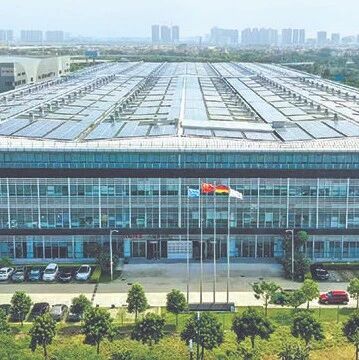
Core Viewpoint - The article discusses the emergence of "pilot testing platforms" in China's manufacturing industry, which serve as crucial facilitators for the transition of scientific innovations from the lab to mass production, effectively navigating the challenges of the "Darwinian Dead Sea" in technology commercialization [1][4]. Group 1: Pilot Testing Platforms - Pilot testing platforms are essential for overcoming the technical bottlenecks in large-scale production, allowing for efficient product validation and market acceptance [1]. - These platforms are characterized by their large physical space and significant investment in advanced equipment, enabling comprehensive testing and development across various technologies [5][6]. - The advanced photovoltaic device pilot testing platform by Tongwei has a total area of 68,000 square meters, making it the largest in the photovoltaic industry, capable of parallel research and development of multiple technologies [5][6]. Group 2: Role in Innovation - Pilot testing platforms act as "scouts" for new technologies, enabling companies to explore and develop next-generation technologies while maintaining production efficiency [10]. - They serve as "demolition experts" that help overcome technical challenges in product manufacturing, such as achieving high yield and stability in battery materials [11]. - These platforms also function as "training grounds" for products before they enter the market, allowing for full-process validation and optimization [12]. Group 3: Industry Collaboration and Ecosystem - The platforms are increasingly recognized in national policies, emphasizing their role as "locomotives" for industrial development and collaboration [15]. - By opening their capabilities to the industry, these platforms can drive collaborative innovation and enhance the overall level of the supply chain [15][16]. - The establishment of an ecosystem that includes research and development, incubation, and investment is crucial for fostering technological innovation and market expansion [16]. Group 4: Challenges Faced - The construction and operation of pilot testing platforms face significant challenges, including technical integration, funding, talent acquisition, and trust issues [18][20]. - High investment costs and uncertain returns pose economic challenges, as the platforms require substantial funding for equipment and facilities [20][21]. - The scarcity of skilled personnel who can manage the complex operations of these platforms is a major bottleneck [22][23].


格林美(002340):核心产量出货增长 镍产能持续扩张
Xin Lang Cai Jing· 2025-04-29 02:43
Core Insights - The company reported a revenue of 33.2 billion yuan for 2024, representing an 8.75% year-over-year increase, and a net profit attributable to shareholders of 1.02 billion yuan, up 9.19% year-over-year [1] - The company experienced significant growth in core product shipments, particularly in the battery materials sector, with a notable increase in profitability [2] - Nickel production capacity continues to expand, positioning the company among the top three in global MHP nickel production capacity [3] - Earnings per share (EPS) forecasts for 2025-2027 have been adjusted downward, but the company maintains a positive outlook on future nickel capacity expansion [4] Financial Performance - In Q4 2024, the company achieved a revenue of 8.33 billion yuan, a decrease of 19.15% year-over-year but an increase of 10.53% quarter-over-quarter [1] - The company's comprehensive gross margin improved by 3.05 percentage points to 15.29% in 2024, with specific product gross margins also showing increases [2] Product and Market Developments - The company’s core product, ternary precursor materials for power batteries, saw a shipment volume of 189,000 tons in 2024, a 5% increase year-over-year [2] - The sales of nickel resources are set to increase significantly due to a new investment project in Indonesia, which will produce 66,000 tons of nickel annually [3] Production Capacity and Expansion - The company produced 51,677 tons of nickel metal in 2024, a 91% increase year-over-year, and has established a nickel resource capacity of 150,000 tons per year in Indonesia [3] - Future plans include increasing nickel resources from over 120,000 tons to over 216,000 tons by 2025-2027 [3] Valuation and Forecast - The company’s EPS estimates for 2025-2027 have been revised to 0.31, 0.47, and 0.73 yuan, reflecting a downward adjustment [4] - The target price for the company is set at 6.86 yuan, based on a projected price-to-book (PB) ratio of 1.70 for 2025 [4]
格林美2024年财报:新能源材料业务领跑,净利润增长9.19%
Sou Hu Cai Jing· 2025-04-29 01:14
Core Insights - The company reported a total revenue of 33.2 billion yuan in 2024, marking an 8.75% year-on-year increase, and a net profit attributable to shareholders of 1.02 billion yuan, up 9.19% year-on-year [1] - Despite significant progress in new energy materials and urban mining operations, the company faced operational pressure as revenue and net profit declined sequentially in the fourth quarter [1][8] New Energy Materials Business - The new energy materials segment showed strong performance with an average capacity utilization rate exceeding 95%, significantly above the industry average [4] - The total shipment of ternary precursor materials for power batteries reached 189,000 tons, a 5% increase year-on-year, maintaining a top two position globally [4] - Sales of nickel-rich high-voltage ternary precursors grew by 66% to 44,000 tons, indicating the company's leading position in high-voltage precursor technology [4] - Cobalt oxide sales reached 20,664 tons, an 88% increase, capturing over 25% of the global supply, and the company achieved a 102% year-on-year growth in cathode material shipments [4] - Despite strong performance, the fourth quarter saw a 19.2% and 69.9% sequential decline in revenue and net profit, respectively, highlighting short-term market demand fluctuations [4] Urban Mining Operations - The urban mining segment experienced significant growth, particularly in battery recycling and tiered utilization, with revenue from battery recycling rising substantially [5] - The company recycled and dismantled 35,930 tons of power batteries, a 31% increase, equivalent to 4.31 GWh, which is a 41% year-on-year growth [5] - Lithium carbonate recovery exceeded 4,000 tons, with a growth rate of over 44% and a lithium recovery rate surpassing 95% [5] - Tungsten recovery reached 6,486 tons, a 39% increase, and cobalt product sales grew by 76% to 12,557 tons, maintaining over 50% of the global market share for ultra-fine cobalt powder [6] - The scrap vehicle business also saw significant growth, with total recovery reaching 280,000 tons, a 133% increase [6] - However, the fourth quarter net profit for this segment declined by 20.95%, indicating short-term profitability challenges [6] Nickel Resource Development - The company achieved a global output of 51,677 tons of nickel metal, a 91% year-on-year increase, and established a nickel resource capacity of 150,000 tons per year in Indonesia [7] - The company ranks among the top three globally in MHP nickel production capacity, with 110,000 tons controlled and 40,000 tons in joint ventures [7] - The company successfully launched the world's first 1,168m³ high-pressure hydrometallurgical reactor, achieving world-class operational and product quality metrics while significantly reducing carbon emissions [7] - Despite these advancements, the fourth quarter saw a 1250.90% sequential decline in non-recurring net profit, indicating ongoing profitability pressures in this segment [7] Summary - The company achieved revenue and net profit growth in 2024 through its dual-driven strategy in new energy materials and urban mining operations [8] - However, the performance fluctuations in the fourth quarter reveal operational pressures that the company must address to enhance profitability and navigate increasing market competition and economic uncertainties [8]

格林美(002340):核心产量出货增长,镍产能持续扩张
HTSC· 2025-04-27 09:57
Investment Rating - The report maintains an "Accumulate" rating for the company with a target price of RMB 6.86 [7][8]. Core Insights - The company achieved a revenue of RMB 33.2 billion in 2024, representing a year-over-year increase of 8.75%, and a net profit attributable to shareholders of RMB 1.02 billion, up 9.19% year-over-year [1]. - The core product shipments, particularly for nickel and battery materials, have shown significant growth, with the company expanding its nickel production capacity and maintaining a strong market position [2][3]. - The gross margin improved by 3.05 percentage points to 15.29% in 2024, driven by increased sales and improved profitability across various product lines [2]. Summary by Sections Revenue and Profitability - In 2024, the company reported a revenue of RMB 33.2 billion, with a year-over-year growth of 8.75%. The net profit attributable to shareholders was RMB 1.02 billion, reflecting a 9.19% increase [1]. - The company’s core product, the ternary precursor materials for power batteries, saw a shipment volume of 189,000 tons, a 5% increase year-over-year, solidifying its position among the top two globally [2]. Production Capacity and Expansion - The company produced 51,677 tons of nickel metal in 2024, marking a 91% increase year-over-year. It has established a nickel production capacity of 150,000 tons per year in Indonesia, ranking among the top three globally in MHP nickel production capacity [3]. - A significant investment of USD 1.42 billion was made in a hydrometallurgical project in collaboration with Vale Indonesia, aimed at producing 66,000 tons of nickel resources annually [3]. Financial Forecast and Valuation - The earnings per share (EPS) for 2025-2027 are projected to be RMB 0.31, RMB 0.47, and RMB 0.73, respectively. The price-to-book (PB) ratio for 2025 is estimated at 1.70, with a target price of RMB 6.86 [4][6]. - The company’s revenue is expected to grow significantly, with forecasts of RMB 42.18 billion in 2025, RMB 52.18 billion in 2026, and RMB 64.24 billion in 2027, reflecting a robust growth trajectory [6][12].