
乡村振兴畜禽贷

Search documents
甘肃:让“活资产”可抵押 破解“带毛不算”融资难
Sou Hu Cai Jing· 2026-02-28 03:24
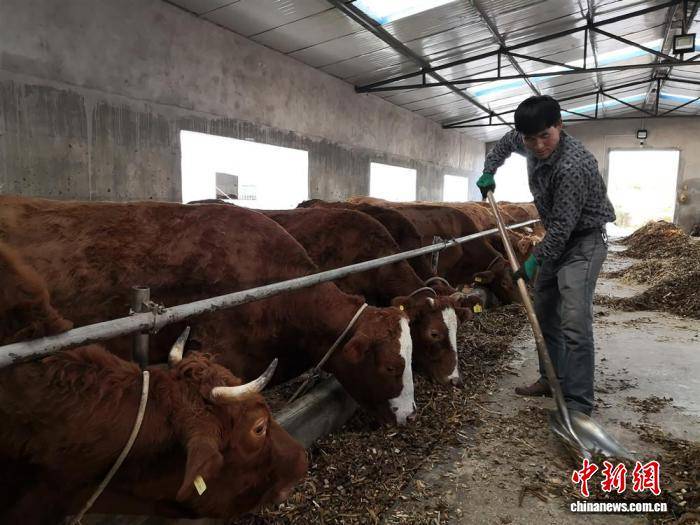
Core Viewpoint - The introduction of a new policy in Gansu aims to transform agricultural facilities and livestock into effective financial assets, addressing long-standing financing challenges in the agricultural sector [1][5]. Group 1: Policy Implementation - The People's Bank of China Gansu Branch, in collaboration with multiple departments, issued a notification to promote financing through agricultural facilities and livestock collateral [1]. - The policy focuses on resolving the issues of asset ownership and valuation for agricultural facilities like greenhouses and livestock, which have historically been excluded from traditional financing [3][4]. Group 2: Asset Valuation and Risk Management - The notification emphasizes the establishment of a value assessment mechanism, allowing financial institutions to use various methods for asset valuation and to provide fair market references [4]. - It encourages innovative risk-sharing models, such as combining collateral with policy guarantees and insurance, while also promoting the use of IoT platforms for dynamic monitoring of collateral assets [4]. Group 3: Technological Integration - The policy introduces technology, such as electronic ear tags and smart collars, to create unique digital identities for livestock, enabling real-time data collection on their health and location [3][4]. - This technological advancement allows livestock to be recognized as "digital assets," facilitating their use as collateral for loans [3][7]. Group 4: Financial Accessibility and Support - The implementation of the policy is expected to enhance the accessibility and convenience of financing for agricultural operators, thereby directing financial resources to the agricultural sector [7]. - Gansu plans to adopt a "one chain, one bank, one policy" service model to establish specialized financial service teams for key agricultural industries [7][8].

甘肃张掖:信用转化为融资资本 多点破解小微企业融资难题
Zhong Guo Fa Zhan Wang· 2025-11-24 04:15
Core Insights - Zhangye City in Gansu Province is focusing on addressing the financing challenges faced by small and micro enterprises by building a diversified financing service system to effectively support business development [1][2] Financing Initiatives - The city has implemented a "silver-tax interaction" mechanism, allowing enterprises to convert their tax credit into financing capital, resulting in 3,817 small and micro enterprises receiving a total of 1.687 billion yuan in loans [1] - Financial institutions are customizing innovative financing products tailored to local industry characteristics, such as the first "de-core chain loan" of 850,000 yuan for a public hospital's upstream pharmaceutical suppliers [1] Agricultural Financing - Various products like "live loans," "Hexi Corridor seed industry loans," and "rural revitalization livestock and poultry loans" have been introduced to alleviate financing difficulties for agricultural operators [2] - The total balance of green loans in the city reached 18.687 billion yuan, with a growth rate exceeding the average growth rate of all loans by 3.78 percentage points [2] Technology and Innovation Financing - Products such as "Sci-Tech E-loan" and "Xinglong Intellectual Property Loan" provide rapid credit services to enterprises, with 56 companies receiving a total of 314 million yuan through patent pledges [2] Government Support - The Gansu Jinkong Zhangye Guarantee Company has provided guarantees totaling 839 million yuan for 277 operating entities from January to October this year [2] Future Outlook - By October 2025, the loan balance for small and micro enterprises in Zhangye City is expected to reach 51.245 billion yuan, reflecting a year-on-year growth of 7.03%, which will invigorate business vitality [2]

擦亮普惠金融发展示范区名片
Jin Rong Shi Bao· 2025-09-16 02:23
Core Insights - Gansu Province's Wuwei City is innovating in inclusive finance, with a focus on supporting rural economic development through various financial policies and mechanisms [1][2][3] Group 1: Financial Development Initiatives - The People's Bank of China in Wuwei has implemented a combination of policies including "re-loans + loan interest subsidies + fund rewards + risk compensation" to enhance inclusive finance [1] - As of July, the total loan balance in Gulang County reached 15.012 billion, a year-on-year increase of 10.22%, with inclusive micro-loans at 1.931 billion, up 12.43% [1] - The Gulang Rural Commercial Bank's re-loan balance for supporting agriculture and small enterprises reached 251 million, 2.1 times its original credit limit, benefiting market entities with a total of 7.16 million in savings this year [2] Group 2: Policy Support and Implementation - A comprehensive implementation plan for high-quality development of inclusive finance was jointly developed by the People's Bank of China and multiple departments, focusing on enhancing credit supply and reducing costs [2] - Gulang County has issued 330 million in industry reward funds since 2022, and in 2024, it initiated fresh milk price insurance, providing 14.26 million in insurance claims to support farmers [3] Group 3: Agricultural and Livestock Industry Support - The financial support has significantly bolstered the livestock industry, with loans for the sheep and cattle breeding sector reaching 3.834 billion, accounting for 25.54% of total loans [4] - Gulang Aomei Sheep Industry Co., Ltd. received a 4 million loan backed by 6,831 sheep, which not only resolved immediate funding issues but also engaged 150 local farmers in sheep breeding [4] Group 4: Financial Services and Accessibility - Financial institutions in Gulang County have launched various products like "Xinglong Entrepreneurship Loan" and "Micro Quick Loan," enhancing financing convenience for different industries [5][6] - The Agricultural Bank of Gulang County provided a 1 million loan to a local plastic products company by using electricity bill data as collateral, showcasing innovative financing solutions [6]
金融活水润泽积石山 重建家园焕发新生机
Jin Rong Shi Bao· 2025-08-08 07:57
Core Viewpoint - The financial support and policies implemented in Jishishan County, Gansu Province, have significantly aided in the recovery and rebuilding efforts following the 6.2 magnitude earthquake on December 18, 2023, helping local residents restore their homes and revitalize local industries [1][2][3]. Financial Support for Housing Reconstruction - The People's Bank of China (PBOC) in Linxia Prefecture has guided financial institutions to focus on post-disaster recovery and industrial revitalization, resulting in an increase of 3.564 billion yuan in loans by June, a growth of 73.59% compared to the end of 2023 [1]. - Financial institutions have issued a total of 5.7 billion yuan in loans to assist 17,000 affected households in rebuilding their homes [1]. - Specific loan products, such as the "5+N" loan model, have been utilized to provide financial assistance to individuals like Zhang Changlu, who received 50,000 yuan to rebuild his home [2][3]. Comprehensive Financial Policies - The PBOC and local government have introduced policies to support housing reconstruction, including a maximum of 50,000 yuan in five-year fully subsidized loans for households rebuilding on their original sites, and up to 100,000 yuan in ten-year fully subsidized loans for those purchasing new homes [3]. - Agricultural Bank of China has played a leading role in providing disaster recovery loans, disbursing 28.9 million yuan to benefit 2,907 affected families [3]. Support for Industrial Revitalization - Financial institutions have shifted focus to support local industries, launching specialized credit products to provide operational funds for affected residents [4]. - The PBOC organized a financial support meeting, resulting in 11 financial institutions signing credit agreements totaling 774 million yuan with 21 local enterprises [5]. - Various innovative loan products have been introduced, such as "Anti-Seismic Recovery Business Loan" and "Revitalization E-Loan," to meet the diverse financial needs of the disaster-affected population [6]. Enhanced Financial Services - Financial services have been extended to reduce the financing costs for disaster-affected individuals, including interest rate reductions and fee waivers [7][8]. - The PBOC has facilitated a reduction in existing loan interest rates by an average of 50 basis points, with new loan rates decreasing by nearly 100 basis points since the earthquake [8]. - Local banks have implemented mobile services to ensure that financial assistance reaches remote areas, enhancing accessibility for residents [8].



金融活水润泽积石山 重建家园焕发新生机 甘肃省金融系统全力以“复”支持灾后重建
Jin Rong Shi Bao· 2025-07-29 01:19
Core Insights - The financial support and policies implemented in Jishishan County have significantly aided in the recovery and rebuilding efforts following the 6.2 magnitude earthquake on December 18, 2023 [1][3][5] Financial Support for Housing Reconstruction - Financial institutions have actively provided loans to support housing reconstruction, with a total of 57 billion yuan in loans issued to assist 17,000 affected households [1] - The People's Bank of China (PBOC) and local financial institutions have introduced specific loan products, such as the "Disaster Housing Loan" and "Disaster Reconstruction Loan," to facilitate the rebuilding process [3] - By June, loans in Jishishan County increased by 35.64 billion yuan, representing a growth of 73.59% compared to the end of 2023 [1] Support for Industry Revitalization - Financial institutions have shifted focus to support the revitalization of local industries, providing tailored credit products to help restore the economic "self-sustaining" capabilities of the affected areas [4] - A total of 7.74 billion yuan in credit was signed between 11 financial institutions and 21 local enterprises to support industrial recovery [5] - The Agricultural Bank of China has issued 2.99 billion yuan in loans to support local livestock and catering businesses [5] Financial Services and Cost Reduction - Financial services have been enhanced to reduce the financing costs for disaster-affected individuals and businesses, including interest rate reductions and fee waivers [7][8] - The average interest rate on new loans has decreased by nearly 100 basis points compared to pre-earthquake levels, while existing loan rates have been reduced by an average of 50 basis points [8] - The PBOC has guided local financial institutions to implement measures such as waiving various fees associated with loan processing to alleviate the financial burden on affected parties [8]