乡村文旅产品

Search documents
海南封关看变化:春节假期人气旺消费热
Zhong Guo Xin Wen Wang· 2026-02-24 07:42
Core Insights - The tourism market in Hainan during the first Spring Festival holiday after the full island closure of the free trade port showed strong visitor numbers, high consumption, and a vibrant international atmosphere, with 12.32 million visitors and total spending of 18.366 billion yuan, representing increases of 28.9% and 30.7% respectively compared to last year [1] Group 1: Tourism and Consumer Trends - The upgraded duty-free policies have significantly boosted consumption quality and efficiency, with the introduction of more duty-free goods and the opening of the first batch of daily consumer goods duty-free stores [1] - Average shopping amounts, number of shoppers, and items purchased in Hainan's offshore duty-free shopping reached 303 million yuan, 36,000 visitors, and 222,000 items respectively, showing year-on-year increases of 16.5%, 20%, and 8.3% [1] - The visa-free policy continues to benefit the inbound tourism market, with 20,000 inbound travelers (including Hong Kong, Macau, and Taiwan), marking an 82% increase compared to last year's Spring Festival [1] Group 2: Cultural and Recreational Activities - A diverse range of products and immersive experiences have driven new Spring Festival cultural tourism consumption, with over 260 cultural and tourism activities planned across Hainan [2] - New tourism projects and products, such as "Haitang Story" in Sanya and "Seven Fairy Dream" in Baoting, have effectively stimulated market consumption [2] - Scenic highways and national park tourism routes have become popular among tourists, with visitor numbers increasing by 16.7% and 8.7% respectively during the holiday [2] Group 3: Accommodation and Local Experiences - Traditional popular areas like Sanya and Wanning saw high hotel booking rates, while new coastal attractions like Qizhi Bay in Changjiang also experienced rising reservations [3] - Unique rural tourism products, such as tea-making experiences and themed activities, have provided visitors with a distinctive festive atmosphere [3] - Hainan's tourism authorities plan to leverage free trade port policies and local cultural resources to continuously optimize product offerings and enhance service quality [3]
文旅深度融合赋能乡村全面振兴
Xin Lang Cai Jing· 2026-01-26 22:08
Core Viewpoint - The integration of culture and tourism is a strategic initiative to promote high-quality economic development and rural revitalization, injecting new momentum into rural development [1] Group 1: Importance of Cultural and Tourism Integration - Culture is the soul of tourism, while tourism serves as the carrier of culture, both playing a crucial role in rural revitalization [1] - Developing rural cultural tourism can increase farmers' income and promote the two-way flow and optimization of urban and rural resources [1] Group 2: Quality Cultural Tourism Products - The core of rural cultural tourism integration is to provide high-quality products that embody local characteristics and cultural connotations [2] - It is essential to break down traditional barriers between culture and tourism, focusing on local agricultural culture, pastoral scenery, and rural customs [2] Group 3: Utilizing Cultural Resources - Rural areas possess rich cultural resources from thousands of years of agricultural civilization, which are vital to traditional Chinese culture [3] - Strengthening local historical and cultural research and innovating traditional arts can enhance the competitiveness and brand influence of rural cultural tourism products [3] Group 4: Role of Digital Technology - Digital technology is a core driving force for high-quality rural cultural tourism integration, providing a broad platform for development [4] - Implementing digital infrastructure improvements and offering smart services can significantly enhance management efficiency and visitor experience [4] Group 5: Talent Development - The shortage of skilled professionals in agriculture, culture, and tourism is a significant barrier to effective rural cultural tourism integration [5] - Collaborative training models involving government, universities, and enterprises are necessary to cultivate talent and improve local professional skills [5] Group 6: Addressing Challenges - A comprehensive policy support system is needed to ensure stable and effective backing for cultural tourism integration [6] - Establishing a collaborative regulatory mechanism across various departments can enhance market order and safety standards in rural tourism [7] - Differentiating cultural tourism products is crucial to avoid homogenization and attract repeat visitors [7]
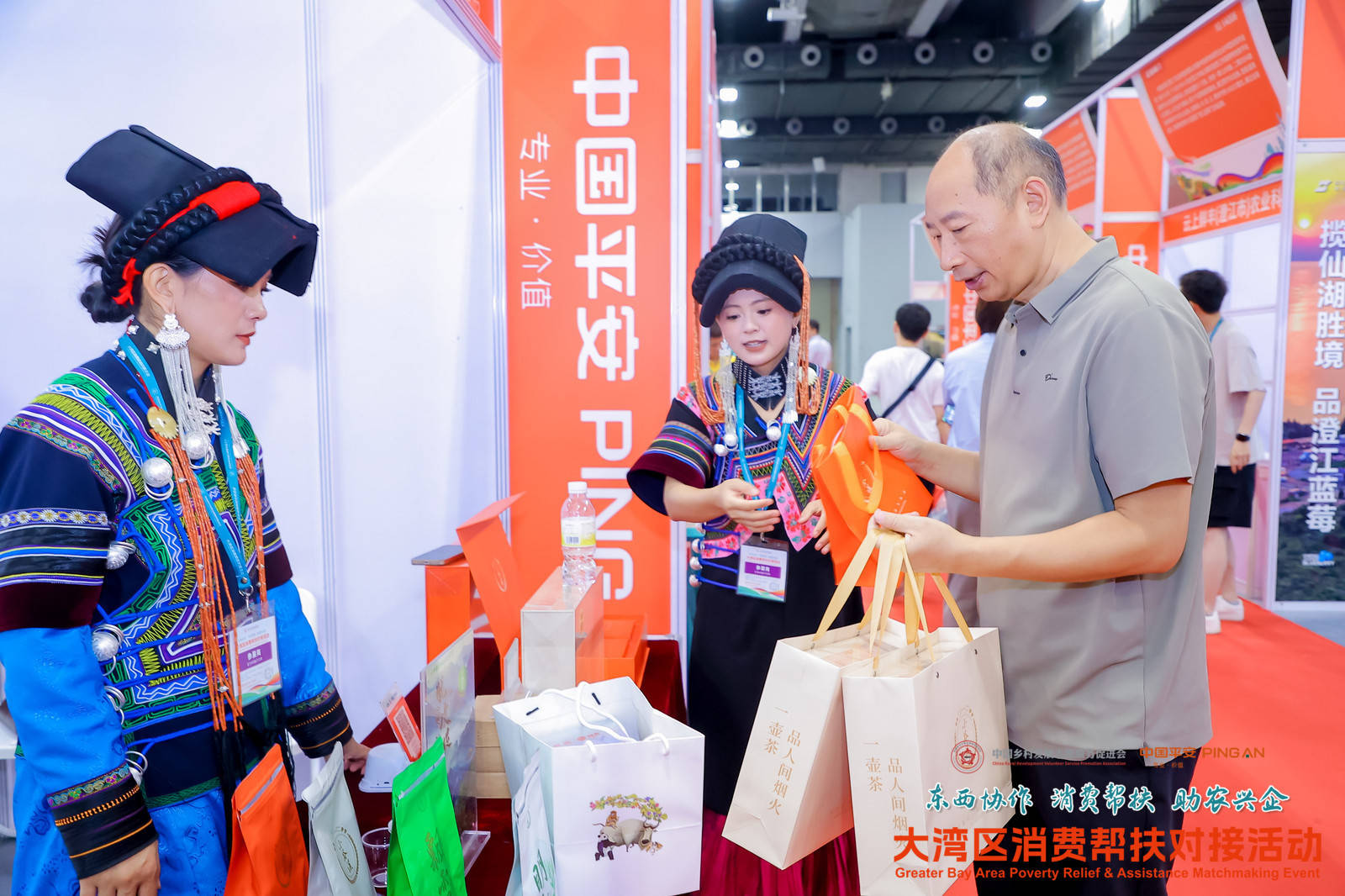
现场签约总金额55亿元,大湾区消费帮扶对接活动在广州开幕
Sou Hu Cai Jing· 2025-09-27 11:45
Core Viewpoint - The event aims to enhance consumption assistance in the Greater Bay Area, focusing on collaboration between Guangdong, Guangxi, and Guizhou provinces, alongside China Ping An Insurance Group, to support rural revitalization and consolidate poverty alleviation achievements [1][3][6]. Group 1: Event Overview - The Greater Bay Area consumption assistance event was co-hosted by the China Rural Development Volunteer Service Promotion Association and China Ping An Insurance Group, opening on September 27 at the Guangzhou Import and Export Fair [1]. - The event features a three-day exhibition showcasing over 2,500 types of rural specialty products, including agricultural products, handicrafts, and rural tourism products, with 1,000+ participating enterprises [8]. Group 2: Collaboration and Achievements - Guangdong, Guangxi, and Guizhou have established effective collaboration models in consumption assistance, leading to significant achievements in poverty alleviation and rural revitalization [3]. - A total of 64 enterprises signed contracts during the event, with a total value of 5.5 billion yuan, demonstrating successful cooperation between supply and demand sides [8]. Group 3: Future Initiatives - The China Rural Development Volunteer Service Promotion Association plans to mobilize social forces to establish a material foundation for consumption assistance products and promote the sale of these products through various channels [6]. - The initiative includes organizing public live-streaming sales and training to help rural specialty products reach broader markets [8].