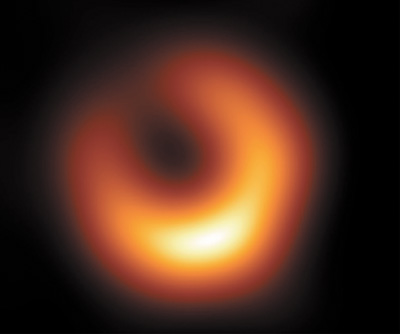
事件视界望远镜

Search documents
“前沿科技+重大工程”喜讯不断 “硬核”实力彰显中国力量
Yang Shi Wang· 2025-10-13 06:04
Group 1: Hydropower Development - The Yebatan Hydropower Station has officially begun water storage, marking the start of the commissioning phase for its first units [1] - Located on the Jinsha River, the station is a key component of China's "14th Five-Year Plan" for clean energy development, with a total installed capacity of 2.24 million kilowatts and a maximum dam height of 217 meters [1] - The station is expected to generate an average annual output of over 10.2 billion kilowatt-hours, saving nearly 4 million tons of standard coal and reducing carbon dioxide emissions by approximately 7.37 million tons annually [3] Group 2: Electromagnetic Launch System - The first electromagnetic launch microgravity experimental device in Asia has commenced a new round of scientific experiments, focusing on life sciences [4] - Since its operation in 2023, the device has completed over 300 experiments across six categories, providing valuable data for advanced research [6] - The device is designed to simulate lunar microgravity conditions and plans to build a facility capable of achieving 20 seconds of microgravity time at a depth of 800 meters [7] Group 3: Deep Space Observation - Recent advancements in deep space observation have been made with the "Event Horizon Telescope," which consists of six radio telescopes connected in a network across China [8] - This network has an effective aperture equivalent to the size of China's land area, allowing for high clarity and precision in observations [8] - The telescope network has recently detected new changes in black holes, enhancing navigation capabilities for spacecraft in deep space exploration [10]


黑洞是如何“长”大的(瞰前沿)
Ren Min Ri Bao· 2025-04-11 21:51
Core Insights - The discovery of evidence showing the impact of supermassive black holes on the formation and evolution of host galaxies has been recognized as one of the "Top Ten Scientific Advances in China" for 2024 [8] - Black holes continue to be a hot topic in the scientific community, with significant public interest stemming from their mysterious nature and the technological advancements that allow for their study [9][10] Group 1: Black Hole Types and Formation - Black holes are categorized into three types based on mass: stellar black holes (a few to tens of solar masses), supermassive black holes (millions of solar masses), and intermediate black holes [10] - Stellar black holes form from the collapse of massive stars after supernova explosions, while supermassive black holes may grow from intermediate black holes through mergers or accretion of surrounding gas [15][16] - The existence of intermediate black holes remains uncertain, often referred to as the "missing link" in black hole research [14] Group 2: Detection and Research Methods - Various methods have been developed to detect black holes, including X-ray detection, gravitational wave observation, and gravitational lensing techniques [13] - Recent advancements include the discovery of GaiaBH3, the largest known stellar black hole in the Milky Way, and the identification of a small black hole (G3425) that fills a gap in the black hole mass distribution [13] Group 3: Technological Impact and Applications - Research on black holes has led to technological advancements that impact everyday life, such as the development of WiFi technology and laser interferometry used in earthquake warning systems and medical imaging [10] - The study of black holes not only addresses cosmic mysteries but also symbolizes humanity's quest for knowledge and technological progress [11]