二硫化钼

Search documents
突破核心技术!二维半导体量产迎来关键进展
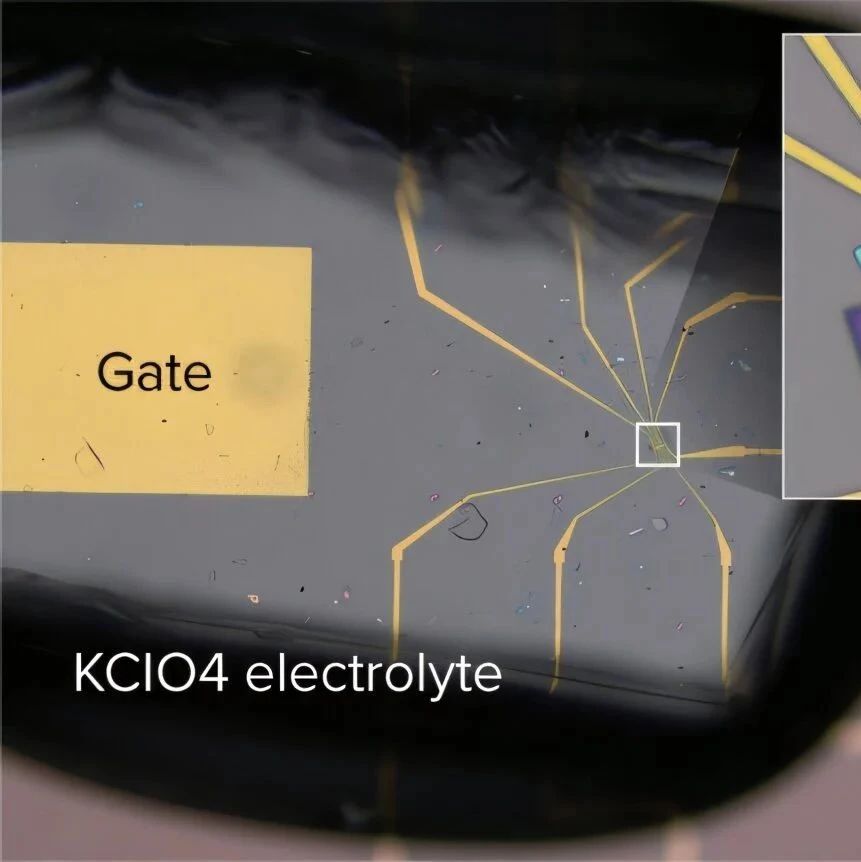
Huan Qiu Wang Zi Xun· 2026-02-02 03:45
Core Insights - The research teams from Southeast University and Nanjing University have achieved a significant breakthrough in the mass production of two-dimensional (2D) semiconductor single crystals using metal-organic chemical vapor deposition technology with an oxygen-assisted strategy [1][2]. Group 1: Technological Advancements - The new method addresses traditional challenges in 2D semiconductor production, such as carbon contamination, small crystal domain sizes, and low mobility [1]. - By introducing oxygen into the growth process and innovatively designing a pre-reaction chamber structure, the energy barrier for reactions was significantly lowered, increasing the precursor reaction rate by over 1000 times [1]. Group 2: Production Improvements - The new approach has dramatically enhanced the growth rate of molybdenum disulfide crystal domains, increasing the average size from the nanometer scale to several hundred micrometers, and ensuring ordered alignment along specific crystal directions [1]. - This advancement resolves the mass production challenge of achieving uniform growth over large areas and effectively suppresses the formation of carbon-containing intermediates, thereby eliminating carbon contamination issues [1]. Group 3: Industry Implications - This breakthrough lays a material foundation for the large-scale application of 2D semiconductors in integrated circuits, flexible electronics, and sensors [2].
6英寸二维半导体单晶量产核心技术获突破
Ke Ji Ri Bao· 2026-01-30 08:48
Core Insights - The research teams from Southeast University and Nanjing University have made significant advancements in the production of two-dimensional (2D) semiconductor single crystals, overcoming challenges related to carbon contamination, small crystal size, and low mobility through a novel metal-organic chemical vapor deposition technique [1][2]. Group 1: Technological Breakthrough - The introduction of oxygen in the growth process has led to a more efficient reaction, increasing the precursor reaction rate by over 1000 times, which is crucial for the production of high-quality 2D semiconductors [1][2]. - The new method has improved the growth rate of molybdenum disulfide crystals significantly, with average crystal sizes increasing from the nanometer range to several hundred micrometers, facilitating uniform large-area growth [2]. Group 2: Industry Implications - This breakthrough marks a substantial step towards the industrialization of 2D semiconductors, laying a material foundation for their application in integrated circuits, flexible electronics, and sensors [2]. - The research validates the theory that controlling growth dynamics can enhance material quality, indicating a promising future for non-silicon materials in the post-Moore era [2].
芯片研究,新突破
半导体行业观察· 2025-03-30 02:56
Core Viewpoint - The research from the RIKEN Center for Emergent Matter Science indicates that inserting potassium ions between layers of molybdenum disulfide can transform its electronic properties, allowing it to behave as a metal, superconductor, or insulator [1][3]. Group 1: Material Properties - Molybdenum disulfide (MoS2) can be separated into thin crystals with different electronic phases, specifically 2H (semiconductor) and 1T (metal) [3]. - The introduction of potassium ions can switch the material's phase from 2H to 1T, with a ratio of approximately two potassium ions for every five molybdenum atoms [3]. Group 2: Superconductivity Discovery - The research team observed superconductivity in the 1T phase of MoS2 when potassium ions were introduced and the sample was cooled to -268°C, which was an unexpected finding [3][4]. - Previous observations of superconductivity in the 2H phase were known, but the occurrence in the 1T phase at different temperatures was surprising [3]. Group 3: Insulating Phase - When potassium ions were allowed to leak from the 1T MoS2 until a lower ion concentration was reached, the material transitioned from a metal to an insulator at -193°C [4]. - This unexpected transition highlights the potential of using potassium ion insertion as a method to control the structure and properties of two-dimensional materials like MoS2 [4]. Group 4: Research Implications - The findings suggest that the method of introducing potassium ions could lead to the discovery of new superconductors and enhance the understanding of electronic phases in materials [4]. - The research team has been developing this method for the past decade, indicating its significance in exploring new electronic properties [4].