金属

Search documents
大和:市场偏好由AI转向周期性行业 料农历新年后逐渐转向与刺激政策相关板块
智通财经网· 2026-01-29 06:41
Group 1 - The interest of mutual funds in the Hong Kong market slightly decreased in Q4 of last year, with strong capital inflows into the metals and financial sectors [1] - By the end of 2025, the structure of stock holdings in equity and mixed mutual funds diversified, with the top 50 holdings' share of total stock investments dropping from 25.8% to 25.1% [1] - The proportion of Hong Kong stocks in mutual fund heavyweights decreased from a peak of 17.8% to 16.3% [1] Group 2 - Driven by global metal market trends, Chinese mutual funds significantly increased their investments in metal stocks in Q4, with a quarterly rise of 1.7 percentage points [2] - Fund managers showed optimism towards banks and diversified financials, with notable inflows into Industrial Bank and ICBC [2] - For Q1 2026, mutual funds are expected to have a higher risk tolerance post profit-taking, with AI and metals remaining key investment themes [2]





Q3-25 Earnings: Circle's Valuation & Revenue Concentration Problems
Seeking Alpha· 2025-11-12 17:45
Group 1 - The company Circle Internet Group (CRCL) went public in June and was initially rated as a 'hold' by the analyst [1] - The analyst has a background in media research and focuses on areas such as cryptocurrency, BTC miners, metals, and media equities [1] - The analyst shares personal investment strategies and insights through a newsletter called Heretic Speculator on Substack [1] Group 2 - The article does not provide any investment advice or recommendations [2][3][4] - The analyst expresses personal opinions and has no business relationship with any mentioned companies [2]



芯片研究,新突破
半导体行业观察· 2025-03-30 02:56
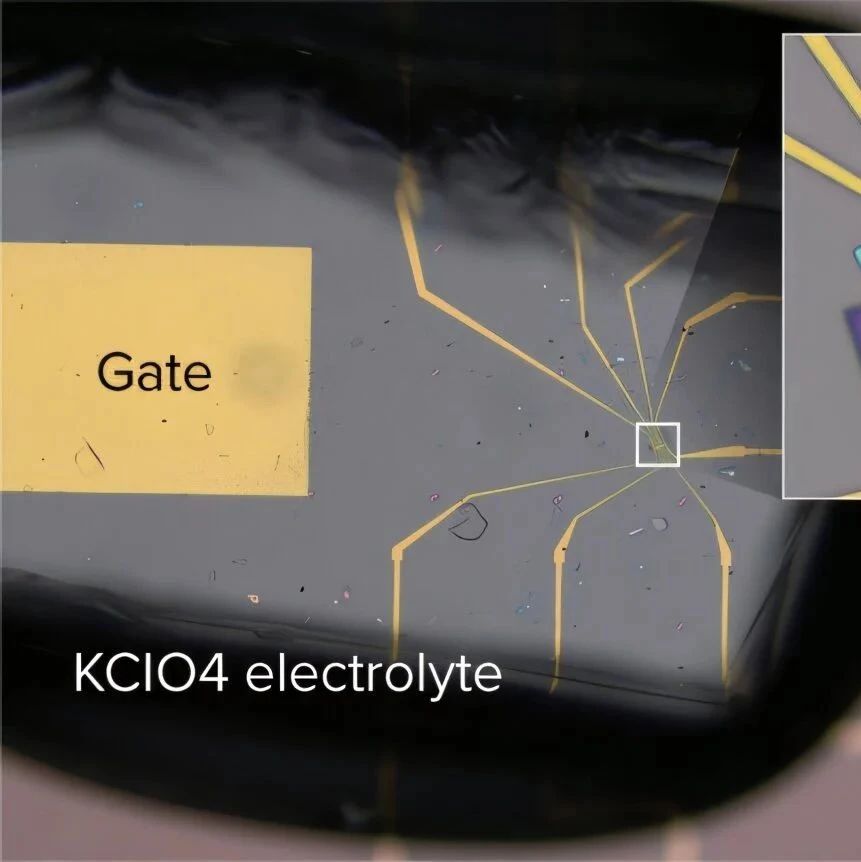
Core Viewpoint - The research from the RIKEN Center for Emergent Matter Science indicates that inserting potassium ions between layers of molybdenum disulfide can transform its electronic properties, allowing it to behave as a metal, superconductor, or insulator [1][3]. Group 1: Material Properties - Molybdenum disulfide (MoS2) can be separated into thin crystals with different electronic phases, specifically 2H (semiconductor) and 1T (metal) [3]. - The introduction of potassium ions can switch the material's phase from 2H to 1T, with a ratio of approximately two potassium ions for every five molybdenum atoms [3]. Group 2: Superconductivity Discovery - The research team observed superconductivity in the 1T phase of MoS2 when potassium ions were introduced and the sample was cooled to -268°C, which was an unexpected finding [3][4]. - Previous observations of superconductivity in the 2H phase were known, but the occurrence in the 1T phase at different temperatures was surprising [3]. Group 3: Insulating Phase - When potassium ions were allowed to leak from the 1T MoS2 until a lower ion concentration was reached, the material transitioned from a metal to an insulator at -193°C [4]. - This unexpected transition highlights the potential of using potassium ion insertion as a method to control the structure and properties of two-dimensional materials like MoS2 [4]. Group 4: Research Implications - The findings suggest that the method of introducing potassium ions could lead to the discovery of new superconductors and enhance the understanding of electronic phases in materials [4]. - The research team has been developing this method for the past decade, indicating its significance in exploring new electronic properties [4].