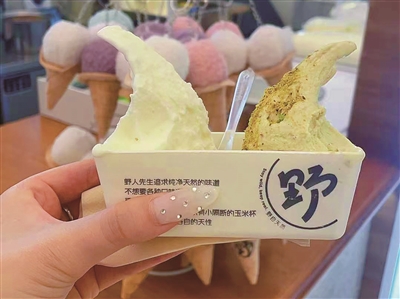
五常大米口味冰淇淋

Search documents
死磕“冰冷”赛道15年,野人先生接棒星巴克成为新“多巴胺放大器” | 穿越周期的消费品
Tai Mei Ti A P P· 2025-12-27 03:12
Core Insights - The article highlights the rapid growth of the ice cream brand "Mr. Wildman," which has expanded from 431 stores in 2024 to over 1,200 stores by 2025, surpassing Haagen-Dazs in mainland China [1][4][9] - The brand's founder, Cui Jianwei, emphasizes the need for market education regarding fresh ice cream, as traditional views on health and diet still pose challenges [1][2] - Mr. Wildman differentiates itself by using fresh ingredients and a "made on the same day" principle, competing against established brands like DQ and Haagen-Dazs [2][4] Company Growth and Strategy - Mr. Wildman started as a small shop in Beijing in 2011, leveraging social media to attract young customers [5][6] - The brand initially faced challenges with rapid expansion, leading to a retreat and a more cautious approach to growth [7][8] - After a three-year period of stabilization, the brand successfully re-entered the market, focusing on major cities like Shanghai [8][9] Market Position and Consumer Engagement - The brand has developed a unique customer engagement strategy, including a trial system that encourages potential customers to sample products without pressure [9][10] - Mr. Wildman aims to create a strong emotional connection with consumers, positioning ice cream as a lifestyle product rather than just a dessert [11][17] - The brand's innovative flavors, such as the Five常大米 (Wuchang rice) ice cream, reflect a commitment to local ingredients and cultural relevance [12][13] Founder’s Vision and Market Perspective - Cui Jianwei, with a background in investment, has chosen not to seek external funding, focusing instead on organic growth and a solid supply chain [14][16] - The founder believes in the potential for the fresh ice cream market to grow independently, without the intense competition seen in coffee and tea sectors [17] - The brand's success is attributed to the overall improvement in consumer spending power and a shift towards premium lifestyle products [17]


本土冰淇淋品牌掀起“瑞幸式”变革
Mei Ri Shang Bao· 2025-08-12 22:18
Core Insights - The ready-to-serve ice cream market is undergoing a transformation similar to the "Luckin Coffee" model, with local brands like Bopais and Mr. Wildman challenging established players like Haagen-Dazs and DQ through high cost-performance and frequent innovation [2][4] - The market landscape is shifting as more young consumers are opting for local brands that offer lower prices and a wider variety of flavors [2] Market Dynamics - Local brands are rapidly expanding their store presence, with Bopais surpassing 1,150 stores and aiming to catch up to DQ's 1,700 stores, while Mr. Wildman has grown from over 400 to more than 900 stores in just a few months [2][3] - In contrast, Haagen-Dazs is experiencing a decline, with its store count in China dropping from 466 to 403 within a year [2] Brand Positioning - Bopais, founded in 2010, focuses on soft serve ice cream and features freshly baked waffles, while Mr. Wildman, established in 2011, specializes in gelato made from natural ingredients, positioning itself as a more premium option [3] - Both brands have successfully opened numerous stores in key urban areas, appealing to younger consumers with innovative flavors and local ingredients [3][4] Consumer Preferences - Younger consumers express dissatisfaction with traditional brands like Haagen-Dazs, citing a lack of innovation and variety in flavors [4] - Local brands are leveraging online marketing and promotional strategies to attract consumers, offering competitive pricing that appeals to the budget-conscious [4][5] Competitive Advantage - The success of Bopais and Mr. Wildman is attributed to their ability to meet the underlying demands of consumers, particularly the Z generation's desire for product innovation and diverse flavors [5] - The pricing strategy of these local brands, which is more accessible, has been a significant factor in their rapid rise within the ready-to-serve ice cream market [5]
一杯冰淇淋卖38元,曾有多名消费者投诉吃出异物,野人先生要冲刺港股?
凤凰网财经· 2025-08-07 03:31
Core Viewpoint - The article discusses the rapid expansion of the ice cream brand "野人先生" (Mr. Wildman), highlighting its growth strategy, market challenges, and consumer perceptions in the context of the Chinese ice cream market [2][11][26]. Group 1: Company Overview - 野人先生 was founded in 2011 by 崔渐为, initially starting as a small stall in Beijing, and has evolved into a significant player in the ice cream market, particularly focusing on Gelato [6][9]. - The brand transitioned from a direct sales model to a franchise model in 2023, resulting in a significant increase in the number of stores from 400 to 900 within five months [9][11]. Group 2: Market Dynamics - The Chinese ice cream market is projected to reach a size of 183.5 billion yuan by 2024, with Gelato experiencing a notable growth rate of 10%, surpassing a market size of 12 billion yuan [11]. - The gross profit margin for Gelato products is reported to be over 60%, with some products reaching up to 70% [11]. Group 3: Expansion Strategy - 野人先生's marketing strategy has shifted from a low-profile approach to aggressive online and offline promotions, significantly increasing brand visibility [9][11]. - The brand's unique selling proposition is its "freshly made" ice cream, although this claim has faced scrutiny regarding its actual production methods [13][24]. Group 4: Consumer Perception and Challenges - Consumer feedback on 野人先生's products is polarized, with some praising the quality while others criticize the pricing, labeling it as "ice cream assassin" due to its high prices [21][24]. - The brand has faced multiple complaints regarding food safety issues, raising concerns about the risks associated with its open production model [24][26]. Group 5: Competitive Landscape - The ice cream market is becoming increasingly competitive, with various brands entering the space, including established players like 光明集团 and popular tea brands expanding into ice cream [26]. - Seasonal fluctuations in ice cream consumption present a significant challenge, particularly in maintaining revenue during winter months [26].