京东JoyAI大模型

Search documents
首届京东AI影视创作大赛圆满收官 引领品牌与用户共创内容新风潮
Zheng Quan Ri Bao Wang· 2026-02-06 11:43
Core Insights - The first JD AI Film Creation Competition has concluded, showcasing the power of AI creativity and leading a new trend of co-creating content between brands and users [1][2] - The competition attracted numerous creators and was supported by JD's JoyAI model, emphasizing the theme "1001 Gifts of Drama" [1] Group 1: Competition Overview - The competition lasted three weeks and involved a rigorous evaluation process by a jury composed of committee members, external directors, and academic experts [1] - A total of 10 outstanding works were selected from thousands of entries, receiving cash prizes and special awards [1] - Participants had the option to create content using the "Horse Honghong" IP or specified products from partner brands, with JD offering up to 100,000 yuan in cash rewards and promotional support [1] Group 2: AI in Brand Marketing - The event highlighted AI video as a key trend in brand marketing, with participant Yuan Hai winning the JD Global Purchase Brand Track Award for his animated short film "New Year Goods Special Forces," completed in just one week using AI tools [2] - The success of the competition demonstrated the significant potential of "user co-creation" in brand marketing [2] - JD plans to continue hosting AI film creation competitions for various holidays and themes, providing a platform for more creators to showcase their ideas and receive substantial rewards [2]

AI激发全民创作热情!首届京东AI影视创作大赛掀“人人皆导演”风潮
2 1 Shi Ji Jing Ji Bao Dao· 2026-02-06 06:57
Core Insights - The first JD AI Film Creation Competition has concluded, showcasing the power of AI creativity and leading a new trend of co-creating content between brands and users [1][2] - The competition attracted a diverse range of participants, including professionals from various fields and everyday individuals, indicating that AI creative tools have become accessible to the general public [1] Group 1: Competition Overview - The competition was supported by JD's JoyAI model and launched on January 14, with the theme "1001 Gifts of Drama," culminating in the announcement of ten outstanding works [1] - Participants had the opportunity to create content using the "Horse Honghong" IP or specified brand products, with JD offering cash rewards up to 100,000 yuan and promotional support [1] Group 2: Brand Collaboration and Innovation - Brands such as Midea, iFlytek, Baidu, and others provided significant creative freedom to participants, allowing users to reinterpret brand expressions through AI tools [2] - Notable creations included innovative content featuring products like BURBERRY scarves and Midea air conditioners, which received high recognition from brand representatives [2] Group 3: Impact on Marketing Trends - The competition highlighted that AI video is becoming a key trend in brand marketing, with participants demonstrating the ability to produce high-quality content rapidly using AI tools [2] - The success of the event validated the potential of "user co-creation" in brand marketing, with plans for future competitions to continue providing platforms for creative expression [2]
京东发布JoyInside软硬一体化方案 以AI赋能玩具产业
Ke Ji Ri Bao· 2026-01-21 05:26
Group 1 - JD.com held the AI Toy Conference in Suqian, Jiangsu, and signed an agreement with the Suqian government to establish an AI toy industry zone, aiming to create a regional benchmark for innovative development in AI toys [1] - JD.com launched the JoyInside integrated hardware and software solution designed for smart hardware terminals, which is highly compatible and supports various hardware, scenarios, and sizes, providing full-link support from technical foundation to product implementation [1] - The company has introduced multiple mass-produced hardware cores that cover a wide range of applications from plush toys to smart home devices, including features like continuous dialogue, offline voice, emotional interaction, and long-term memory [1] Group 2 - JoyInside utilizes technologies such as child scene optimization, long-term memory system integration, and human-like response algorithms, achieving a response delay of less than 2 seconds and a children's voice recognition rate of over 95%, enabling smart terminals to have core capabilities of "perceiving emotions, remembering preferences, and continuous growth" [2] - The solution has been integrated with over 40 leading hardware brands, covering various categories including robots, robotic dogs, and AI toys [2]
回望2025·实物见变迁丨App里的新生活——2025年人工智能渗透日常方方面面
Xin Hua She· 2025-12-19 00:20
Core Insights - The article discusses the significant penetration of artificial intelligence (AI) into daily life and work by 2025, highlighting the popularity of AI applications like DeepSeek and Doubao, which have achieved 1.2 billion and 2.6 billion installations respectively [1][2] - AI has become an integral part of both personal and professional routines, with users increasingly relying on AI for tasks ranging from homework assistance to workplace productivity [2][3] - The rapid integration of AI into various applications is transforming traditional app ecosystems, with AI capabilities becoming a standard expectation in mobile applications [3][4] Group 1: AI in Daily Life - Many users have incorporated AI applications into their daily routines, with examples including using Doubao for children's homework and AI for travel planning [2] - AI is perceived as a necessary tool in the workplace, with employees utilizing multiple AI applications for tasks such as creating presentations and processing data [2][3] - The evolution of AI applications is evident, with new products like Lingguang AI emerging to enhance user experience through advanced capabilities [2] Group 2: AI in E-commerce - E-commerce platforms are heavily integrating AI, with AI assistants taking over customer service and digital humans conducting live-stream sales, significantly reducing operational costs [3] - During the 2025 Double Eleven shopping festival, JD's JoyAI model was applied in over 1,800 scenarios, serving more than 300,000 merchants and achieving over 700 million yuan in transaction volume [3] Group 3: Transformation of Industry Landscape - The rapid adoption of AI is expected to lead to a profound transformation in industry structures, moving from a "tool era" to a "partner era" where AI reshapes economic and social dynamics [4] - AI is changing the interaction paradigm from "users seeking services" to "services seeking users," potentially rendering traditional apps less visible [4][5] - Challenges remain for AI to fully replace existing app ecosystems, particularly concerning user data security and the evolution of revenue models in the face of personalized AI services [5]
京东数字人跨界多场景,成为品牌AI营销新标配
Zhong Jin Zai Xian· 2025-12-17 10:48
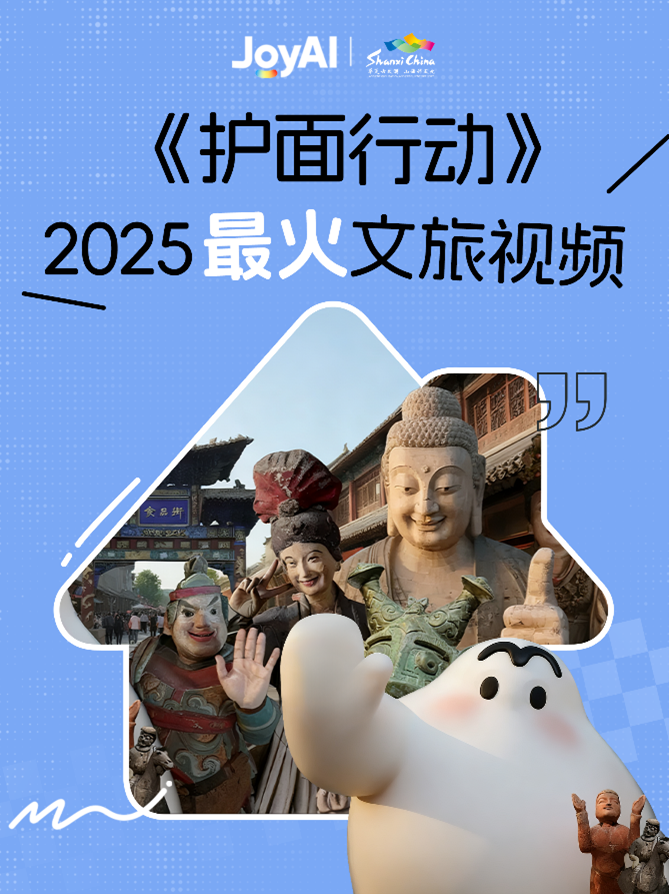
Core Insights - The article highlights the success of Shanxi Cultural Tourism's AIGC video "Face Guard Action," which has become a viral hit, showcasing the innovative integration of digital humans and cultural tourism in AI marketing [1] - The collaboration between JD's digital human technology and Shanxi Cultural Tourism signifies a shift from mere technical support to a deeper involvement in creative planning, enhancing brand value [1] Group 1: Digital Human Technology - JD's digital human technology not only provides technical support but also engages in creative planning, merging local cultural elements with social sentiments to create content with viral potential [1] - The virtual idol Ava and boy band E'Core demonstrate the brand empowerment capabilities of digital humans through collaborations that seamlessly integrate product features into engaging narratives [3] - The partnership between E'Core and Honor showcases how virtual IPs can resonate deeply with physical brands, enhancing product storytelling [5] Group 2: Cost Efficiency and Creative Innovation - The ability to create a strong "human-like" presence in digital humans allows brands to elevate their marketing strategies, transforming digital humans from mere sales tools to brand IPs [7] - Digital technology has broken the boundaries of creativity and cost, as seen in MCM's AIGC video, which features imaginative concepts that traditional filming could not achieve, significantly reducing production costs and time [9] - The collaboration between Haier and JoyAI exemplifies how digital humans can revitalize existing IPs, achieving substantial savings in production costs and time compared to traditional methods [9] Group 3: AI-Driven Brand Engagement - JD's digital humans have proven to be commercially valuable, with free digital human live streaming achieving over 80% effectiveness compared to real people, serving over 50,000 brands [11] - The introduction of foundational models and low-threshold generation tools has lowered the barriers for content creation, allowing digital humans to evolve from "sales assistants" to "brand partners" [11] - Digital humans are now integral in connecting with users throughout their entire lifecycle, creating a closed loop from awareness to purchase [11] Group 4: Future of Brand Innovation - In the current landscape of accelerated AI penetration, digital humans are positioned as core engines of brand innovation rather than mere marketing gimmicks [13] - Embracing digital human representation and leveraging AI to create exclusive brand IPs is becoming a crucial strategy for companies to stand out in competitive markets [13] - The successful integration of technology and creativity by JD's digital humans demonstrates the potential for brands to rejuvenate in the digital age [13]