代码辅助工具

Search documents
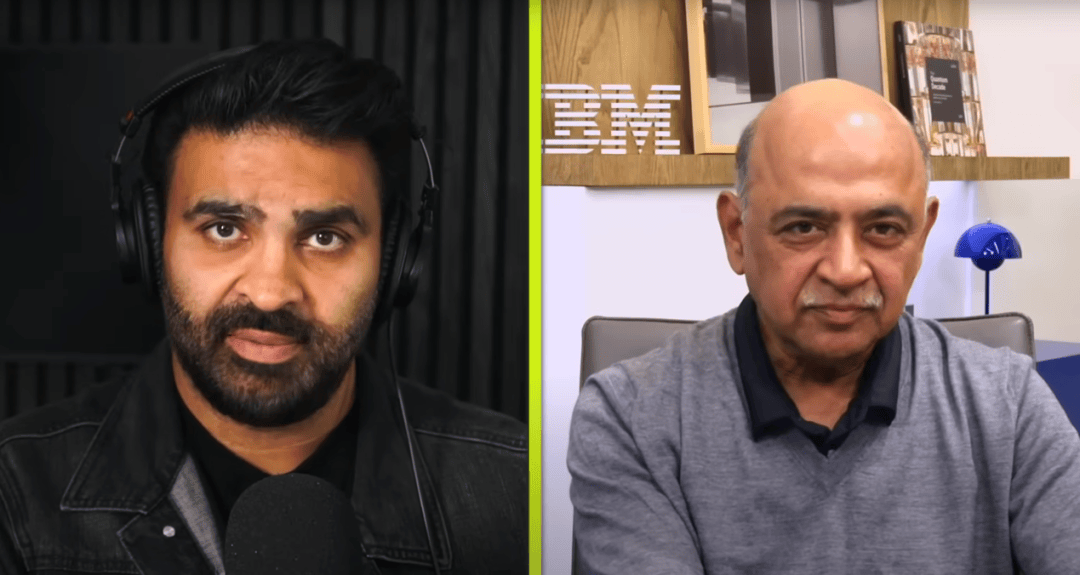
“可能性大概0到1%”:IBM CEO给AGI泼冷水,断言AI数据中心投资无法获得回报
Sou Hu Cai Jing· 2025-12-03 14:40
Core Viewpoint - The debate over whether AI data center investments are overheated is intensifying in Wall Street and Silicon Valley, with significant capital expenditure plans announced by major tech companies, raising concerns about potential returns on these investments [1][2]. Group 1: Investment Plans - Major tech companies have announced substantial investments in data centers: Meta plans to invest over $600 billion over the next three years, Microsoft $80 billion by 2025, Google $75 billion, and Apple $500 billion over four years, potentially pushing global data center and AI infrastructure investments to over $5 trillion in the next five years [1]. - IBM's CEO Arvind Krishna expressed skepticism about the returns on these investments, stating that the current infrastructure costs make it impossible to achieve returns on the promised multi-trillion dollar investments [2][4]. Group 2: Cost Analysis - Krishna calculated that filling a 1 gigawatt data center costs approximately $80 billion, leading to a total capital expenditure of about $8 trillion if tech companies pursue a total capacity of 100 gigawatts [4]. - He emphasized that this level of investment would require around $800 billion in profits just to cover interest payments, not accounting for depreciation of equipment, particularly AI chips that have a rapid obsolescence rate [4]. Group 3: Comparison to Past Bubbles - Krishna compared the current AI investment frenzy to the internet bubble of the early 2000s, noting that while fiber optics had long-term utility, AI hardware like GPUs has a much shorter lifespan, necessitating expensive updates every five years [5]. - He acknowledged that while some infrastructure can last, the rapid pace of technological advancement in AI hardware raises questions about the sustainability of current investments [5]. Group 4: AGI Potential - Krishna expressed a low probability (0 to 1%) that current technology can achieve Artificial General Intelligence (AGI), contrasting sharply with optimistic statements from other tech leaders [6][8]. - He believes that achieving AGI will require significant advancements beyond current large language models (LLMs) and emphasizes the need for integrating hard knowledge with AI technologies [8]. Group 5: IBM's Strategic Focus - IBM has chosen not to compete in the consumer AI market, focusing instead on enterprise solutions, where it can leverage its long-standing reputation for data protection and reliability [9]. - The company is actively hiring while others in the tech sector are laying off employees, as it aims to enhance productivity through AI tools [9]. Group 6: Quantum Computing Outlook - Krishna predicts that quantum computing could reach practical scale within three to five years, with an estimated market value of $400 billion to $700 billion annually [9]. - He provided a probabilistic timeline for when quantum computing might deliver significant commercial value, suggesting a higher likelihood of breakthroughs within four to five years [10]. Group 7: Industry Perspectives - Krishna's views reflect a broader skepticism within the tech industry regarding the disconnect between current investment levels and realistic return expectations, while still acknowledging the transformative potential of AI for enterprise productivity [11]. - The ongoing debate highlights differing beliefs about the future of AI and AGI, with some companies betting heavily on becoming market leaders through substantial investments [12].