
仿组织支架神经电极

Search documents
聋哑人“发声”、脑机能“隐身”,医疗器械硬科技亮相中关村
Xin Lang Cai Jing· 2026-01-23 04:26
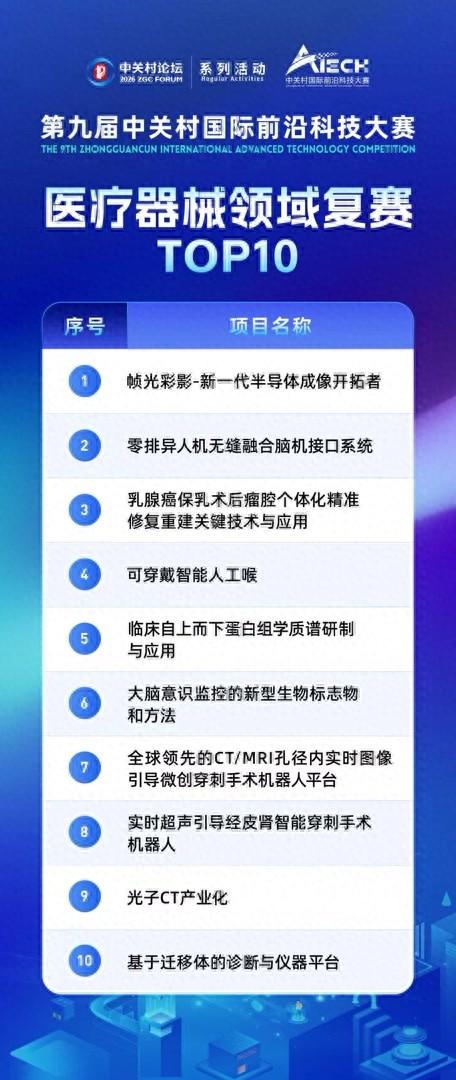
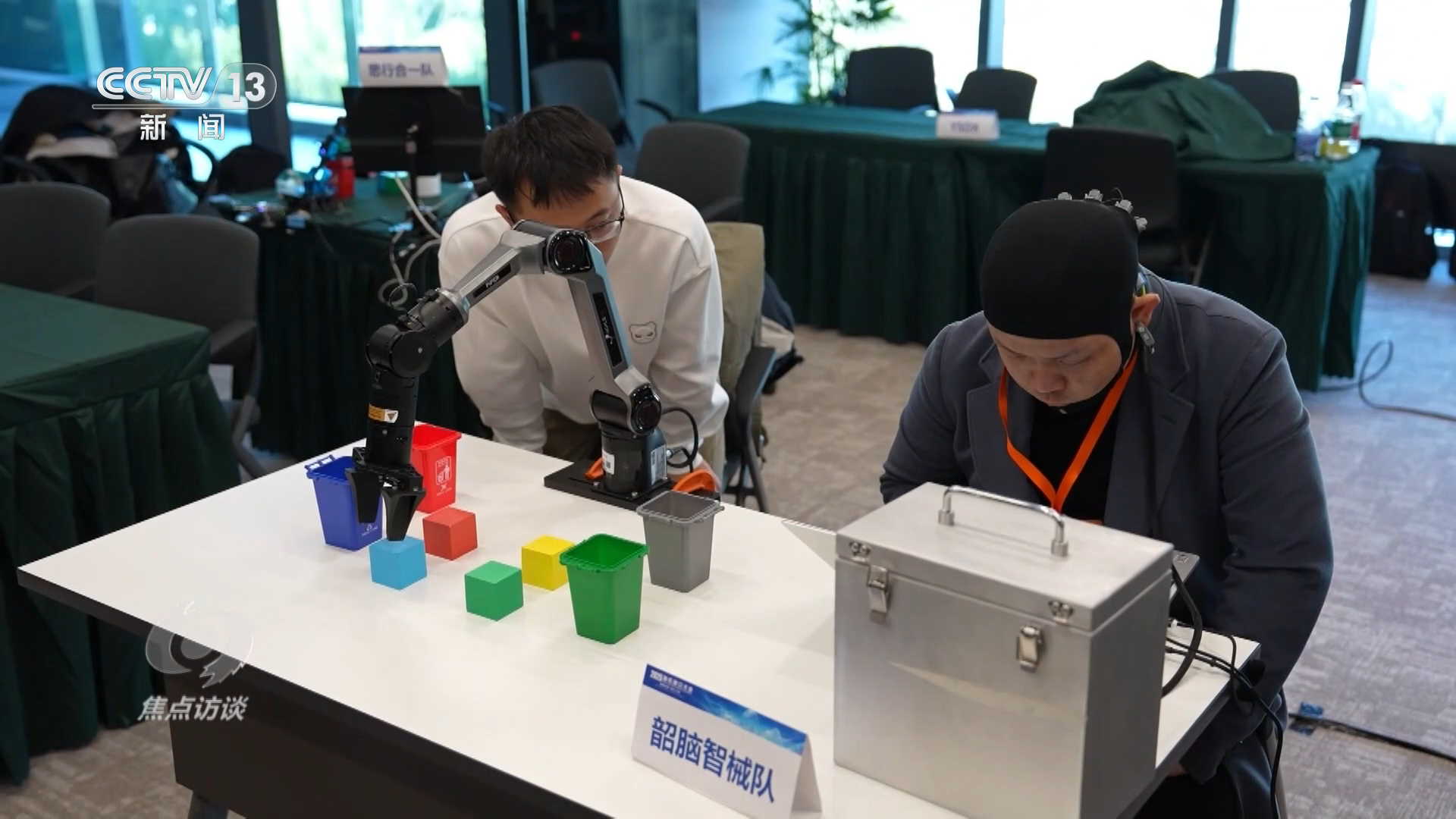
Group 1 - The 9th Zhongguancun International Frontier Technology Competition in the medical device sector recently took place, showcasing innovative projects such as semiconductor imaging technology and brain-machine interface systems [1] - Key projects that made it to the top ten include "Frame Light and Shadow," a new generation of semiconductor imaging, and a seamless brain-machine interface system that minimizes rejection [1][4] - The competition aims to create a high-level international platform for technological exchange and is set to hold its semifinals in March 2026, with the finals during the Zhongguancun Forum annual meeting [5] Group 2 - The "Wearable Smart Artificial Larynx" project by Chip Intelligence captures subtle vocal signals from patients with conditions like ALS, converting them into clear, emotional speech using advanced AI algorithms [3] - This device is non-invasive and aims to improve the quality of life for various patient groups, including those with speech difficulties due to medical conditions or aging [3] - The product is expected to enter clinical trials and certification stages in 2026, with a market launch anticipated in 2027 [3] Group 3 - The "Zero Rejection Brain-Machine Interface" project by Heze Technology features a bio-compatible neural electrode designed to minimize rejection by the human body, enhancing long-term safety and signal stability [4] - The project has developed a fully automated production line for these electrodes, showcasing significant advancements in brain-machine interface technology [4] - Other notable projects include a minimally invasive surgical robot platform that allows real-time monitoring during procedures and a new generation of semiconductor imaging technology aimed at reducing radiation exposure while improving image resolution [4]


“心想”变“事成”!“十五五”规划建议布局脑机接口产业
Yang Shi Wang· 2025-12-28 05:34
Core Insights - The article discusses the emerging technology of brain-computer interfaces (BCI), highlighting its potential to assist individuals with motor disabilities and its recognition as a key future industry in China's economic growth strategy [1][8]. Group 1: Technology Overview - Brain-computer interface technology captures brain signals and translates them into commands that machines can understand, enabling direct interaction between the brain and external devices [5][6]. - The technology has shown promise in various applications, including controlling vehicles and treating neurological diseases [5][6]. Group 2: Industry Development - The global BCI market is currently valued at several billion dollars and is projected to exceed $10 billion by 2030, with the medical application sector alone expected to reach $40 billion by 2030 and $145 billion by 2040 [10]. - China's unique advantages in innovation, comprehensive industrial capabilities, and a large population provide significant market opportunities for BCI development [10]. Group 3: Challenges and Solutions - Key challenges in BCI technology include the difficulty of capturing weak brain signals, understanding the complex neural data, and effectively modulating these signals for therapeutic purposes [6][8]. - Recent advancements, such as the development of a "bio-invisible" neural electrode, aim to address issues of long-term safety and signal stability [12]. Group 4: Education and Talent Development - Tianjin University has launched the first undergraduate program in BCI in China, focusing on integrating theory with practical applications to cultivate high-quality professionals for the industry [14]. Group 5: Policy Support - The Chinese government has initiated policies to promote BCI innovation and development, setting phased goals for 2027 and 2030 to guide the industry [20].
从实验室走向产业化 脑机接口让科幻照进现实
Yang Shi Xin Wen Ke Hu Duan· 2025-12-27 16:15
Core Viewpoint - The development of brain-computer interface (BCI) technology is transitioning from laboratory research to industrial application, becoming a significant economic growth point as outlined in China's 14th Five-Year Plan [1][13]. Group 1: Technology Overview - Brain-computer interfaces allow direct communication between the brain and external devices, enabling individuals with motor impairments to regain control over their movements [1][6]. - The technology captures brain signals and translates them into machine-readable commands, facilitating interaction with devices without physical movement [6][10]. - Current challenges in BCI technology include accurately decoding brain signals, understanding the vast number of neurons involved, and effectively modulating these signals for therapeutic purposes [10][11]. Group 2: Market Potential - The global BCI market is currently valued at several billion dollars and is projected to exceed $10 billion by 2030, with the medical application sector alone expected to reach $40 billion by 2030 and $145 billion by 2040 [15][16]. - The BCI industry is seen as a high-end sector that can drive advancements in various related fields, including neuroscience, AI, and clinical medicine [13][15]. Group 3: Research and Development - Significant breakthroughs in key BCI technologies have been achieved, laying the groundwork for further industrialization [13]. - Innovative devices, such as the "bio-invisible" neural electrode developed at Tsinghua University, aim to minimize the body's rejection response, enhancing the safety and stability of implanted devices [18][20]. Group 4: Education and Talent Development - Educational institutions, such as Tianjin University, are establishing specialized programs in BCI to cultivate skilled professionals capable of advancing the field [21]. - The curriculum includes both theoretical and practical components, preparing students to contribute to various interdisciplinary applications of BCI technology [21]. Group 5: Application Scenarios - BCI technology has been successfully applied in clinical settings, allowing patients with paralysis to control devices like computers and robotic systems through thought alone [23][25]. - Recent advancements include the first wireless Chinese language BCI trial, enabling patients with speech impairments to communicate basic needs through thought [27]. Group 6: Policy Support - The Chinese government is actively promoting the BCI industry through policy initiatives aimed at fostering innovation and setting developmental goals for 2027 and 2030 [28]. - Various regions, including Beijing and Shanghai, have introduced policies to support the rapid development of BCI technology [28].
焦点访谈|“心想”变“事成”!“十五五”规划建议布局脑机接口产业
Yang Shi Wang· 2025-12-27 13:57
Core Viewpoint - Brain-computer interface (BCI) technology is emerging as a significant innovation, enabling direct interaction between the brain and external devices, with potential applications in medical rehabilitation and beyond [1][5][10]. Group 1: Technology Overview - BCI technology captures brain signals and translates them into machine-readable commands, allowing for direct communication between the brain and devices [5][6]. - The technology has shown promise in assisting patients with motor disabilities, enabling them to regain control over their movements through external devices like exoskeletons [1][3]. Group 2: Market Potential - The global BCI market is currently valued at several billion dollars and is projected to exceed $10 billion by 2030, with medical applications alone expected to reach $40 billion by 2030 and $145 billion by 2040 [10]. - Countries are increasing investments in BCI technology to secure a competitive edge in this high-stakes market, with China having unique advantages in innovation, industry infrastructure, and market potential [10][8]. Group 3: Challenges and Development - Key challenges in BCI development include the difficulty of acquiring weak brain signals, understanding the complex neural data, and effectively modulating these signals for therapeutic purposes [6][8]. - Recent breakthroughs in BCI technology, such as the development of biocompatible neural electrodes, are addressing long-standing issues related to signal stability and safety [12][10]. Group 4: Educational Initiatives - Educational institutions like Tianjin University are launching specialized programs in BCI to cultivate skilled professionals, integrating theoretical knowledge with practical applications [14][16]. - The collaboration across various disciplines is essential for advancing BCI technology and meeting the industry's growing demands [12][14]. Group 5: Policy Support - The Chinese government is actively promoting BCI innovation through policy frameworks aimed at setting developmental goals for 2027 and 2030, facilitating rapid industry growth [20][18]. - Local governments are also implementing supportive policies to foster BCI innovation, creating a conducive environment for technological advancements [20][18].
北京亮出多项“AI+脑机”新成果 将加速打造全球脑机接口创新与产业高地
Xin Lang Cai Jing· 2025-11-22 23:36
Core Viewpoint - The "AI + Brain-Computer Interface" industry in Beijing is gaining momentum with the introduction of innovative initiatives and achievements, particularly in the field of neural electrodes that can help visually impaired patients perceive complex images and colors [1] Group 1: Industry Developments - The event was co-hosted by multiple organizations including the Beijing Municipal Science and Technology Commission, Zhongguancun Management Committee, Haidian District People's Government, Tsinghua University, and the China Academy of Information and Communications Technology [1] - Several initiatives and achievements related to brain-computer interface technology were announced, indicating a significant push for the development of the "AI + Brain-Computer Interface" industry in Beijing [1] Group 2: Technological Innovations - The introduction of "bio-organizational scaffold neural electrodes" that can operate invisibly within the brain represents a breakthrough, allowing blind patients to "see" complex patterns and vibrant colors [1]