伊利每益添

Search documents
“2025城市生活消费影响力年度推荐” 新消费食力推荐今日公布
Sou Hu Cai Jing· 2026-01-21 13:42
Group 1 - The "2025 City Life Consumption Influence Annual Recommendation" event has been launched, focusing on the food and fast-moving consumer goods (FMCG) sector, which is of great interest to the public [1][3] - The food FMCG industry is undergoing a deep transformation in the 2025 market environment, with brands emphasizing aspects such as "redefining lifestyles," "emotional and transparent engagement," "technology-enabled green factories and service system upgrades," and "rationally creating new consumption scenarios" [3] - Brands are leveraging digital transformation and service upgrades to reshape urban residents' "living circles" and "sense of happiness," successfully addressing consumers' "fragmented emotional" needs and securing top positions in various shopping lists [3] Group 2 - The "2025 Annual New Consumption Power List" has recognized several brands and products, including Starbucks and Burger King for the Annual Brand Value Award, and Yili's Meiyitian and Holley for the Annual Product Innovation Award [5][6] - The Annual Green Intelligent Brand Award was given to McDonald's China, Mengniu Dairy, and Yuanqi Forest, while the Annual New Consumption Scenario Innovation Award went to New Hope Liuhe Dairy and Kang Shifu Instant Noodles [6]

养乐多大收缩,关厂止血
创业邦· 2025-10-23 10:48
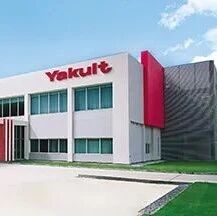
Core Viewpoint - Yakult is undergoing significant restructuring in China, closing key production facilities in Guangzhou and Shanghai due to declining sales and increased competition, indicating a critical challenge for the brand in maintaining its market position [4][6][9]. Group 1: Factory Closures - Yakult announced the closure of its Guangzhou factory, effective November 30, as part of a strategy to optimize production and manage resources more effectively [4][6]. - The Guangzhou factory's closure follows the earlier shutdown of the Shanghai factory, signaling a retreat from core production areas in East China [9]. - Following these closures, Yakult's production bases in China will reduce from six to five, consolidating operations to address declining sales [11]. Group 2: Sales Decline - Daily sales in Guangzhou have dropped significantly from 282 million bottles in 2021 to 149 million bottles in early 2025, indicating nearly a 50% decline [6][7]. - Nationally, Yakult's daily sales fell from 597.4 million bottles in 2019 to 383.1 million bottles in early 2025, reflecting a broader trend of declining demand [9]. Group 3: Market Challenges - Increased competition from local brands like Mengniu and Yili, which offer lower-priced alternatives, has intensified market pressure on Yakult [14][15]. - Changing consumer preferences towards low-sugar and healthier options have diminished Yakult's appeal, as its products are perceived as high in sugar [15][18]. - The brand's reliance on its flagship product, the "small red bottle," has hindered its ability to adapt to market changes and consumer demands [20]. Group 4: Strategic Missteps - Yakult's failure to innovate beyond its core product line has left it vulnerable in a rapidly evolving market, where consumers are seeking diverse and healthier options [20]. - The company's delayed response to the rise of online channels and community-based sales has further exacerbated its market share loss [20].