会稽山一日一熏气泡黄酒

Search documents
资本重新“酿”酒:黄酒能否讲出千亿故事
Jing Ji Guan Cha Bao· 2026-01-19 03:17
Core Viewpoint - The yellow wine sector is experiencing significant growth, with companies like Kuaijishan (601579) achieving remarkable stock price increases, while traditional liquor stocks are facing declines. The potential for the yellow wine industry to reach a market size of 100 billion is highlighted, driven by high-end, youthful, and nationwide strategies [1][2][12]. Group 1: Market Performance - Kuaijishan's stock surged by 90.15% in 2025, making it the top-performing liquor company, while major white liquor brands like Moutai and Wuliangye saw declines of -6.47% and -19.57% respectively [1][2]. - The yellow wine index recorded a 51.67% increase in the first five months of 2025, outperforming other liquor segments and popular concepts like humanoid robots and pet economy [1][2]. Group 2: Industry Dynamics - The market capitalization of Kuaijishan reached 9.86 billion, while Guyue Longshan (600059) was at 8.32 billion, still significantly lower than Moutai and Wuliangye [2]. - The yellow wine industry accounted for less than 2% of the total liquor market, with a production volume of approximately 4 million tons and sales of around 20 billion in 2024 [2][12]. Group 3: Strategic Changes - Kuaijishan and Guyue Longshan implemented significant price adjustments in April 2025, marking Kuaijishan's first major price increase since 2016, aimed at enhancing the industry's pricing structure [3][5]. - The sales revenue from mid-to-high-end products for Kuaijishan reached 1.065 billion in 2024, constituting 67.26% of its total revenue, while Guyue Longshan's mid-to-high-end sales were 1.398 billion, making up 73.36% [3][4]. Group 4: Consumer Trends - The consumer base for yellow wine is becoming increasingly younger, with 70% of users under 35 years old, indicating a shift in consumption patterns [4][5]. - The introduction of innovative products, such as sparkling yellow wine, has shown potential for breaking into new consumer markets, with significant sales growth during promotional events [4][6]. Group 5: Future Outlook - Analysts suggest that the yellow wine industry could realistically aim for a market size of 300 billion by 2025, with the potential for further growth if high-end products are successfully promoted [2][12]. - Despite the optimistic outlook, some analysts express caution, noting that achieving a 100 billion market size will require sustained innovation and the establishment of strong consumer scenarios [12][13].


资本重新“酿”酒:黄酒能否讲出千亿故事
经济观察报· 2026-01-18 05:54
Core Viewpoint - The article discusses the significant growth and potential of the Huangjiu (yellow wine) industry, highlighting a shift in investor interest from traditional Baijiu (white liquor) to Huangjiu, driven by successful high-end, youth-oriented, and national strategies by companies like Kuaijishan and Guyuelongshan [1][3][10]. Group 1: Market Performance - In 2025, Huangjiu stocks experienced a remarkable surge, with Kuaijishan (601579.SH) achieving a 90.15% increase, making it the top-performing liquor company for the year [2]. - The Huangjiu index saw a 51.67% increase in the first five months of 2025, outperforming other liquor segments and popular sectors like robotics and pet economy [2][3]. - As of January 16, 2026, Kuaijishan's market capitalization reached 9.86 billion, while Guyuelongshan's was 8.32 billion, still significantly lower than leading Baijiu companies [2]. Group 2: Industry Trends - The Huangjiu industry is projected to grow, with a market size expected to exceed 30 billion by 2025, up from approximately 20 billion in 2024 [3]. - The production of Huangjiu in China was around 4 million tons in 2024, with a 3.5% year-on-year increase [3]. - The market share of the top two Huangjiu companies increased from 14.9% in 2017 to 37.4% in 2023, indicating a consolidation in the industry [9]. Group 3: Strategic Shifts - Companies like Kuaijishan and Guyuelongshan have implemented price adjustments and high-end product strategies, with Kuaijishan's mid-to-high-end sales reaching 1.065 billion in 2024, accounting for 67.26% of its revenue [5][9]. - The introduction of innovative products, such as sparkling Huangjiu, has shown potential for attracting younger consumers, with 70% of buyers being under 35 years old [6][10]. - The entry of cross-industry players, such as Qingdao Beer acquiring a Huangjiu factory, indicates a growing interest in the Huangjiu market and its potential for complementary sales [7]. Group 4: Challenges and Opportunities - Despite the growth, Huangjiu faces challenges such as a limited consumer base and a lack of premium products in the mid-price range [12][13]. - Analysts suggest that for Huangjiu to reach a market size of 100 billion, it must overcome structural issues and establish strong consumer scenarios [15][16]. - The historical context shows that while Huangjiu has potential, it must innovate and create national-level products to compete effectively with Baijiu [16][17].

三重困境压顶,低度酒饮能否成为酒商中秋突围的救命稻草?
Sou Hu Cai Jing· 2025-09-04 08:22
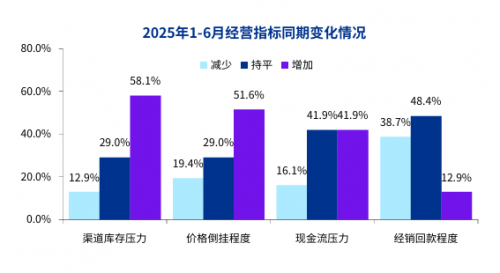
Core Viewpoint - The Chinese liquor industry is facing a significant transformation, with the upcoming Mid-Autumn Festival and National Day serving as a critical test of survival amid severe challenges including inventory buildup, price collapse, and changing consumer scenarios [1][2]. Group 1: Survival Challenges - The liquor industry is experiencing systemic challenges, with inventory turnover days reaching 900, a 10% increase year-on-year, and over 58.1% of distributors reporting increased inventory [3][5]. - The price inversion phenomenon is worsening, with over 50% of distributors and retailers facing negative profit margins, particularly in the 800-1500 yuan price range, where competition from both high-end and low-end products is intense [6][7]. - The new regulations prohibiting alcohol in work meals have severely impacted core consumption scenarios, leading to a 40% year-on-year decline in demand, further exacerbated by online low-price competition [7][9]. Group 2: Market Dynamics - The overall liquor market is shrinking, with traditional categories like white liquor, wine, and beer facing significant challenges, while the low-alcohol beverage market is projected to grow to 74 billion yuan by 2025, with a compound annual growth rate of 25% [11][13]. - The shift in consumer demographics towards younger generations is driving demand for low-alcohol, health-oriented products, necessitating a reevaluation of traditional liquor offerings [11][19]. - Innovative products like low-alcohol sparkling wines are gaining traction, with brands like Mei Jian and craft beers showing significant growth, indicating a shift in consumer preferences [16][18]. Group 3: Strategic Responses - Liquor companies are responding to market pressures by diversifying their product lines, with notable launches of low-alcohol options aimed at capturing the evolving consumer base [14][19]. - The industry's future competitiveness will hinge on understanding consumer needs and adapting to new consumption scenarios, moving away from traditional high-alcohol offerings [14][19]. - The rise of brands like Mei Jian, which has seen over 20% growth in a challenging market, exemplifies the potential for success through targeted product positioning and broad consumption scenarios [16][18].