
传感器技术

Search documents
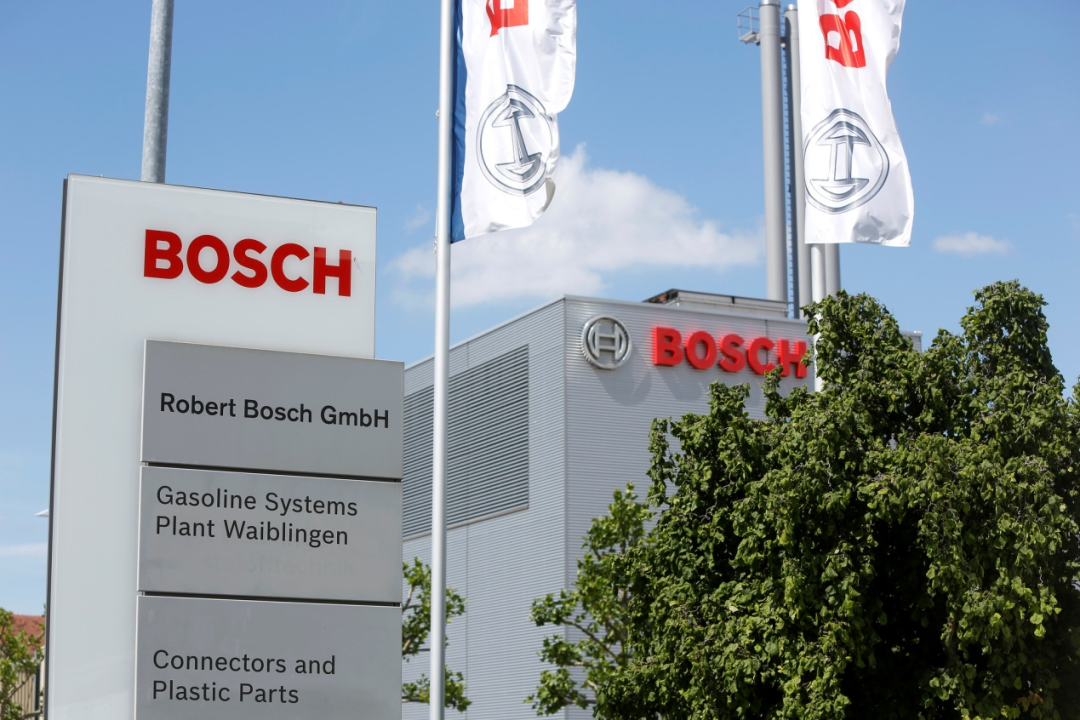
博世确认关停德国工厂!
Zhong Guo Qi Che Bao Wang· 2026-02-26 02:40
Core Viewpoint - Bosch has reached an agreement to cease production at its Waiblingen plant by the end of 2028, affecting approximately 560 jobs, reflecting the contraction of the traditional automotive parts industry in Europe and initiating a significant cost-cutting and global capacity restructuring plan within Bosch's smart mobility division [1][3] Group 1: Company Restructuring - The Waiblingen plant is part of Bosch's smart mobility division, which is crucial for the company, generating €56 billion in revenue in 2025, accounting for over 60% of the group's total revenue of €91 billion [3] - Bosch has committed to providing various relocation options for affected employees, with around 220 able to transfer internally, while others will be offered early retirement, pension optimization, or voluntary severance packages [3] - The closure is primarily due to high production costs and declining market demand, particularly in Europe, where sales of related products have dropped nearly 50% over the past eight years [3][4] Group 2: Market Dynamics - The traditional products produced at the Waiblingen plant, such as connectors, are being replaced by new technologies in electric vehicles, leading to a significant decrease in demand for these components [4] - Bosch's decision to close the plant follows extensive negotiations and protests, with the company stating that it could not produce competitively at the Waiblingen site [4] - The company plans to shift production capacity from Waiblingen to facilities in China and Thailand to maintain global supply stability amid increasing price competition and cost pressures [4] Group 3: Broader Industry Trends - The closure of the Waiblingen plant is part of a larger trend, with Bosch also adjusting operations at multiple other German plants, facing significant layoffs as negotiations continue [7] - Bosch aims to cut approximately 13,000 jobs by the end of 2030, building on a previously announced plan to reduce 9,000 jobs in Germany, resulting in a total of 22,000 job cuts [8] - The automotive industry is experiencing structural challenges due to the shift towards electrification and digitalization, with Bosch facing an annual cost gap of approximately €2.5 billion in its smart mobility division [8] Group 4: Future Outlook - Bosch is reallocating its manufacturing capabilities to regions with cost advantages while retaining high-end research and development in key markets [9] - The company has secured €10 billion in customer orders for smart driving solutions and plans to invest €2.5 billion in AI applications by the end of 2027 [9] - The ongoing transformation reflects a collective struggle within the European automotive supply chain, as companies like ZF and Continental also initiate large-scale layoffs and capacity adjustments [11]

博世“痛苦之年”的中国亮色
Xin Lang Cai Jing· 2026-02-11 04:49
Core Insights - Bosch is experiencing a challenging fiscal year in 2025, with a significant drop in profit margins due to high transformation costs and sluggish growth in the automotive sector [3][7] - The company reported total sales of €91 billion, a slight increase of 0.8%, while EBIT plummeted by 45% to €1.7 billion, resulting in a profit margin of approximately 2% [5][8] - The Chinese market is emerging as a critical support for Bosch's transformation, contributing about 20% to total revenue with a growth rate of 4.9% [6][26] Financial Performance - Total sales for fiscal year 2025 reached €91 billion, up from €90.3 billion in 2024, reflecting a 0.8% increase, with a real growth rate of 4.2% after currency adjustments [5] - EBIT decreased from €3.1 billion in 2024 to €1.7 billion in 2025, marking a 45% decline [5][8] - The EBIT margin fell to approximately 2%, significantly below the 3.5% margin in 2024 and the long-term target of 7% [5][8] Transformation Challenges - The decline in profit margins is attributed to three main factors: the costs associated with restructuring and layoffs, adverse global economic conditions, and sustained high R&D investments [8][9] - Bosch has set aside approximately €2.7 billion for restructuring and severance, which has heavily impacted current profits [8] - The company is undergoing a significant workforce reduction, planning to cut around 13,000 jobs between 2025 and 2030 to maintain desired profit margins [8][11] Market Position and Competitiveness - Despite the challenges, Bosch maintains a strong position in core automotive components, particularly in chassis control and powertrain systems, with a robust order book of €10 billion in advanced driver assistance systems and sensor technologies [9][10] - Bosch's competitive advantages include its deep expertise in vehicle mechanics and large-scale manufacturing capabilities, which are difficult for competitors to replicate [10] - The company faces increasing competition from new entrants in the battery and software sectors, which are reshaping the automotive landscape [16][17] Strategic Focus on China - Bosch's strategy of "In China, for the World" emphasizes leveraging China's rapid innovation and efficiency in the automotive supply chain to drive global competitiveness [6][27] - In 2025, Bosch's sales in China reached approximately €14.98 billion, with the smart mobility segment growing by 6.2%, outperforming global averages [26][28] - The company aims to utilize its experiences and innovations from the Chinese market to enhance its global operations and support the internationalization of Chinese automakers [27][28]

汽车零部件巨头拆分自救 博世预计行业2027年回暖
Jing Ji Guan Cha Wang· 2026-02-06 13:16
Core Insights - The global automotive parts industry is undergoing significant transformation challenges since 2025, driven by high investments in electrification and shrinking traditional business, leading to a slowdown in the growth of the electric vehicle market in Europe and the US [2] - Major companies like Bosch, Continental, and ZF are adopting a "spin-off for self-rescue" strategy, focusing on divesting non-core businesses and restructuring to shift towards smart electric business [2][3] - The overall economic environment remains weak, and the automotive parts industry has not yet seen a recovery, with companies like Bosch and Continental reporting mixed results from their restructuring efforts [2][8] Company Strategies - Bosch has restructured its automotive business into the "Bosch Smart Mobility Group," focusing on core areas like intelligent driving solutions and enhancing R&D capabilities in China, resulting in a €10 billion order for smart driving solutions in 2025 [3][11] - Continental has completely restructured its business model by spinning off its automotive group into AUMOVIO, focusing on software-defined vehicles, and is also optimizing its workforce by cutting 4,000 R&D positions [4][5] - Schaeffler has adopted a strategy of divesting traditional fuel-related assets while concentrating on electric drive and hydrogen fuel cell technologies, reflecting a broader industry trend of focusing on core competencies [6] Financial Performance - Bosch reported a slight revenue increase to €91 billion in 2025, but its EBIT margin was only about 2%, indicating ongoing profitability pressures due to a weak economic environment and rising costs [8][10] - Continental's revenue for 2025 was approximately €19.7 billion, with an adjusted EBIT margin of about 10.2%, demonstrating a stable performance post-restructuring [9] - Aptiv (formerly Delphi Technologies) reported a revenue of $20.4 billion in 2025, a 2% increase year-over-year, with adjusted net income of $1.726 billion, indicating some recovery in its financials [9] Market Outlook - The automotive parts industry is expected to see a substantial recovery only by 2027, as companies continue to navigate through restructuring and market challenges [2][12] - Bosch anticipates that the market for automotive parts will not see significant improvement until 2027, emphasizing the need for focused resource allocation and technological breakthroughs post-spin-off [12] - The Chinese market remains a critical growth area for global automotive parts companies, with firms like Bosch and Magna actively pursuing partnerships with Chinese automakers to enhance their business prospects [12]
凯尔达(688255.SH):控股子公司获得发明专利
Ge Long Hui A P P· 2025-09-15 08:04
Core Viewpoint - The company Kailda (688255.SH) has recently received an invention patent certificate from the National Intellectual Property Administration, which reflects and extends its sensor technology [1] Group 1: Patent Acquisition - The invention patent obtained is a significant representation of the company's sensor technology [1] - This patent acquisition will not have a major impact on the company's recent operations but is beneficial for enhancing the company's intellectual property protection system [1] Group 2: Competitive Advantage - The patent will help the company leverage its proprietary technology advantages, promote technological innovation, and enhance its core competitiveness [1]
