低空基础设施

Search documents
申万宏源策略十五五规划解读:新增新型基础设施建设+新产业赛道十五五将带来哪些投资机会
Shenwan Hongyuan Securities· 2026-03-15 10:24
Core Insights - The "14th Five-Year Plan" framework remains largely intact, with a focus on five key areas: economic development, innovation-driven growth, social welfare, security, and green low-carbon initiatives. The details have been optimized to address current development challenges and social needs [1][2] - The new plan introduces a clearer policy direction, emphasizing the dual control of carbon emissions and energy structure transformation, shifting from energy consumption control to direct carbon emission management [3][2] - The plan expands the number of specialized columns from 20 to 23, focusing on strategic tasks and core capability enhancement rather than just project implementation [1][2] Investment Opportunities - New infrastructure construction focuses on five areas: integrated computing networks, satellite internet, information communication networks, data infrastructure, and low-altitude infrastructure. Key requirements include building a new generation of supercomputing facilities and enhancing satellite internet applications [1][2][10] - The new industry and new track development section identifies ten key areas for technological breakthroughs, including integrated circuits, embodied intelligence, biomanufacturing, new batteries, commercial aerospace, domestic large aircraft, low-altitude equipment, green hydrogen, brain-computer interfaces, and high-end medical devices [1][2][6] Traditional Infrastructure - The traditional infrastructure section retains its focus on transportation, energy, and water networks, with specific policy adjustments such as the renaming of the transportation section to "National Comprehensive Transportation Network Construction" and the energy section to "New Energy System" [1][2][7] Economic Reforms - The plan introduces multiple reforms in the socialist market economy, private economy, state-owned enterprises, and finance, aiming to enhance market vitality and innovation. This includes a focus on market-oriented pricing mechanisms and support for private enterprises to lead major technological breakthroughs [2][3]
申万宏源策略十五五规划解读:新增“新型基础设施建设+新产业赛道”十五五将带来哪些投资机会
Shenwan Hongyuan Securities· 2026-03-15 08:44
Core Insights - The report outlines the investment opportunities arising from the "New Infrastructure Construction + New Industry Tracks" as part of the 14th Five-Year Plan, emphasizing a shift towards green and low-carbon development [1][2] - The 14th Five-Year Plan maintains a five-part framework, with a focus on economic development, innovation, social welfare, security, and green low-carbon initiatives, addressing current development pain points [1][3] - The report highlights the introduction of new independent chapters in the 14th Five-Year Plan, clarifying policy direction and enhancing strategic priorities, particularly in modern industry and digitalization [1][2] Investment Opportunities - The new infrastructure construction focuses on five key areas: integrated computing networks, satellite internet, information communication networks, data infrastructure, and low-altitude infrastructure [1][3] - The new industry tracks include ten core areas such as integrated circuits, embodied intelligence, biomanufacturing, new batteries, commercial aerospace, domestic large aircraft, low-altitude equipment, green hydrogen, brain-computer interfaces, and high-end medical devices [1][3] - Specific tasks for each track are outlined, such as enhancing advanced manufacturing capabilities in integrated circuits and accelerating the development of key technologies in biomanufacturing [1][3][7] Policy Adjustments - The report notes a significant shift in policy focus from energy consumption control to direct carbon emission management, with new measures for carbon footprint accounting and product carbon emission limits [2][3] - The financial sector is transitioning from supply-side reforms to a "Financial Power Strategy," emphasizing the need for deeper investment and financing reforms to support the real economy [2][3] - The report emphasizes the importance of high-level opening-up strategies, with a focus on expanding service industry openness and promoting the internationalization of the Renminbi [3][2] Traditional Infrastructure - The traditional infrastructure section retains focus on transportation, energy, and water networks, with specific policy adjustments to enhance the national comprehensive transportation network and new energy systems [1][3] - Key projects include the construction of major clean energy bases and the expansion of natural gas pipelines to support energy transition goals [1][3][8] Technological Advancements - The report highlights the need for breakthroughs in high-end materials, basic components, software, and industrial machinery to strengthen the industrial supply chain [4][7] - Emphasis is placed on advancing artificial intelligence, quantum technology, and biotechnology as part of the frontier technology initiatives [12][14]
中国银河证券:新基建统筹建设深化布局 通信行业蓬勃发展
智通财经网· 2026-03-09 01:31
Core Viewpoint - The report from China Galaxy Securities indicates that China's new infrastructure has evolved from "concept proposal" to "system planning," emphasizing efficient operation and systematic layout during the 14th and 15th Five-Year Plans, which will drive the robust development of the communication industry [1][3]. Group 1: New Infrastructure Development - The National Development and Reform Commission highlighted the need for coordinated and efficient use of new infrastructure, focusing on building strategic, application-supporting, and forward-looking major technological infrastructures [2]. - The 15th Five-Year Plan emphasizes "appropriate advanced construction of new infrastructure," establishing the core principles of "coordinated promotion and efficient utilization" [3]. Group 2: Communication Infrastructure and Growth Potential - China's information and communication infrastructure has a significant scale advantage, with 80.9% availability of 5G-SA mode by the end of 2025, leading internationally [4]. - In the computing network sector, the U.S. leads with 44% of global data center capacity, while China holds 26%, indicating a competitive landscape [4]. - The satellite internet sector shows a considerable gap, with the U.S. having around 10,000 satellites in orbit compared to China's 250-300, suggesting substantial room for growth [4].

上海:编制发布低空基础设施建设方案
Zheng Quan Shi Bao Wang· 2026-01-04 08:10
Core Viewpoint - The Shanghai Municipal Economic and Information Technology Commission has issued measures to accelerate the construction of a low-altitude economy and advanced manufacturing cluster in the Yangtze River Delta, emphasizing the need for scientific planning of low-altitude infrastructure [1] Infrastructure Development - The measures include the development of a low-altitude infrastructure construction plan and the reinforcement of land and funding support for non-profit low-altitude infrastructure projects [1] - Gradual construction of low-altitude infrastructure will be carried out, focusing on large specialized take-off and landing sites and low-altitude intelligent network systems that meet the needs of new aviation vehicles [1] Financial Support - The government will provide financial support for safety protection and other non-profit low-altitude infrastructure projects, with a maximum support of up to 20 million yuan [1] - There is encouragement for social capital participation in the construction of low-altitude infrastructure [1] Technological Innovation - Support will be given for the first use of new technology equipment in communication, monitoring, navigation, and meteorology within the low-altitude infrastructure construction sector [1]
《低空基础设施发展研究报告(2025)》正式发布
Sou Hu Cai Jing· 2025-11-26 03:52
Core Insights - The report titled "Research on Low Altitude Infrastructure Development (2025)" was officially released during the 2025 Hunan (International) General Aviation and Low Altitude Economic Industry Expo, focusing on the development of low altitude infrastructure in China [1] - It aims to provide theoretical support and practical references for the safe, healthy, and sustainable development of the low altitude economy, which is identified as a key area for optimizing economic structure and fostering new growth momentum [1][3] Summary by Sections Low Altitude Infrastructure - Low altitude infrastructure is defined as the cornerstone of low altitude economic development, encompassing various facilities such as takeoff and landing facilities, flight service facilities, supply support facilities, safety protection facilities, and digital platforms like low altitude intelligent network systems [1] Development Trends - The report outlines eight major trends for the development of low altitude infrastructure, including: - Transition from inefficient airspace management to refined and effective management - Movement from isolated pilot projects to a unified national framework with three-level linkage - Shift from scarce dedicated takeoff facilities to public, networked, and integrated facilities - Evolution from separated technologies to integrated smart solutions across air, land, and sea - Progress from fragmented standards and regulations to forward-looking, unified, and systematic approaches - Change from spontaneous market-driven innovation to coordinated efforts under a national system involving industry, academia, and research - Transition from demonstration applications to large-scale, commercial, and civilian-oriented uses - Development model evolution from singular construction to collaborative development with energy and information infrastructure [2] Recommendations for Infrastructure Development - Six key recommendations are proposed to promote the construction of a modern low altitude infrastructure system: - Incorporate low altitude infrastructure into the overall urban and rural planning - Strengthen top-level planning to create a multi-scenario, multi-entity, and multi-level takeoff network - Deepen technological integration to accelerate the establishment of a digital low altitude operating environment - Focus on the application of new equipment to avoid redundant construction due to outdated technology - Enhance cost control, prioritizing functionality over unnecessary high-end features - Innovate financing models to fully engage social capital and actively cultivate new "low altitude +" business formats [2] Long-term Vision - The construction of low altitude infrastructure is characterized as a long-term, systematic project requiring collaboration among government, enterprises, research institutions, and society [3] - The next five years are identified as a strategic opportunity period for low altitude infrastructure development, emphasizing principles such as coordinated planning, standard prioritization, technology-driven approaches, scenario leadership, and comprehensive efforts [3] - The report serves as an important reference for government policy formulation, strategic planning for industry enterprises, and technological advancements by research institutions, contributing to the sustainable development of China's low altitude economy and the cultivation of new economic growth points [3]
发布八项团体标准 2025首届国际低空产业大会在成都双流区召开
Mei Ri Jing Ji Xin Wen· 2025-09-26 15:29
Group 1 - The first International Low Altitude Industry Conference was held from September 25 to 27, 2025, in Chengdu, focusing on "Navigating Low Altitude Safety to Empower Industry Development" [1] - The conference featured nearly a hundred experts presenting reports and discussions, showcasing technological hotspots and development trends in the low altitude economy [1] - Eight group standards were released, including guidelines for low altitude safety terminology, risk assessment, and operational requirements, filling a gap in China's low altitude standards and supporting the establishment of a comprehensive low altitude safety system [1] Group 2 - The "Typical Application Scenarios Demonstration Project" was launched, with 25 units receiving honorary awards, highlighting over 200 low altitude projects that participated in the competition [2] - The low altitude industry expo gathered nearly 200 domestic enterprises and showcased over 2,000 cutting-edge technology products and solutions, emphasizing the innovative applications and exploration in the low altitude economy [2] - The expo attracted over 8,000 professional visitors from various sectors, including government, emergency rescue, transportation management, military, and aerospace, indicating strong interest and engagement in low altitude technology research and procurement [2]
规模升级、10万平米展区,2026国际低空经济博览会明年7月举行
Guo Ji Jin Rong Bao· 2025-09-19 12:15
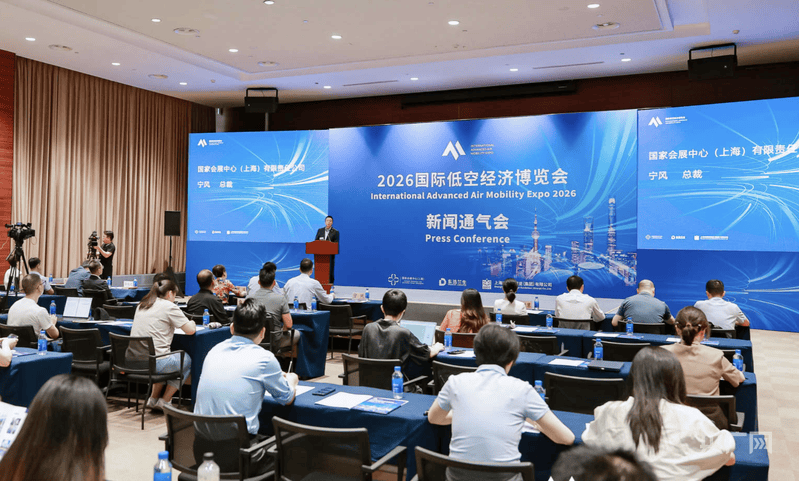
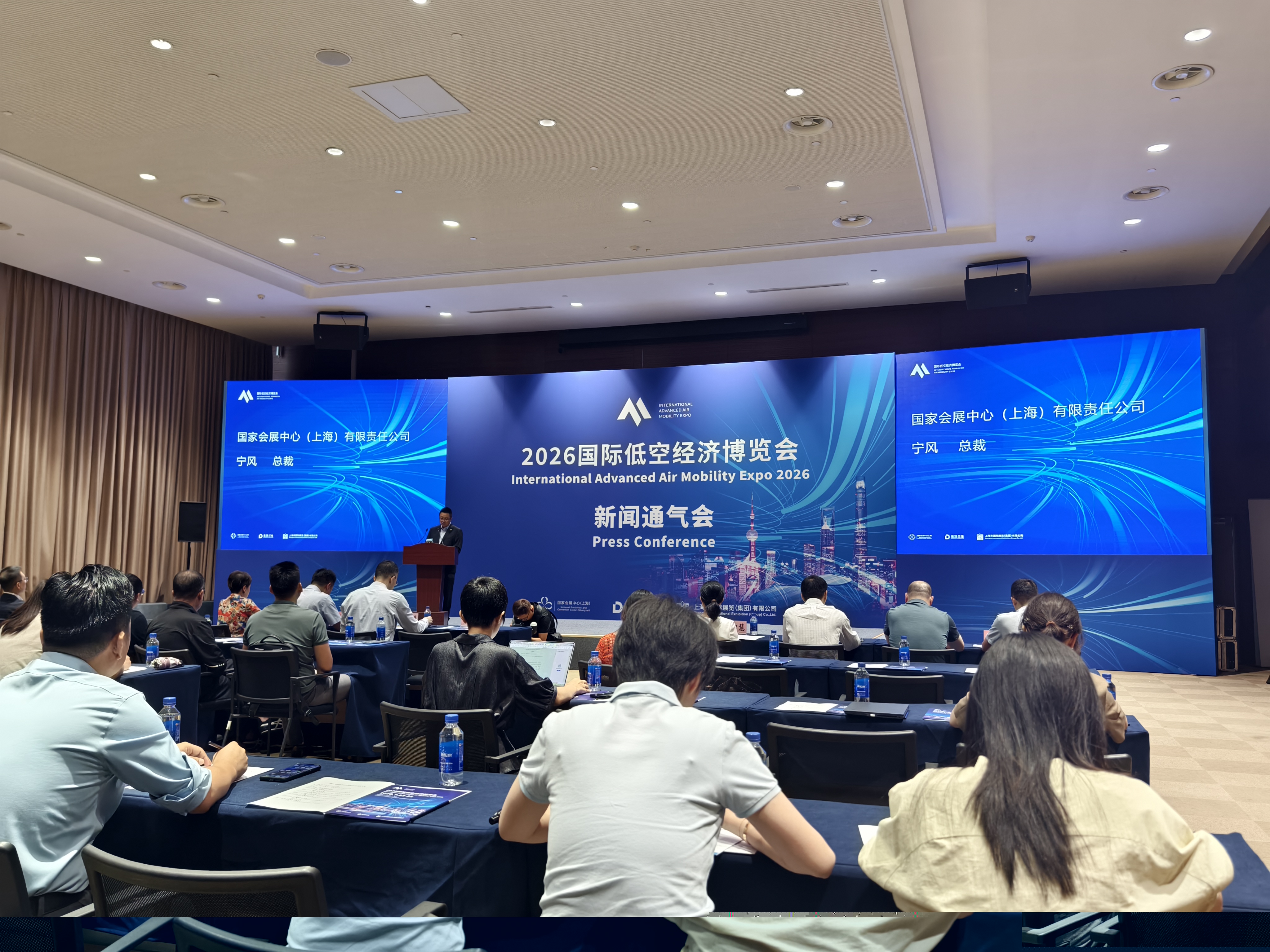
Core Viewpoint - The 2026 International Low Altitude Economy Expo will be held from July 22 to 25, 2026, in Shanghai, focusing on promoting high-quality development of the low altitude economy and driving the integration of the industry, application, and ecological chains [1][3]. Group 1: Event Overview - The expo aims to showcase new technologies, achievements, and directions in the low altitude economy, providing clear guidance for industry development [3]. - The exhibition area will cover 100,000 square meters, expanding on key exhibits such as low altitude vehicles and infrastructure, while also including new materials and electric power industries [3]. - The event will feature a main forum, multiple parallel forums, and various supporting activities, with an expected attendance of 100,000 visitors [3]. Group 2: International Collaboration - The expo will enhance its international influence by collaborating with organizations like the International Aircraft Owners and Pilots Association (AOPA) and the Royal Aeronautical Society of the UK [4]. - It will focus on engaging with target countries and regions in Southeast Asia and along the Belt and Road Initiative, promoting technical exchanges and project cooperation [4]. - The event aims to connect Chinese low altitude enterprises with global market resources, increasing their exposure and collaboration opportunities [4]. Group 3: Industry Impact - The 2025 International Low Altitude Economy Expo attracted nearly 300 exhibitors and over 55,200 visitors, showcasing a wide range of products including drones and eVTOLs [5]. - Significant business agreements were made during the 2025 expo, including a $1.75 billion deal for 500 eVTOLs, highlighting the event's role in commercial transformation [5]. - The expo serves as a platform for enhancing brand visibility and facilitating potential customer connections for exhibitors [5]. Group 4: Economic Significance - The low altitude economy is recognized as a strategic emerging industry and a key driver for high-quality economic development in the country [6]. - The 2026 expo will further solidify the strategic advantages of the low altitude economy and promote safe and healthy development [6]. - It aims to strengthen international exchanges and cooperation in the low altitude economy sector [6].


2026国际低空经济博览会将于明年7月在沪举行 观众预计达10万人次
Zheng Quan Shi Bao Wang· 2025-09-19 06:29
Group 1 - The 2026 International Low Altitude Economy Expo will be held from July 22 to 25, 2026, at the National Exhibition and Convention Center (Shanghai), with a theme of "Harnessing New Low Altitude Trends, Opening a New Chapter in the Economy" [1] - The exhibition area is planned to be 100,000 square meters, expanding beyond low-altitude aircraft and infrastructure to include new materials and three-electric industries [1] - The expo aims to create an international exchange platform, focusing on Southeast Asia and countries along the Belt and Road Initiative, and will invite international exhibitors, buyers, media, and government organizations [1] Group 2 - The 2025 International Low Altitude Economy Expo facilitated commercial transformation in the low-altitude sector, resulting in over 400 intended orders, including a $1.75 billion agreement for 500 eVTOLs with Volant Aviation and the Thai Pacific Group [2] - Nearly 300 companies participated in the 2025 expo, showcasing products such as drones, eVTOLs, flying cars, and low-altitude infrastructure, covering an exhibition area of 60,000 square meters and attracting over 55,200 visitors [2]
已闭幕的2025国际低空经济博览会 促成洽谈意向订单超400单
Xin Lang Cai Jing· 2025-09-19 06:05
Core Insights - The 2025 International Low Altitude Economy Expo has successfully facilitated commercial transformation in the low-altitude sector, resulting in over 400 intended orders [1] - Notable agreements include a procurement contract for 500 eVTOL aircraft between Volant Aviation and Thailand's Pan-Pacific Group, totaling $1.75 billion [1] - The expo attracted nearly 300 participating companies, showcasing products across the drone, eVTOL, flying car, and low-altitude infrastructure sectors, covering an exhibition area of 60,000 square meters and receiving over 55,200 visitors [1]
集中展现“三链”“三新”第二届国际低空经济博览会2026年7月启幕
Sou Hu Cai Jing· 2025-09-19 04:56
Core Insights - The 2026 International Low Altitude Economy Expo will be held from July 22 to 25, 2026, in Shanghai, focusing on high-quality development of the low altitude economy and the integration of industry, application, and ecological chains [1][7] - The expo aims to showcase new technologies, achievements, and directions in the low altitude economy, providing clear guidance for industry development [1] Group 1: Event Overview - The exhibition area for the 2026 expo is planned to be 100,000 square meters, expanding on previous events to include new materials and electric systems [1] - The event will feature a main forum, multiple parallel forums, and various supporting activities, with an expected attendance of 100,000 visitors [1] Group 2: International Collaboration - The expo will strengthen cooperation with international organizations such as AOPA and the Royal Aeronautical Society, inviting global exhibitors, buyers, and media, particularly from Southeast Asia and Belt and Road countries [3] - The goal is to enhance the visibility and collaboration opportunities for Chinese low altitude enterprises in the global market [3] Group 3: Industry Integration - The expo will focus on the needs of low altitude enterprises through thematic exhibitions, professional forums, and various interactive activities to link exhibitors with target audiences [4] - It aims to promote the integration of low altitude applications and extend from the industrial end to the consumer end [4][5] Group 4: Previous Success and Future Goals - The inaugural 2025 expo attracted nearly 300 exhibitors and over 55,200 visitors, showcasing a wide range of products including drones and eVTOLs, and facilitating significant business agreements [6] - The 2026 expo is positioned as a key driver for the development of the low altitude economy, emphasizing international exchange and cooperation [7]