
低空飞行器电池

Search documents
限时免费报名!FINE2026 先进电池大会,聚焦固态电池+钠电池+机器人电池+AI数据中心储能......
DT新材料· 2026-03-06 16:04
先进电池产业大会 6月10-12日 上海新国际博览中心 FINE2026 先进电池产业大会 定于 6月10日至12日在上海新国际博览中心召开 。同期将举办8场专题论坛,涵盖 固态电池、钠离子电池、 "人形机器人电池"、"智能 汽车电池"、"低空飞行器电池"、"商业航天电池"、"AI数据中心储能"、"通信储能储能" 等前沿方向。 大会将邀 请 80+ 位行业专家、产业领袖与学术科学家 ,分享前沿技术报告与深度行业见解, 预计参会规模突破 1000 人 。目前已有 40+ 终端应用企业、头部电芯 企业、资深材料企业、中科院院 所、知名高校及行业协会 深度参与, 实现产业链全链路贯通 。 大会报名火热进行中, 诚邀各界行 业精英共赴盛会, 把握时代风口,共谋发展新机遇 。 免费参会! 转发本条推文至朋友圈,即可 免费参会 (原价 3000 元)。 名额仅限 前 100 名 ,活动截止至 4 月30 日 ,先到先得! 适用企业范围(每家企业限额2名): 电 芯、电池材料、机器人、eVTOL、新能源汽车、智能机器人、商业航天。 扫码报名 二、 大 会组织 主办单位: DT先进电池 DT新材料 DT未来产业 支持单位: ...


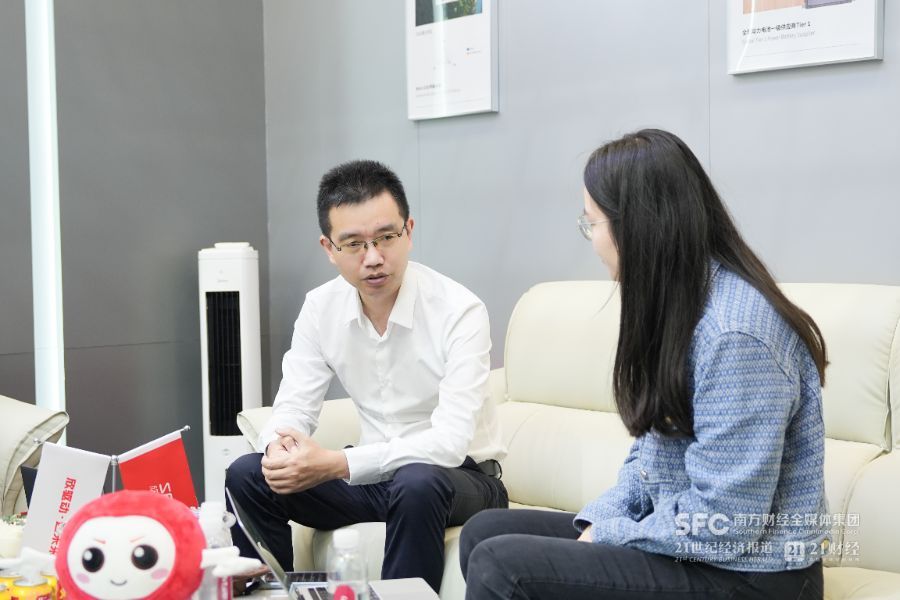
专访欣旺达动力中央研究院院长徐中领:eVTOL电池需要在能量密度、功率密度和安全性三者间找到平衡
2 1 Shi Ji Jing Ji Bao Dao· 2025-04-30 02:03
Core Viewpoint - The low-altitude economy is gaining momentum since it was included as a strategic emerging industry in the 2023 Central Economic Work Conference, with battery technology being a critical barrier to its development [1][2]. Group 1: Battery Technology Requirements - Aviation batteries require high energy density, high power density, and extreme safety, making them more demanding than batteries for electric vehicles [1][3]. - Energy density for aviation batteries needs to reach at least 300Wh/kg to ensure economic viability, with some experts suggesting a target of 400Wh/kg for widespread electric aircraft use [5][6]. - Safety standards for aviation batteries include the ability to withstand a 15-meter drop without failure [7]. Group 2: Development and Market Outlook - The company began developing aviation batteries in 2023, coinciding with significant industry milestones such as the inclusion of low-altitude economy in national strategy and the first eVTOL airworthiness certificate [3][10]. - The market for low-altitude flying vehicles is expected to gradually grow after 2027, with a potential explosion in demand by 2030, similar to the trajectory of the electric vehicle market [10][11]. Group 3: Product Offerings - The company showcased three types of batteries at the Shanghai Auto Show, including a 230Wh/kg high-power soft pack battery, a 360Wh/kg soft pack cell, and a 350Wh/kg cylindrical cell, each designed for different aviation applications [8]. - Current production batteries have an energy density of 320Wh/kg, suitable for low-altitude logistics and tourism applications, with ongoing development for higher density batteries [16]. Group 4: Safety and Reliability - The company emphasizes high safety and reliability for passenger-carrying aircraft, with specific requirements for battery performance under failure conditions [17][18]. - Safety features include advanced monitoring systems and materials designed to withstand high temperatures and prevent thermal runaway [18]. Group 5: Competitive Advantages - The company's aviation batteries are developed based on customer needs, achieving a balance between energy density, power density, and safety [21]. - Future solid-state products are expected to exceed 400Wh/kg in energy density, positioning the company among the top tier in the domestic market [22].

双轮驱动构筑智慧能源新生态 欣旺达一季度营收净利同比双增长
Zheng Quan Ri Bao Wang· 2025-04-29 13:45
Core Viewpoint - XINWANGDA has demonstrated strong financial performance in Q1 2025 and throughout 2024, showcasing resilience and growth in the face of industry challenges, driven by a dual strategy of "consumer electronics + smart energy" [1][2][4] Financial Performance - In Q1 2025, XINWANGDA achieved revenue of 12.289 billion yuan, a year-on-year increase of 11.97%, and a net profit of 386 million yuan, up 21.23% [1] - For the full year 2024, the company reported revenue of 56.021 billion yuan, a 17.05% increase, and a net profit of 1.468 billion yuan, growing 36.43% [1] Consumer Battery Segment - The consumer battery segment generated revenue of 30.405 billion yuan in 2024, reflecting a 6.52% growth and maintaining a 54.27% revenue share with a gross margin of 17.65% [2] - Global smartphone shipments reached 1.24 billion units in 2024, marking six consecutive quarters of growth, while the PC market saw shipments of approximately 253 million units, also growing for five consecutive quarters [2] Global Expansion - XINWANGDA is expanding its global footprint with the construction of a manufacturing base in Vietnam, aiming to create a "China R&D + global manufacturing" collaborative network [3] Strategic Emerging Segments - The strategic emerging segment, particularly the power battery sector, saw revenue of 15.139 billion yuan in 2024, a 40.24% increase, with a shipment volume of 25.29 GWh, up 116.89% [4] - The energy storage segment became a highlight with revenue of 1.889 billion yuan, a 70.19% increase, and installed capacity doubling to 8.88 GWh [4] Technological Advancements - XINWANGDA is advancing its technology portfolio, launching its first aviation power battery and making significant progress in solid-state battery development, with the first generation achieving over 300 Wh/kg energy density [5][6] - The company is transitioning from a battery supplier to an energy ecosystem builder, leveraging synergies between consumer electronics and new energy sectors [6]