先进芯片制造设备

Search documents
芯片股盘前集体上涨 此前阿斯麦、希捷和德州仪器公布强劲业绩
Xin Lang Cai Jing· 2026-01-28 10:42
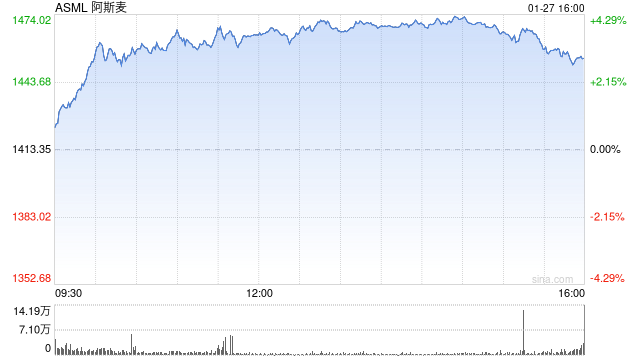
在阿斯麦控股、希捷科技和德州仪器公布强劲业绩后,半导体、存储类股票在周三盘前交易中走高。 阿斯麦一度大涨7.5%,创历史新高,此前该公司第四季度订单量远超分析师预期,人工智能基础设施 的快速建设显著推升了其先进芯片制造设备的需求 美国同业中上涨的股票包括:应用材料涨4.1%;泛林集团涨4.4%;科磊涨3.1%。 德州仪器盘前上涨7.3%,公司给出的业绩指引被视为积极信号,显示其主要终端市场需求改善。 相关个股:微芯科技涨5.1%;安森美半导体涨4.5%;恩智浦半导体涨3.0%;ADI>亚德诺半导体涨 2.9%。 另外,希捷科技盘前股价上涨逾10%,此前这家计算机硬件和存储公司第二财季业绩超出预期,并给出 了积极的未来指引。 在阿斯麦控股、希捷科技和德州仪器公布强劲业绩后,半导体、存储类股票在周三盘前交易中走高。 阿斯麦一度大涨7.5%,创历史新高,此前该公司第四季度订单量远超分析师预期,人工智能基础设施 的快速建设显著推升了其先进芯片制造设备的需求 美国同业中上涨的股票包括:应用材料涨4.1%;泛林集团涨4.4%;科磊涨3.1%。 德州仪器盘前上涨7.3%,公司给出的业绩指引被视为积极信号,显示其主要终端市场 ...


欧洲科技股业绩“碾压”预期,AI浪潮成最强引擎
智通财经网· 2025-10-27 07:05
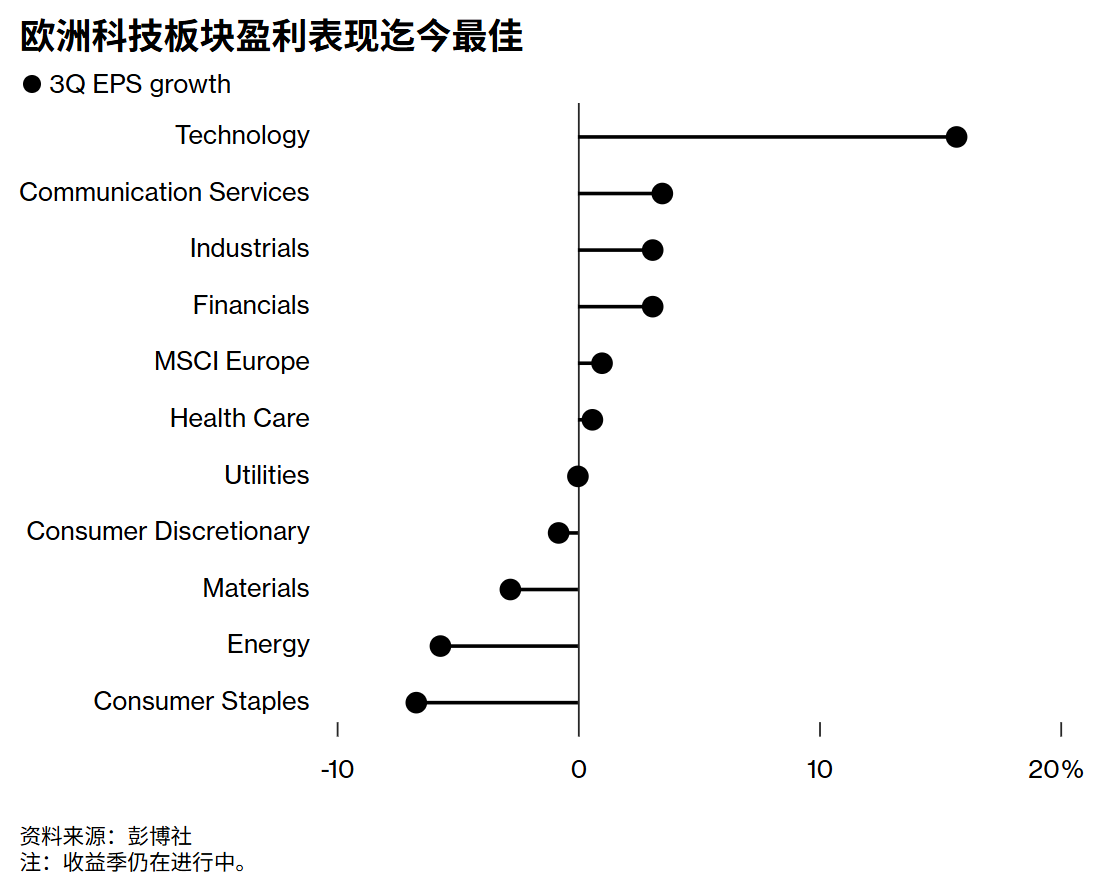
Group 1: Core Insights - The expansion of artificial intelligence (AI) investments is reshaping the European technology landscape, with companies reporting third-quarter earnings significantly exceeding market expectations [1] - The MSCI Europe Technology Index shows a 16% year-over-year increase in earnings per share for its constituents, with over 86% of the reported earnings surpassing the previous quarter's expected growth of 4.2% [1] Group 2: Company Performance - ASML, a leading semiconductor equipment manufacturer, reported a substantial increase in orders due to accelerated AI infrastructure spending, alleviating market concerns about an economic slowdown [3] - BE Semiconductor Industries NV also exceeded expectations in orders and profits, driven by AI-related demand in Asia [3] - SAP SE provided a mixed outlook for its core cloud business but reassured investors with discussions on the growing application of AI, emphasizing its role as a key growth enabler [3] - Ericsson's profit surged due to the divestment of its call routing business, while Nokia's third-quarter profits exceeded expectations, primarily benefiting from AI and cloud customer demand [3] Group 3: Market Trends - Analysts believe that the AI supercycle is driving demand for fiber access, data center connectivity, and transmission networks, improving Nokia's sales outlook, with the U.S. market emerging as a key growth area [4] - The market's bullish sentiment towards AI is spilling over into Europe, leading to upward revisions in earnings expectations for companies directly benefiting from AI infrastructure investments [4] Group 4: Challenges and Outlook - European tech giants face supply chain challenges due to escalating U.S.-China trade tensions, which have disrupted the semiconductor supply chain and worsened the operating environment [8] - Companies like STMicroelectronics and Texas Instruments indicated that automotive and industrial customers are delaying orders, with potential impacts from the Dutch government's takeover of the Chinese chipmaker Nexperia [8] - Despite these challenges, AI is still viewed as a core driver of long-term growth, with expectations that announced AI chip deals will gradually penetrate the supply chain and convert into actual orders, sustaining growth momentum beyond 2026 [8]


荷兰半导体,有了危机感
半导体行业观察· 2025-06-02 02:28
Core Viewpoint - The Netherlands must accelerate investments in the semiconductor industry to maintain its competitive edge amid increasing international competition and geopolitical tensions [1][2]. Group 1: Strategic Importance of Semiconductors - Semiconductors are essential for modern technologies, including electric vehicles, medical devices, artificial intelligence, and defense systems [2]. - The Netherlands plays a critical role in the semiconductor supply chain but is becoming overly dependent on other countries for key value chain components [2]. Group 2: Beethoven Plan - The "Beethoven Plan" involves a joint investment of €2.51 billion from the government, regional authorities, and industry to enhance the semiconductor business environment [2]. - The plan focuses on the Brainport region, which includes key players like ASML and aims to create 62,000 new housing units and improve infrastructure by 2030 [2]. - A talent development initiative aims to train 38,000 skilled professionals by 2030, with an investment of €450 million and ongoing annual funding of €80 million [2]. Group 3: European Semiconductor Coalition - The urgency for action extends beyond the Netherlands, as the European Semiconductor Coalition was formed with eight other EU member states to enhance Europe's position in the global semiconductor value chain [3]. - The coalition aims to increase local chip production, as Europe currently holds only about 10% of the global semiconductor sales market [3]. Group 4: International Cooperation and Security - The Netherlands is fostering collaborations with countries like South Korea, Japan, Taiwan, and the USA in areas such as innovation and talent exchange [5]. - Stricter export controls on advanced chip manufacturing equipment have been implemented to prevent misuse for military purposes [5]. Group 5: National Innovation Capability - A broad coalition of 64 semiconductor companies in the Netherlands has proposed the "ChipNL" innovation plan, focusing on chip design, advanced packaging, and production equipment [6]. - The plan seeks government co-funding to enhance the country's semiconductor capabilities and is closely aligned with national defense objectives [6]. Group 6: Semiconductor Industry Blueprint - The Netherlands will establish the "Semicon Board Netherlands" in early 2025 to create a development blueprint for the semiconductor industry aimed at 2035 [7]. - The Minister emphasizes the need for immediate action to maintain the country's creativity, strategic autonomy, and economic resilience [7].