
光伏ETF博时

Search documents
多重利好共振,光伏板块活跃,光伏ETF博时(560313)火热发售中!
Sou Hu Cai Jing· 2026-02-03 06:04
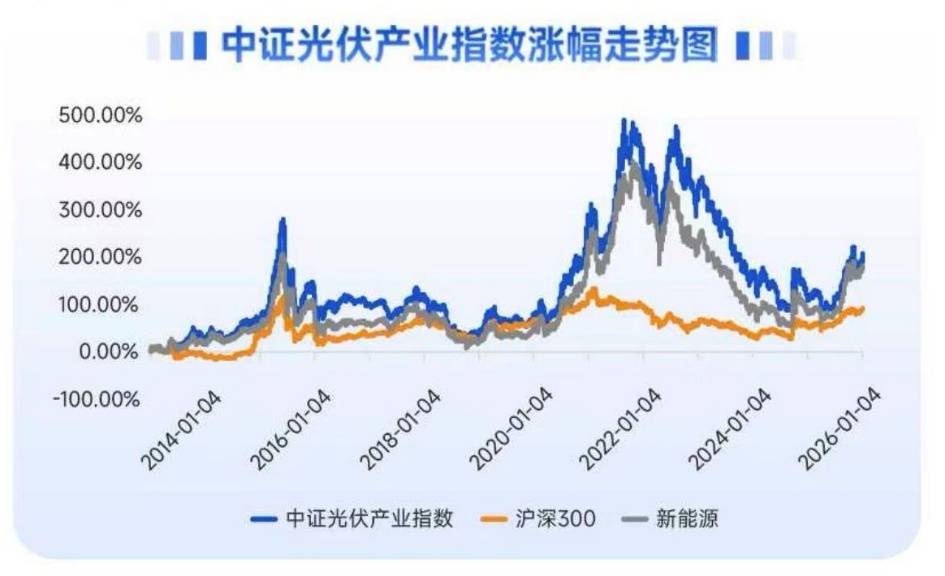
Core Viewpoint - The photovoltaic (PV) sector is experiencing a significant rebound, with the photovoltaic industry index rising over 5% as of February 3, indicating a shift in investment logic from a rebound after a downturn to a deeper game of supply and demand restructuring [1][2]. Group 1: Industry Developments - The launch of the photovoltaic ETF by Bosera (subscription code: 560313) on January 26, 2026, aims to facilitate investor access to leading companies in the photovoltaic industry chain, with the subscription period ending on February 6 [2]. - Elon Musk's proposal for "space photovoltaics," which includes plans to deploy a 100GW solar array to power space data centers, opens new possibilities for the industry, suggesting that Chinese photovoltaic companies could benefit from their leading position in the entire industry chain [2]. - The Ministry of Industry and Information Technology held a meeting on January 28, 2026, to address "anti-involution" in the photovoltaic industry, emphasizing mergers, restructuring, and standard-setting to combat excessive competition [2][5]. Group 2: Market Dynamics - The price war in the photovoltaic industry has intensified, with the average price of polysilicon dropping below the industry average cost, leading to significant losses forecasted by leading companies like Longi and Tongwei [2]. - The cancellation of export tax rebates for photovoltaic products on April 1, 2026, is expected to accelerate the elimination of outdated production capacity, thereby strengthening the market share and bargaining power of leading enterprises [2][5]. - The demand for photovoltaic products is increasingly driven by non-European and non-American overseas markets, with the construction of low-orbit satellite constellations boosting the demand for space photovoltaics [5]. Group 3: Technological Advancements - New technologies, such as BC and the replacement of precious metal pastes, are rapidly developing and may help reduce costs in the photovoltaic sector [6]. - The China Securities Index for the photovoltaic industry has shown a growth of 214.96% from December 31, 2012, to February 2, 2026, outperforming the CSI 300 and new energy indices, which grew by 82.57% and 191.04%, respectively [3]. Group 4: Future Outlook - With the implementation of "anti-involution" policies and the increasing energy demand driven by AI computing, the photovoltaic industry is expected to enter a recovery phase characterized by simultaneous growth in volume and profit [3]. - Current valuations in the photovoltaic sector remain relatively low historically, presenting a potential investment opportunity for those optimistic about energy transition and industry recovery [3].

光伏产业或将开启高质量发展新征程,光伏ETF博时(560313)火热发售中!
Sou Hu Cai Jing· 2026-01-30 05:45
Core Viewpoint - The Chinese photovoltaic industry is set to undergo a historic transformation starting April 1, 2026, with the cancellation of export VAT rebates on photovoltaic products and a gradual reduction of battery product rebates to zero, marking the end of tax incentives and initiating a new phase of high-quality development in a purely competitive market [1] Group 1: Industry Trends - The launch of the photovoltaic ETF by Bosera on January 26, 2026, aims to facilitate investor access to leading companies in the photovoltaic industry [2] - Major companies like Longi Green Energy and JA Solar are implementing equity incentive plans targeting profitability by 2026, signaling a positive recovery in the industry [2] - The latest data from the China Photovoltaic Industry Association indicates price increases for polysilicon, silicon wafers, battery cells, and modules by 38.9%, 2.2%, 0.4%, and 2.3% respectively compared to early 2025 [2] Group 2: Market Dynamics - Zheshang Securities expresses optimism about the industry turning point, citing a 47% quarter-on-quarter increase in polysilicon prices in Q3 2025, which has helped some companies reduce losses [3] - The global photovoltaic installation is expected to reach 570-630 GW in 2025, a year-on-year growth of 8-19%, with domestic installations projected at 270-300 GW [3] - The China Photovoltaic Industry Index has increased by 206.55% from December 31, 2012, to January 13, 2026, outperforming the CSI 300 and New Energy Index [3] Group 3: Policy and Demand - Recent policies have been introduced to regulate pricing and capacity in the industry, including discussions on benchmark pricing mechanisms to prevent below-cost sales and measures to address supply-demand imbalances in polysilicon [5] - Non-European and American markets are becoming the main sources of growth for global photovoltaic demand, with overseas expansion supporting industry needs [5] - The space photovoltaic sector is experiencing growth opportunities due to accelerated low-orbit satellite constellation construction, with projections of nearly 14,000 small satellites to be launched by 2030 [5] Group 4: Technological Advancements - New technologies such as Bifacial Cell (BC) and the use of low-cost metal pastes are rapidly developing, potentially lowering costs in the photovoltaic sector [6] - The Bosera photovoltaic ETF closely tracks the photovoltaic industry index, which includes up to 50 representative listed companies across the photovoltaic supply chain [6]


太空光伏有望站上风口,光伏ETF博时(560313)火热发售中!
Sou Hu Cai Jing· 2026-01-28 03:15
Core Insights - The A-share photovoltaic industry index has significantly outperformed the market, driven by optimism surrounding space solar energy and commercial aerospace developments [1] - The launch of the photovoltaic ETF by Bosera (subscription code: 560313) aims to facilitate investor access to leading companies in the photovoltaic industry chain [1] - China submitted an application for frequency and orbital resources for 203,000 satellites to the International Telecommunication Union (ITU), indicating a strategic move to secure valuable orbital resources [1] Industry Growth Potential - The space solar photovoltaic sector is expected to benefit from the global commercial aerospace boom, with Elon Musk stating that SpaceX and Tesla aim to increase solar energy production to 100 GW annually [1][2] - The photovoltaic industry is projected to open new growth avenues due to the release of the hundred GW-level space computing market and the high unit value of space photovoltaic batteries [2] - The China Photovoltaic Industry Index has increased by 206.55% from its base date (December 31, 2012) to January 13, 2026, outperforming the CSI 300 Index and the New Energy Index [2] Policy and Demand Dynamics - Recent policies have been introduced to regulate pricing and production capacity, including discussions on benchmark pricing mechanisms to prevent below-cost sales and measures to address supply-demand imbalances in the multi-crystalline silicon segment [4] - Non-European and non-American overseas markets are becoming the main sources of global photovoltaic demand, with the space photovoltaic sector poised for rapid growth due to accelerated low-orbit satellite constellation construction [4] - The commercial satellite industry is expected to launch nearly 14,000 small satellites by 2030, further driving demand for photovoltaic solutions [4] Technological Advancements - New technologies, such as BC and the substitution of low-cost metal pastes, are rapidly developing and may help reduce costs in the photovoltaic sector [5] - The Bosera photovoltaic ETF closely tracks the photovoltaic industry index, selecting up to 50 representative listed companies involved in the photovoltaic industry chain to reflect the overall performance of these securities [5]
太空光伏万亿赛道启幕,光伏ETF博时(560313)火热发售中
Sou Hu Cai Jing· 2026-01-27 05:50
Group 1 - The core viewpoint of the articles highlights the acceleration of the space photovoltaic sector, indicating a significant transformation and high-quality development phase for the photovoltaic industry, with the launch of the photovoltaic ETF by Bosera on January 26, 2026, aimed at facilitating investment in leading companies within the photovoltaic supply chain [1] - Elon Musk's announcements at the Davos Forum on January 22, regarding SpaceX and Tesla's plan to jointly create 200GW of photovoltaic capacity in the U.S. over the next three years, with each company contributing 100GW, are fueling market enthusiasm for the space photovoltaic sector [1] - Analysts from Galaxy Securities predict that with decreasing commercial space launch costs and ongoing breakthroughs in battery technology, space photovoltaics could gradually achieve commercialization within the next 10-15 years, emphasizing the importance of technological advancements and scenario integration in the short term, while long-term prospects appear promising [1] Group 2 - The China Securities Photovoltaic Industry Index has increased by 206.55% from its base date (December 31, 2012) to January 13, 2026, outperforming the Shanghai and Shenzhen 300 Index and the New Energy Index, which rose by 91.97% and 179.28%, respectively [2] - On the policy front, various measures have been introduced to regulate the industry, focusing on pricing and capacity management, including discussions on benchmark pricing mechanisms to prevent below-cost sales and addressing supply-demand imbalances through capacity consolidation and energy consumption standards [4] - The demand side is seeing significant growth from non-European and American overseas markets, with the space photovoltaic sector benefiting from accelerated low-orbit satellite constellation construction, supported by Musk's advocacy and increased corporate engagement, leading to rapid demand growth [4]