光伏产业高质量发展

Search documents
光伏再现企业破产
中国能源报· 2026-03-18 23:32
Core Viewpoint - The photovoltaic industry is transitioning from rapid expansion to high-quality development, marked by recent bankruptcies of several companies due to overcapacity and declining product prices [3][10][12]. Group 1: Bankruptcy Cases - Ningxia Yunhao Photovoltaic Technology Co., Ltd. has entered bankruptcy proceedings, becoming the third publicly known photovoltaic-related company to do so recently [3][5]. - Hainan Development's subsidiary, Haikong Sanxin (Bengbu) New Energy Materials Co., Ltd., filed for bankruptcy liquidation due to continuous losses, with a projected loss of 376 million yuan in 2024 [5][11]. - Jiangsu Yongquan Photovoltaic Technology Co., Ltd. was declared bankrupt by the court due to its inability to repay debts and lack of repayment capacity [5][11]. Group 2: Industry Pressure - The photovoltaic industry has seen rapid capacity expansion, but global demand fluctuations and supply-demand mismatches have led to significant price declines, compressing profit margins for companies [7][9]. - The industry is experiencing a phase of supply-demand imbalance, particularly in segments like photovoltaic glass, where overcapacity and price wars have resulted in substantial financial strain on companies [9][10]. - High production costs and tightening financing conditions have put pressure on cash flows, contributing to the bankruptcy of several firms [9][10]. Group 3: Transition to High-Quality Development - The emergence of bankruptcy cases reflects the changing phase of industry development, with a need for rational investment and avoidance of blind expansion emphasized by industry associations [11][12]. - The Ministry of Industry and Information Technology has called for improved industry management and innovation to prevent low-level redundant construction [12]. - The shift from rapid growth to high-quality development is expected to involve structural adjustments and a process of elimination of weaker players in the market [12].



光伏结算价格分化背后的市场化逻辑与破局路径
Zhong Guo Dian Li Bao· 2026-02-28 00:31
Core Viewpoint - The transition of China's photovoltaic (PV) industry into a fully market-oriented phase signifies a departure from traditional guaranteed purchase policies, leading to significant price differentiation in project settlements, which is a natural outcome of market resource allocation and an important signal for the industry's shift towards high-quality development [1][4][13]. Industry Overview - The photovoltaic industry, particularly distributed PV, has historically operated under a "full guaranteed purchase" policy, which has revealed inefficiencies as the industry scaled. Fixed electricity prices do not reflect market supply and demand changes, leading to low resource allocation efficiency and weakened market competition, resulting in overcapacity and increased abandonment rates [3][4]. Price Differentiation - The differentiation in settlement prices is a direct manifestation of market mechanisms at work, influenced by factors such as project scale and generation efficiency. Centralized PV projects tend to secure higher prices due to their larger scale and stability, while distributed projects face challenges like mismatched generation and consumption, leading to lower prices [4][5]. Market Dynamics - Market-driven pricing acts as a selection mechanism for the PV industry, pushing it from "scale expansion" to "quality enhancement." Projects with higher generation efficiency and better load matching can achieve higher settlement prices, while those with outdated technology and poor operational practices face lower prices or even losses [5][11]. New Development Models - The market shift has created new opportunities for distributed PV, including energy storage integration and participation in virtual power plants. Energy storage helps address the mismatch between generation and consumption, allowing for better economic performance and risk mitigation against price fluctuations [7][8]. Strategic Recommendations - Distributed PV owners must adapt to market rules and enhance their operational strategies to achieve sustainable returns. This includes optimizing load matching during project planning and actively tracking market prices to adjust operations accordingly [11][12]. Engaging with professional aggregators can also provide essential support in navigating market complexities and improving profitability [12]. Conclusion - The full market entry of renewable energy marks a milestone for the PV industry, indicating a new phase of market competition. The differentiation in settlement prices not only optimizes resource allocation but also compels companies to enhance their technical and operational efficiencies, fostering new development models that inject vitality into the long-term health of the PV industry [1][13].
聚势谋远,向光而行:能环宝受邀出席光伏行业2025年回顾与2026年展望研讨会
Jin Tou Wang· 2026-02-06 04:31
Group 1 - The conference highlighted the release of the "China Photovoltaic Industry Development Roadmap (2025-2026)", predicting that China's new photovoltaic installed capacity in 2026 will be between 180-240 GW, a decrease from 2025, with a recovery expected starting in 2027. The average annual new installed capacity during the "14th Five-Year Plan" period is projected to reach 238-287 GW [2] - The photovoltaic industry is entering a new phase of deep adjustment, with 2026 identified as a critical year for governance. The Ministry of Industry and Information Technology will focus on four key areas: addressing industry competition, improving standards and quality supervision, enhancing innovation-driven development, and deepening international cooperation [2] - Experts emphasized the need for the photovoltaic industry to shift from traditional competition based on scale and price to a value-centric competition model during the "14th Five-Year Plan" period. This includes a focus on energy efficiency and technological innovation [3] Group 2 - The year 2025 is seen as a pivotal point for the photovoltaic industry, marking a transition from rapid growth to meticulous cultivation. The industry is expected to optimize its competitive landscape and repair its profit model while focusing on long-term operational efficiency of power plants [4] - The trend towards digital and intelligent operations is becoming essential for maximizing the core value of photovoltaic power stations, driven by technological advancements and energy storage solutions [4] - The photovoltaic industry is tasked with ensuring energy supply while also exploring technological and business model innovations, playing a crucial role in achieving national goals for new productivity and carbon neutrality [4][5]
光伏产业发展路线图出炉 新增装机或阶段性回调
Xin Lang Cai Jing· 2026-02-05 20:14
Core Insights - The Chinese photovoltaic industry is expected to see a decline in new installed capacity in 2026, with estimates ranging from 180GW to 240GW, before returning to an upward trend post-2027 [1][3] - The "14th Five-Year Plan" period has shown significant growth in the application market, with a 35.4% year-on-year increase in solar power capacity, reaching 1200GW by the end of 2025 [1] - The industry is currently undergoing a deep adjustment phase, facing challenges related to supply-demand mismatches and operational difficulties for enterprises [2] Industry Outlook - The "15th Five-Year Plan" aims for high-quality development, shifting focus from scale and price competition to value competition, emphasizing energy efficiency and technological innovation [2][3] - The average annual new installed capacity for the global photovoltaic market during the "15th Five-Year Plan" is projected to be between 725GW and 870GW, with China's contribution expected to be between 238GW and 287GW [3] - In 2026, the global new photovoltaic installed capacity is estimated to be between 500GW and 667GW, with China expected to see a temporary adjustment in new installations due to market uncertainties following recent policy changes [3] Strategic Initiatives - The Ministry of Industry and Information Technology plans to enhance collaboration among departments to achieve a dynamic balance of supply and demand through various measures, including capacity control and quality supervision [2] - Companies are encouraged to innovate and develop advanced photovoltaic technologies, particularly in areas like perovskite tandem cells, to build competitive advantages [2] - The manufacturing sector should focus on intelligent, green, and integrated development, while also exploring new markets such as commercial aerospace and consumer electronics [3]
中经评论:光伏“退税补贴时代”将结束
Jing Ji Ri Bao· 2026-02-05 00:04
Core Viewpoint - The Ministry of Finance and the State Taxation Administration announced the cancellation of the export VAT rebate for photovoltaic products starting April 1, 2026, marking the end of a decade-long support policy aimed at nurturing the solar industry [1][2]. Group 1: Policy Background and Rationale - The export VAT rebate policy was introduced in October 2013 to support the recovery of the Chinese photovoltaic industry during a challenging period marked by anti-dumping investigations and market shrinkage [1]. - The policy aimed to enhance international competitiveness by offsetting costs and encouraging companies to explore overseas markets, thus helping the industry overcome domestic market bottlenecks [1][2]. Group 2: Impacts of Policy Cancellation - The cancellation of the export VAT rebate is seen as a necessary adjustment in response to the photovoltaic industry's evolution, which now holds over 70% of the global market share [2]. - The previous support measures have led to adverse effects, such as price wars among companies that eroded domestic profits and distorted market pricing mechanisms [2]. - The removal of the rebate is expected to push companies to focus on technological innovation, brand development, and service upgrades rather than competing solely on price [2][3]. Group 3: Future Strategies for Companies - Companies are encouraged to strengthen their capabilities for international expansion by investing in R&D and enhancing brand value to achieve premium pricing [4]. - A global strategy is essential, shifting from merely exporting to establishing a local presence in key markets to mitigate trade risks and better serve local customers [4]. - Firms should optimize their entire cost structure through digitalization and smart management, while also exploring new applications like space photovoltaics and integrated solar-plus-storage systems to create new market demands and profit opportunities [4].
光伏产业或将开启高质量发展新征程,光伏ETF博时(560313)火热发售中!
Sou Hu Cai Jing· 2026-01-30 05:45
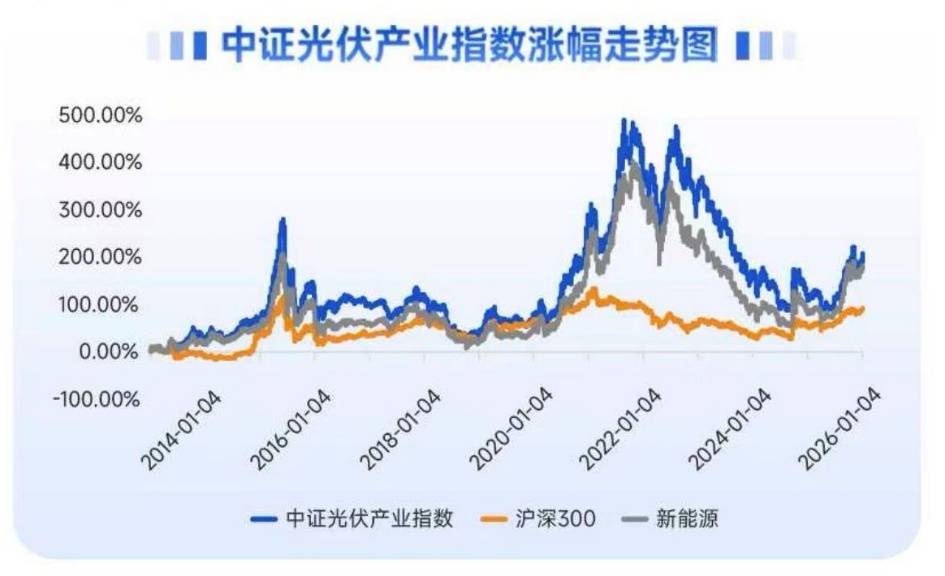
Core Viewpoint - The Chinese photovoltaic industry is set to undergo a historic transformation starting April 1, 2026, with the cancellation of export VAT rebates on photovoltaic products and a gradual reduction of battery product rebates to zero, marking the end of tax incentives and initiating a new phase of high-quality development in a purely competitive market [1] Group 1: Industry Trends - The launch of the photovoltaic ETF by Bosera on January 26, 2026, aims to facilitate investor access to leading companies in the photovoltaic industry [2] - Major companies like Longi Green Energy and JA Solar are implementing equity incentive plans targeting profitability by 2026, signaling a positive recovery in the industry [2] - The latest data from the China Photovoltaic Industry Association indicates price increases for polysilicon, silicon wafers, battery cells, and modules by 38.9%, 2.2%, 0.4%, and 2.3% respectively compared to early 2025 [2] Group 2: Market Dynamics - Zheshang Securities expresses optimism about the industry turning point, citing a 47% quarter-on-quarter increase in polysilicon prices in Q3 2025, which has helped some companies reduce losses [3] - The global photovoltaic installation is expected to reach 570-630 GW in 2025, a year-on-year growth of 8-19%, with domestic installations projected at 270-300 GW [3] - The China Photovoltaic Industry Index has increased by 206.55% from December 31, 2012, to January 13, 2026, outperforming the CSI 300 and New Energy Index [3] Group 3: Policy and Demand - Recent policies have been introduced to regulate pricing and capacity in the industry, including discussions on benchmark pricing mechanisms to prevent below-cost sales and measures to address supply-demand imbalances in polysilicon [5] - Non-European and American markets are becoming the main sources of growth for global photovoltaic demand, with overseas expansion supporting industry needs [5] - The space photovoltaic sector is experiencing growth opportunities due to accelerated low-orbit satellite constellation construction, with projections of nearly 14,000 small satellites to be launched by 2030 [5] Group 4: Technological Advancements - New technologies such as Bifacial Cell (BC) and the use of low-cost metal pastes are rapidly developing, potentially lowering costs in the photovoltaic sector [6] - The Bosera photovoltaic ETF closely tracks the photovoltaic industry index, which includes up to 50 representative listed companies across the photovoltaic supply chain [6]


官宣落地!光伏出口退税 “归零”,3个月窗口期引发行业 “抢出口” 大战
Sou Hu Cai Jing· 2026-01-20 06:03
Core Viewpoint - The Ministry of Finance and the State Taxation Administration announced the cancellation of VAT export rebates for certain products, including photovoltaic (PV) products, effective April 1, 2026, marking a significant policy adjustment that has raised concerns across the industry chain [1][2] Policy Adjustment - The adjustment specifically targets the export of PV products, including monocrystalline silicon wafers, solar cells, and PV modules, which are primarily affected by the policy change [2] - The previous reduction of the export rebate rate from 13% to 9% in December 2024 is part of a broader trend of tightening export rebate policies amid declining global PV prices and increasing competition [2][3] Cost Impact - The cancellation of approximately 9% export rebate is expected to increase the cost of PV products by 0.06 to 0.07 yuan per watt, necessitating a price adjustment to maintain reasonable profit margins [3] - The policy change is anticipated to directly impact the pricing structure, order composition, and profit models of companies in the industry [3] Market Reaction - A three-month transition period has been established, leading to expectations of a surge in PV product exports before the new policy takes effect, with some companies accelerating production and signing contracts to mitigate cost pressures [4] - Research institutions predict a potential doubling of battery module exports in the first quarter of 2026 as companies rush to capitalize on the policy window [4][5] Industry Dynamics - The current trend shows a divergence between the export volume and export value of PV products, with significant growth in volume but a 13.2% decline in total export value to $24.42 billion in the first ten months of 2025 [5] - The policy aims to guide the industry away from low-price competition and towards high-quality development, addressing the issues of price erosion and international trade friction [6][7] Long-term Implications - The adjustment is seen as a means to encourage the PV industry to move beyond low-cost competition and to promote higher quality and sustainable growth [7][8] - The cancellation of export rebates is expected to accelerate industry differentiation, benefiting companies with premium capabilities while pressuring low-margin firms to exit the market [8]

光伏行业:冬天到了,春天还会远吗?
Zhong Guo Hua Gong Bao· 2026-01-06 02:35
Core Viewpoint - The Chinese photovoltaic industry is currently undergoing a new adjustment phase, with a consensus among experts that the focus should shift from speed to quality through standards and innovation [1][2]. Group 1: Industry Status and Trends - The keyword for 2025 in the photovoltaic industry is "change," encompassing shifts in development conditions, concepts, and new pathways for industry growth [2]. - The industry is experiencing a recovery from "involution" competition, with measures being implemented to stabilize prices across the supply chain, indicating a gradual restoration of competitive order [2][3]. - From January to November 2025, 140 tracked bidding projects with a total capacity of 116.69 GW were reported, with an overall slight increase in the average price of components [2]. Group 2: Challenges and Responses - The industry faces internal challenges as the "anti-involution" efforts continue, and a new paradigm centered on value creation has yet to be established [3]. - Externally, the international trade environment is becoming increasingly complex, with developed countries imposing stricter measures on Chinese photovoltaic products and renewed trade frictions with emerging markets [3]. Group 3: Innovation and Standards - Experts emphasize that innovation and standards are key to overcoming challenges, advocating for a shift from a growth model focused on scale to one prioritizing quality [4]. - The industry is encouraged to collaborate on self-regulation and supply chain coordination to create a healthy ecosystem, while also focusing on technological innovation and intellectual property protection [4]. - The standardization efforts in the photovoltaic sector are evolving to cover various levels, including national and international standards, with a focus on quality reliability and new battery technologies [5]. Group 4: Future Development and Opportunities - Despite short-term challenges, the photovoltaic industry is expected to transition to a higher quality and more sustainable development phase, supported by national strategies and collective industry efforts [6]. - The industry is projected to focus on distributed energy development, with significant growth opportunities in zero-carbon factories, rural areas, and integrated energy solutions [7]. - The Chinese market demand for photovoltaic installations is anticipated to stabilize above 200 GW and potentially exceed 300 GW, with global demand expected to reach 1,000 GW within 5-6 years [7]. - The transition from energy consumption control to carbon emission control policies is expected to create a favorable environment for the photovoltaic sector [7]. Group 5: Cost Competitiveness - Over the past 20 years, the photovoltaic sector has achieved significant cost reductions, with generation costs now lower than coal power, and has reached parity with coal fuel costs within five years [8]. - The absolute cost advantage and the diverse application scenarios of photovoltaic technology are expected to enhance its competitiveness despite market challenges [8].
光伏产业进入拼质量新阶段
Zhong Guo Neng Yuan Wang· 2025-10-27 03:10
Core Insights - The focus of the photovoltaic industry is shifting from "installing capacity" and "price competition" to "quality" and "reliability" [1][2] - The industry is entering a critical phase where product reliability over its entire lifecycle is becoming a key measure of a company's core competitiveness [1][2] - The market is moving towards a model that emphasizes long-term returns rather than initial costs, with a projected global annual installed capacity of 900 GW by 2030 [6][7] Industry Trends - The photovoltaic industry has experienced rapid growth in installed capacity over the past decade, driven by efficiency improvements and cost reductions [2] - Current competition is centered around power, efficiency, and reliability, moving away from mere capacity and price comparisons [2] - The industry is facing challenges due to the diminishing innovation space in crystalline silicon technology, leading to increased homogenization of products [2][4] Technological Developments - The industry consensus indicates that Topcon technology will remain mainstream in the next 1 to 3 years, while new technologies like perovskite are emerging as potential breakthroughs [4][5] - Innovations in materials and structures are essential for opening new avenues for growth, with a focus on integrating traditional silicon with perovskite technology [4][5] - The development of a more robust certification system is necessary to ensure the reliability of products over their entire lifecycle, rather than just the initial years [5] Market Dynamics - The export volume of Chinese photovoltaic products decreased by 3.4% year-on-year, with export value dropping by 26% in the first half of 2025 [6][7] - Emerging markets in Africa are showing strong growth potential, with export increases exceeding 40%, indicating a shift in the export landscape [6][7] - The industry is transitioning from single product exports to project-driven models that leverage the entire supply chain and advanced technologies [7] Application Trends - Photovoltaic products are evolving from single-component forms to intelligent, lightweight, and multi-scenario applications [6][7] - The industry is expected to see significant growth in BIPV (Building-Integrated Photovoltaics) applications, with a shift towards distributed applications closely integrated with human living environments [7]
光伏组件“危机”如何化解?多方联动构建光伏产业高质量发展新格局
Xin Hua Cai Jing· 2025-09-25 00:36
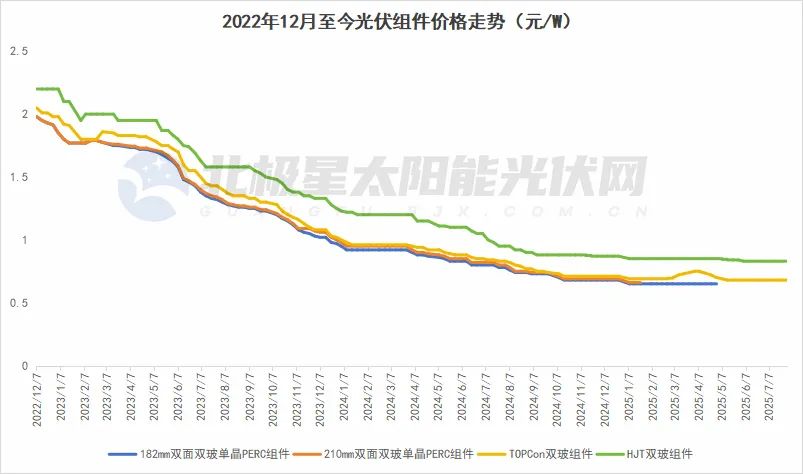
Core Insights - The Chinese photovoltaic industry has achieved significant market share and rapid technological advancements over the past decade, but is now facing challenges such as declining prices, quality issues, and overall reduced profitability [1][2]. Industry Overview - Since the second half of 2023, the photovoltaic sector has experienced a continuous decline in prices, with component prices dropping below 0.6 yuan per watt. The prices of polysilicon, silicon wafers, battery cells, and modules have decreased by over 35%, 45%, and 25% respectively [1]. - The overall qualification rate of photovoltaic modules has fallen from 100% in 2019 to 62.9% in 2024, with a nearly 16% non-compliance rate in the first half of 2025. Issues include mechanical load failures, substandard photoelectric conversion efficiency, and power mislabeling [2]. Regulatory Response - Multiple government departments, including the Ministry of Industry and Information Technology, have introduced policies to establish manufacturing thresholds, standard systems, and price regulations to improve product quality and market order [2]. - A meeting led by the Ministry of Industry and Information Technology in August 2025 aimed to shift the industry focus from scale expansion to quality enhancement and from price competition to technology and service competition [2]. Company Initiatives - Companies like Sunshine New Energy are actively addressing quality issues by forming specialized technical teams and establishing evaluation laboratories to create comprehensive standards for materials, processes, and testing [3]. - Sunshine New Energy has also collaborated with certification centers to publish standards for high-quality photovoltaic power stations, emphasizing performance, safety, and reliability [3][5].