
光路交换机

Search documents
硅光,大爆发
3 6 Ke· 2026-02-10 03:15
Core Insights - Silicon photonics technology is transforming data centers, with significant changes expected in the future [1] - The market for optical devices is projected to grow significantly, driven by advancements in artificial intelligence networks [3][25] - The transition from copper cables to fiber optics is underway, with major companies like Corning and Meta making substantial investments [7][12] Market Growth - The optical device market has grown from several billion dollars in 2003 to approximately $13 billion in 2023, with expectations to reach $25 billion by 2030 [3] - CignalAI forecasts the market will reach $31 billion by 2029, indicating robust growth in the sector [3] - Coherent's investor report predicts the pluggable optical device market will grow from $6 billion in 2023 to $25 billion by 2030 [12] Technology Advancements - Silicon photonics integrates previously disparate photonic devices into improved CMOS processes, enhancing data transmission capabilities [6] - The use of single-mode fiber (SMF) is prevalent in optical communications, with various wavelength bands utilized for low signal loss [9][11] - Coherent and Lumentum are key players in the optical circuit switch (OCS) technology market, with potential market sizes being revised upwards due to increasing customer interest [15] Industry Dynamics - Companies like Nvidia and Broadcom are set to launch Ethernet switches using co-packaged optical devices (CPO) to reduce power consumption [16] - The shift towards CPO is driven by its energy efficiency, which is one-third of that of pluggable devices, making it significant for large-scale applications [18][25] - TSMC is positioned to become a leading silicon photonics foundry, with projected revenues from silicon photonics expected to exceed $1 billion by the end of the decade [21][26] Competitive Landscape - GlobalFoundries has claimed the top position in silicon photonics foundry services, with a focus on long-haul coherent applications [21] - Tower Semiconductor is also a significant player, offering an open platform for silicon photonics that caters to a growing market [23][24] - The silicon photonics industry is expected to see rapid growth, with projections indicating an eightfold increase in foundry revenues from 2026 to 2032 [25]




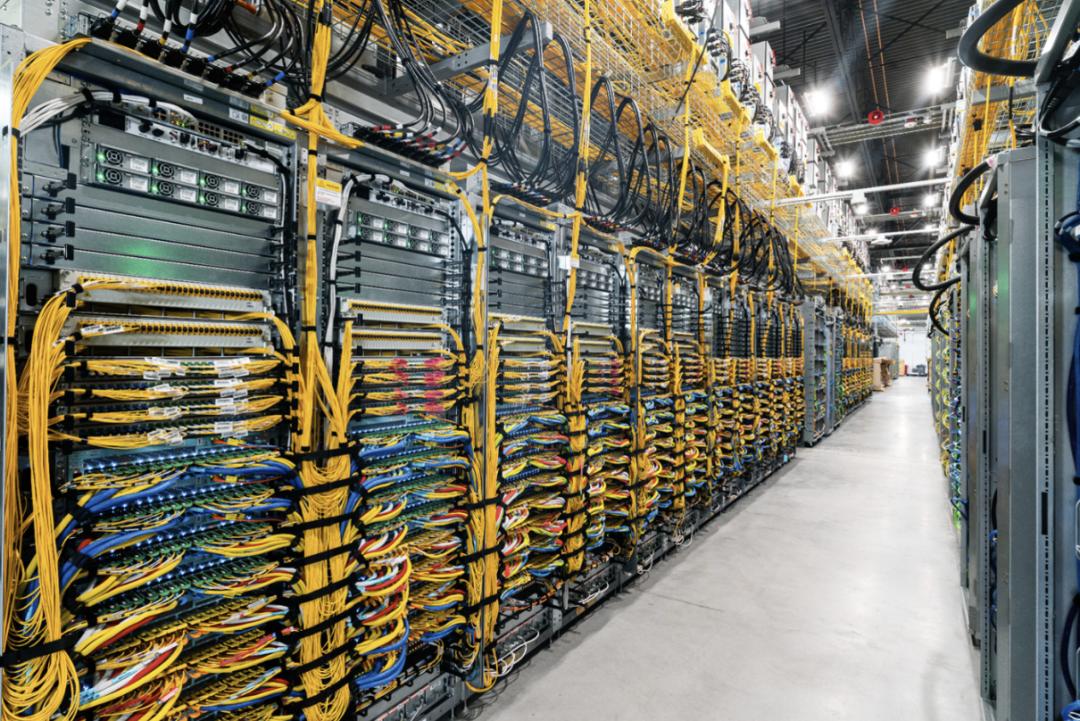
Google集群拆解
HTSC· 2025-11-27 08:52
Report Industry Investment Rating No relevant content provided. Core Viewpoints The report delves into the in - depth analysis of Google clusters, including their Scale - up (3D structure and optical interconnection) and Scale - out aspects, and also compares the architectures of different GPUs such as NVIDIA and AMD [1][2]. Summary by Directory 1. Google Cluster's Scale up: 3D Structure - **TPU Architecture**: The Ironwood architecture of TPU has high - performance computing components like TensorCore, XLU, VPU, etc., and is connected by high - speed ICI. It uses HBM3 and HBM3E memory to achieve scale - up of 9216 chips [11][12]. - **From TPU to TPU Rack**: A TPU Tray contains 4 Ironwood TPUs, and a TPU Rack consists of 16 TPU Trays and 64 TPU chips. The rack has a specific physical structure and cooling system [28][29]. - **Comparison with Other GPUs**: Compares the architectures of NVIDIA (from Hopper to Blackwell) and AMD (from MI350 to MI400) GPUs, highlighting their different interconnect technologies and performance parameters [20][25]. 2. Google Cluster's Scale up Optical Interconnection: Optical Path Switch - **Optical Switch Components**: The optical path switch uses components such as 850nm camera modules, dichroic beam splitters, fiber collimators, and 2D MEMS micromirrors to separate or combine calibration light and signal light [46]. - **TPU SuperPod Structure**: A TPU SuperPod consists of 64 Google racks, divided into 8 groups of 8 racks. It integrates 4096 chips, sharing 256TiB of HBM memory, with a total computing performance of over 1 ExaFLOP. Each group of 8 racks has a CDU for liquid - cooling [60]. 3. TPU Cluster, Proportion of Optical Path Switches and Optical Modules - **TPU V4**: The proportion of optical path switches is 1.1% with 4096 TPUs, and the proportion of optical modules is 1.5 [70][84]. - **TPU V7**: The proportion of optical path switches is 0.52% with 9216 TPUs, and the proportion of optical modules is also 1.5 [75][89]. - **Rack - level Data**: For a single rack, there are 6 * 16 external optical modules, 4 * 16 PCB traces, and 80 copper cables [94]. 4. Google Cluster's Scale out - **Switch Parameters**: The Tomahawk 5 switch has 128 400G ports [103]. - **Communication Outside TPU SuperPod**: Communication outside the TPU SuperPod is carried out through the Data - center Network (DCN), which includes optical circuit switches and physical fibers [106][108]. - **NV Scale - out OCS**: In the NV scale - out, OCS is used in a redundant spine - leaf network structure, which can enhance the resilience of the network [113][114]. - **Comparison of Interconnection Schemes in a 100,000 - card Cluster**: Compares the InfiniBand, NVIDIA Spectrum - X, and Broadcom Tomahawk5 interconnection schemes in terms of switch quantity, optical module quantity, cost, etc. [125].