六方氮化硼

Search documents
生产“工业味精”,如何给合规管理“提鲜”
Xin Lang Cai Jing· 2026-02-27 04:58
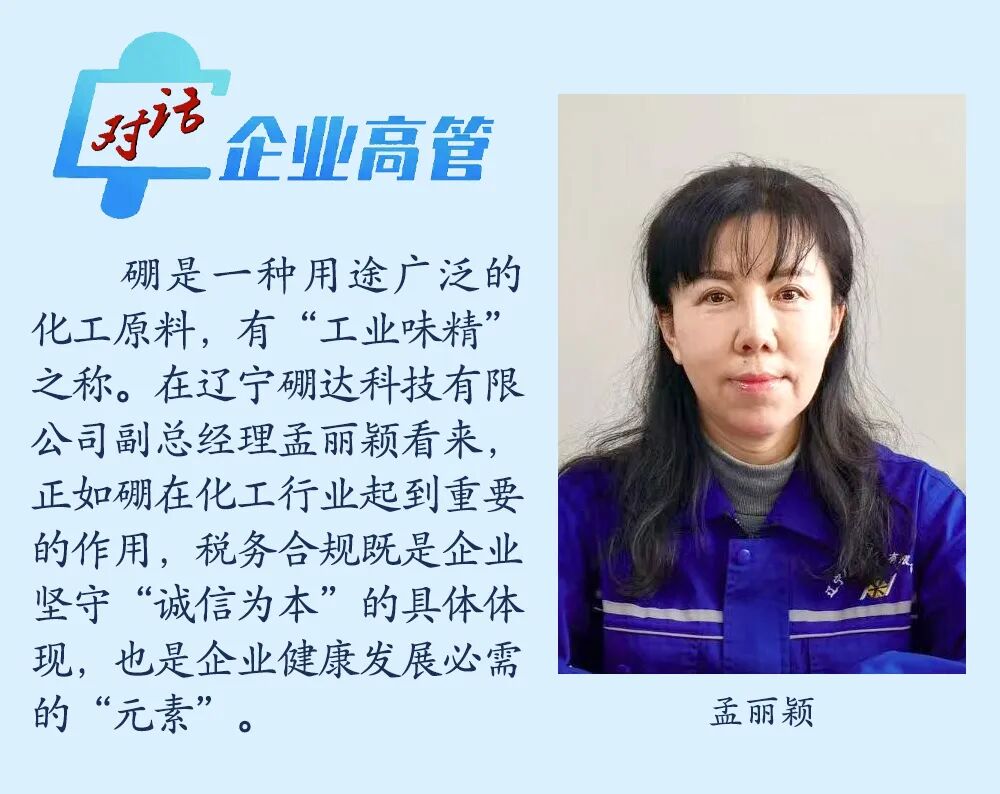
Core Viewpoint - Boron is a widely used chemical raw material, essential for various industries, and tax compliance is crucial for the healthy development of companies like Boron Technology [3][6]. Group 1: Company Overview - Boron Technology specializes in deep processing of boron products, with core products including hexagonal boron nitride, anhydrous borax, and boron nitride coatings [6]. - The company holds approximately 20% of the domestic market share for hexagonal boron nitride and about 25% for anhydrous borax, with exports to South Korea, Russia, and Europe [6]. Group 2: Tax Compliance Management - The company has established a tax compliance management mechanism that includes six core operational standards to monitor and prevent tax risks throughout the entire process [8]. - The six core operational standards include verification of raw material invoices, cost aggregation during processing, tax accounting for finished product inventory, invoicing and reporting during sales, tax matching for fund payments, and policy documentation retention [8]. Group 3: Digital Transformation - Boron Technology has implemented an ERP management system to enhance management efficiency, achieving a 40% improvement in tax processing efficiency and a 100% accuracy rate in tax declarations [9]. - The ERP system includes a "smart tax management" module that automates the calculation and generation of tax declarations, ensuring accurate tracking of costs and expenditures [9]. Group 4: Employee Training and Compliance Culture - The company integrates tax compliance into its corporate culture, making it a shared responsibility among all employees through regular training on legal regulations related to production and operations [10]. - Over the past three years, the company has invested over 14.48 million yuan in R&D, with R&D expenses accounting for more than 6% of sales revenue [10]. Group 5: R&D Compliance Management - A cross-departmental project team has been established to clarify the responsibilities of R&D, finance, and business personnel in managing R&D expenses [11]. - The company has developed standardized systems for recording and managing R&D expenses, ensuring compliance and promoting a cycle of technological innovation driving business development [11].

李俊竺加盟厦门大学任教授、博导!
Xin Lang Cai Jing· 2026-02-03 09:06
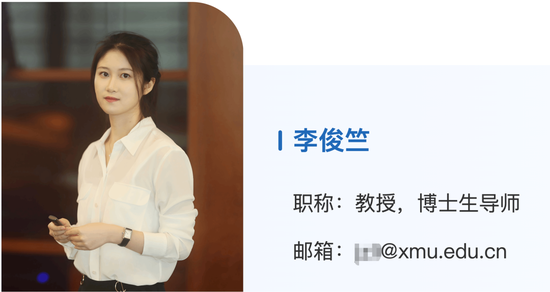
Core Viewpoint - Dr. Li Junzhu has officially joined Xiamen University's School of Materials as a full-time professor and doctoral supervisor starting January 2026, recognized for her contributions to the field of materials science [1][5]. Group 1: Academic Background - Dr. Li obtained her bachelor's degree from Xiamen University's Department of Physics from September 2013 to July 2017, making her an alumnus of the university [3][8]. - She pursued her doctoral studies at King Abdullah University of Science and Technology in Saudi Arabia from January 2019 to December 2022 [3][8]. - After earning her PhD, she conducted postdoctoral research at the same university from December 2022 to May 2024, followed by another postdoctoral position at Nanyang Technological University in Singapore from July 2024 to January 2026 [3][8]. Group 2: Research Focus and Achievements - Dr. Li's research primarily focuses on the controlled preparation of advanced two-dimensional materials, including graphene, hexagonal boron nitride, and transition metal dichalcogenides, utilizing chemical vapor deposition (CVD) techniques [4][9]. - Her work aims to achieve high-quality, wafer-scale production of these materials and explore their applications in ultra-low temperature growth, on-chip integration, and van der Waals heterojunction optoelectronic devices [4][9]. - She has published multiple papers as the first author in top international academic journals such as Nature Materials, Nature Communications, and Advanced Materials [4][9]. - Dr. Li was selected for the 2025 Forbes Asia "30 Under 30" list in the technology category and serves as an editorial board member for the important materials science journal Carbon [4][9].
行业聚焦:全球导热界面材料用填料市场头部企业份额调研(附Top10 厂商名单)
QYResearch· 2025-09-11 03:43
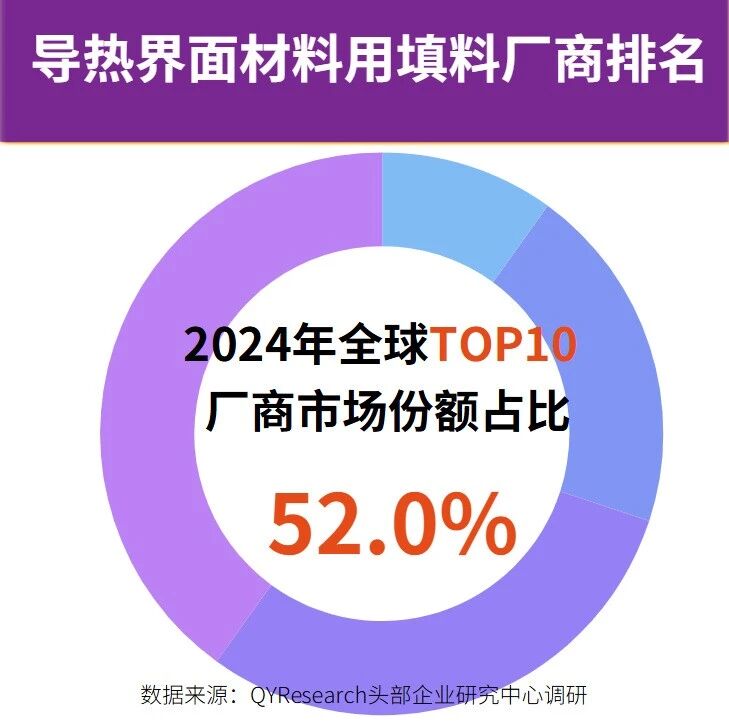
Core Insights - The global thermal interface materials (TIM) filler market is projected to reach $610 million by 2031, with a compound annual growth rate (CAGR) of 7.5% over the coming years [1]. Market Overview - The leading manufacturers in the global TIM filler market include Tokuyama, Baidu High-tech, Admatechs, Denka, Kingo New Materials, Resonac, 3M, Nippon Steel, Jinyi New Materials, and Toyo Aluminium. The top ten manufacturers are expected to hold approximately 52.0% market share in 2024 [5]. - Spherical alumina is currently the most significant product type, accounting for about 43.8% of the market share [8]. - In terms of application, consumer electronics represent the largest demand source, holding approximately 28.9% of the market share [10]. Key Drivers - The ongoing electrification of vehicles, including electric vehicles (EVs), hybrid electric vehicles (HEVs), and plug-in hybrid electric vehicles (PHEVs), is a primary driver for the demand for thermal fillers. Efficient thermal management is crucial for battery packs, onboard chargers, inverters, and electronic control units [13]. - The expansion of global data infrastructure, including data centers, AI accelerators, high-performance computing (HPC), and edge computing, is another significant factor driving market growth. These environments require high-performance TIMs to manage intense heat loads [13]. Challenges - The high cost of quality thermal fillers, particularly aluminum nitride, hexagonal boron nitride, and surface-treated spherical alumina, limits their application in high-end sectors like EV power modules and data centers [15]. - The lack of global standardization and performance benchmarking for filler materials poses challenges for product consistency and supplier evaluation [15]. - Environmental and regulatory constraints in the filler supply chain are becoming increasingly prominent, necessitating investments in cleaner processes and stricter waste control, which may raise production costs [15]. Industry Opportunities - The rapid development of high-power electronic devices and miniaturized components is reshaping the TIM filler market. The demand for fillers that not only provide high thermal conductivity but also possess processability, electrical insulation, and mechanical compliance is on the rise [16]. - Spherical alumina remains the dominant filler type due to its balance of thermal conductivity, flowability, and cost, widely used in consumer electronics, automotive electronics, and LED modules [17].