石墨烯

Search documents
东华科技20230331
2026-04-01 09:59
Summary of the Conference Call for Donghua Technology Company Overview - Donghua Technology has over 500 billion yuan in hand orders, with overseas contracts expected to exceed 40% by 2025. The coal chemical contracts account for approximately 40%-50% of the business structure, transitioning towards a dual-driven model of "engineering + industry" [2][3]. Core Business Insights - The company achieved a revenue of approximately 10 billion yuan and a net profit attributable to shareholders of 532 million yuan in 2025, with new contracts signed amounting to about 22.3 billion yuan, all showing year-on-year growth [3]. - The coal chemical sector remains a core strength, expected to maintain its significant position during the 14th Five-Year Plan period with the rollout of large projects [2][7]. - The new energy and new materials sectors are projected to account for 20%-30% of contracts by 2025, becoming future growth drivers [2][17]. Strategic Developments - A strategic cooperation framework agreement was signed with Qinghai Dongtai Jinaier Lithium Resources Co., focusing on lithium extraction technology and project execution, enhancing the company's performance and brand in this field [5][6]. - The company is developing a green energy and new energy team to focus on lithium extraction technology and project execution, with plans to integrate green energy with traditional chemical operations [6]. Financial Performance - The growth in net profit for 2025 is attributed to the steady conversion of hand orders, cost reduction, and a significant asset impairment reversal from the Tianye project, leading to a profit growth rate that outpaces revenue growth [9]. - The company plans to maintain a stable dividend policy, with a mid-year dividend of approximately 2 yuan per 10 shares in 2025, representing a year-on-year increase of over 30% [15]. Environmental and Industrial Operations - The company has 12 environmental project companies, with 8 in operation, focusing on industrial wastewater treatment, solid waste management, and soil and water restoration [16]. - Approximately 20%-30% of key R&D projects in 2025 will be related to environmental protection, indicating a commitment to this sector despite the ongoing development of the 14th Five-Year Plan [16]. New Materials and Renewable Energy - The company is actively expanding in the new materials and renewable energy sectors, with contracts in these areas expected to account for 20%-30% of total contracts by 2025 [17]. - The PBAT project, with a capacity of 60,000 tons for PBA and 40,000 tons for PBT, is progressing as planned, with ongoing optimization of product performance and applications [20]. Market Expansion and International Strategy - The company is pursuing an internationalization strategy, focusing on countries along the Belt and Road Initiative, with overseas contracts expected to exceed 40% of total contracts by 2025 [10]. - Regional offices have been established in South America, Africa, the Middle East, and Southeast Asia to support this international expansion [10]. Future Outlook - The coal chemical sector is expected to see steady demand growth, with the coupling of coal chemical projects and new energy initiatives anticipated during the 14th Five-Year Plan period [18]. - The company is committed to adapting its production pace based on market demand and continuously optimizing technology and products in the PBAT sector [20].

飞荣达:公司可为AI PC、AI手机等终端产品提供的散热产品
Zheng Quan Ri Bao Zhi Sheng· 2026-02-27 14:13
Core Viewpoint - The company is actively involved in the AI sector, providing advanced thermal management and electromagnetic shielding solutions to meet the increasing demands of AI-related applications [1] Group 1: Product Applications - The company has numerous products already applied in AI-related fields, indicating a strong alignment with the growing AI market [1] - There is a shift from passive to active cooling solutions in terminal devices, which enhances the demand for the company's thermal management products [1] Group 2: Product Offerings - The company offers a range of thermal products for AIPC and AI mobile devices, including graphite sheets, graphene, heat pipes, vapor chambers, phase change materials, micro fans, and micro-pump liquid cooling systems [1] - The value per unit of these products has significantly increased, reflecting the enhanced performance requirements in the AI sector [1] Group 3: R&D and Innovation - The company has been actively collaborating with clients to develop and innovate products that meet specific needs, ensuring a continuous update and improvement of their offerings [1] - Recent developments include micro-pump liquid cooling, micro fans, micro cooling modules, and piezoelectric fans, which are tailored to provide better quality and compatibility for customers [1]

重磅!“十五五”新材料产业发展规划与解读(附100+份解读资料)
材料汇· 2026-02-18 13:48
Core Viewpoint - The new materials industry is crucial for supporting modern industrial systems and achieving high-level technological self-reliance in China, with significant strategic importance for building a strong manufacturing and quality nation [2]. Industry Background and Development Situation - During the 14th Five-Year Plan, China's new materials industry saw continuous growth, with total output value exceeding 8.2 trillion yuan and an average annual growth rate of over 12% [4]. - Achievements include breakthroughs in ultra-high-strength steel, high-performance carbon fiber, semiconductor silicon wafers, and key materials for lithium-ion batteries [4]. - Challenges remain in high-end materials and the need for improved self-sufficiency in core processes and equipment [4]. Overall Requirements - The guiding ideology emphasizes innovation-driven development, demand-oriented approaches, and green low-carbon principles, focusing on enhancing the self-sufficiency of strategic materials and original innovation capabilities [8]. - Basic principles include innovation leadership, application orientation, enterprise-driven collaboration, and green development [9]. Development Goals (by 2030) - Comprehensive security capability for strategic materials to exceed 80%, with a focus on achieving global leadership in original achievements in frontier new materials [11]. - Continuous increase in R&D investment intensity, aiming to break through over 500 key core technologies [11]. - Establishment of over 20 distinctive, complete, and internationally leading new materials industrial clusters [11]. Key Development Directions - Advanced basic materials include ultra-high-strength automotive steel and high-performance aluminum alloys [13][14]. - Key strategic materials focus on high-temperature alloys and advanced semiconductor materials [18][19]. - New energy materials target high-energy-density battery materials and photovoltaic materials [21]. Key Tasks and Major Projects - Focus on urgent new materials needed in critical application areas such as aerospace, new energy vehicles, and electronic information [27]. - Specific projects include developing high-performance carbon fiber composites for aircraft and high-nickel ternary cathode materials for batteries [29][31][32]. Collaborative Innovation System - Establish a collaborative innovation system that integrates enterprises, academia, and research institutions to enhance innovation capabilities [51]. - Plans to build five national new materials laboratories and ten engineering research centers to support innovation [52]. Market Cultivation for Key New Materials - Implement insurance compensation mechanisms for the first application of key new materials to encourage market adoption [56]. - Establish a project library for demonstration projects to showcase the advantages of new materials in practical applications [57]. Breakthroughs in Key Processes and Equipment - Focus on overcoming bottlenecks in key processes and specialized equipment for new materials production [61]. - Plans to support the development of over 80 key processes and equipment technologies, aiming for significant improvements in production efficiency and cost reduction [64].


特朗普对华下狠招!160%关税砸向中国?美国这次制裁,损失惨重
Sou Hu Cai Jing· 2026-02-18 06:48
Core Viewpoint - Trump's recent decision to impose a 160% tariff on Chinese graphite while planning to visit China for cooperation reflects a contradictory and erratic policy approach that could have significant repercussions for the U.S. electric vehicle industry and broader economic landscape [1][4][10]. Industry Impact - Graphite is a critical component in electric vehicle batteries, accounting for over 90% of lithium battery anode materials. The U.S. decision to impose tariffs jeopardizes its own electric vehicle sector, which is heavily reliant on Chinese graphite [1][3]. - By 2025, China's artificial graphite production is expected to reach 2.67 million tons, representing 92.7% of global anode material shipments, indicating a near-monopoly in the market due to decades of technological accumulation and production capacity advantages [1][6]. Economic Consequences - The 160% tariff is projected to shift 92% of the additional costs onto U.S. companies and consumers, effectively acting as a hidden tax that could increase annual expenses for American households by approximately $1,300 [8][10]. - The U.S. electric vehicle industry is not prepared to sever its dependence on Chinese graphite, and the attempt to do so through tariffs may lead to greater economic pain domestically [3][10]. Political Context - The tariff appears to be more of a political maneuver aimed at garnering support from conservative voters and domestic capital, rather than a genuine effort to promote fair competition [4][10]. - The U.S. has previously delayed the implementation of tariffs on graphite, recognizing its inability to establish an independent supply chain in the short term, which underscores the challenges faced by American companies in this sector [6][8]. Technological and Competitive Landscape - China has a significant lead in graphite production and graphene technology, holding 80% of global patent applications in this area, which positions it favorably in the ongoing competition [6][11]. - Despite U.S. tariffs, China continues to innovate and expand its applications of graphene, maintaining a stronghold in various high-tech sectors, including AI and 5G communications [11][13]. Future Considerations - The potential for the tariff to be modified or reduced exists, depending on the findings of the U.S. International Trade Commission and the growing opposition from American businesses [11][13]. - The ongoing dynamics of U.S.-China relations will play a crucial role in determining the future of these tariffs and the overall competitive landscape in the graphite industry [11][13].
Carbontech2026 第十届国际碳材料产业展览会丨6月10-12日,上海再出发!
Sou Hu Cai Jing· 2026-02-12 16:49
Core Insights - The 10th International Carbon Materials Conference and Exhibition (Carbontech 2026) will take place from June 10-12, 2026, at the Shanghai New International Expo Center, reflecting the acceleration of strategic emerging industries and high-end manufacturing systems in China [1][2] - Carbon materials, including carbon fiber, carbon nanotubes, graphene, and silicon-carbon anodes, are becoming essential materials for future industries due to their unique physical and chemical properties [1][3] Group 1: Event Overview - Carbontech 2026 will merge with the iTherM2026 and AMTE2026 exhibitions to form the FINE2026, aiming to establish a benchmark exhibition in the new materials sector with a focus on future industries [2] - The exhibition will cover an area of 50,000 square meters, featuring over 800 participating companies, 200+ research institutions, and attracting more than 100,000 professional visitors [2] Group 2: Industry Significance - Carbon materials have maintained their strategic importance throughout various stages of industrial civilization, evolving from graphite and activated carbon to advanced materials like diamond semiconductors and carbon fiber [3] - The conference serves as a vital platform for academic exchange and industry collaboration, showcasing the strategic value and enduring vitality of carbon materials in energy, information, and advanced technology sectors [3] Group 3: Recent Developments - The 2025 Carbontech event attracted over 10,000 professional visitors and featured nearly 400 exhibitors, highlighting the industry's growth and the increasing interest in carbon materials [6][8] - The event included specialized areas focusing on diamond and superhard materials, as well as carbon materials for energy and equipment, demonstrating the innovative applications and solutions in strategic fields [8][11] Group 4: Future Trends - With the rapid development of emerging industries such as artificial intelligence, semiconductors, and new energy vehicles, carbon materials are expected to experience significant growth and application expansion [11] - The conference will feature a dedicated area for new product launches, allowing companies to showcase technological breakthroughs and connect with potential customers [14]

李俊竺加盟厦门大学任教授、博导!
Xin Lang Cai Jing· 2026-02-03 09:06
Core Viewpoint - Dr. Li Junzhu has officially joined Xiamen University's School of Materials as a full-time professor and doctoral supervisor starting January 2026, recognized for her contributions to the field of materials science [1][5]. Group 1: Academic Background - Dr. Li obtained her bachelor's degree from Xiamen University's Department of Physics from September 2013 to July 2017, making her an alumnus of the university [3][8]. - She pursued her doctoral studies at King Abdullah University of Science and Technology in Saudi Arabia from January 2019 to December 2022 [3][8]. - After earning her PhD, she conducted postdoctoral research at the same university from December 2022 to May 2024, followed by another postdoctoral position at Nanyang Technological University in Singapore from July 2024 to January 2026 [3][8]. Group 2: Research Focus and Achievements - Dr. Li's research primarily focuses on the controlled preparation of advanced two-dimensional materials, including graphene, hexagonal boron nitride, and transition metal dichalcogenides, utilizing chemical vapor deposition (CVD) techniques [4][9]. - Her work aims to achieve high-quality, wafer-scale production of these materials and explore their applications in ultra-low temperature growth, on-chip integration, and van der Waals heterojunction optoelectronic devices [4][9]. - She has published multiple papers as the first author in top international academic journals such as Nature Materials, Nature Communications, and Advanced Materials [4][9]. - Dr. Li was selected for the 2025 Forbes Asia "30 Under 30" list in the technology category and serves as an editorial board member for the important materials science journal Carbon [4][9].

石化科技筑基强国路——中国制造“十四五”成就展创新成果扫描
Zhong Guo Hua Gong Bao· 2026-02-02 03:37
Core Insights - The "14th Five-Year Plan" has led to significant advancements in China's manufacturing sector, particularly in petrochemical and chemical industries, showcasing breakthroughs in high-end manufacturing, new materials, and intelligent industrial robots [1] Petrochemical Equipment Highlights - During the "14th Five-Year Plan," China's petrochemical and chemical industry achieved notable successes in key technologies and major equipment [2] - The "Dream" deep-sea drilling vessel can operate in unlimited ocean areas and has a drilling capacity of 11,000 meters [2] - The JSD6000 deep-water lifting and pipe-laying vessel can perform operations in ultra-deep waters of 3,000 meters [2] - The "Deep Sea No. 1" energy station features nearly 200 key oil and gas processing devices and can store up to 20,000 cubic meters of oil [2] - The "Hurricane No. 1" integrates digital technology for marine development and has a maximum oil storage capacity of 60,000 tons [2] - The domestically developed 110 MW heavy-duty gas turbine "Taihang 110" represents a core equipment for efficient energy conversion and clean utilization [2] - The 180,000 tons/year ethylene compressor unit by ShenGu Group has achieved significant breakthroughs in equipment localization, reaching international leading performance [2] New Materials Innovation - The innovation capability of China's new materials industry has been continuously enhanced during the "14th Five-Year Plan," promoting the petrochemical industry towards high-end development [3] - Tibet Mining Development Co., Ltd. has developed lithium carbonate materials with a purity of 99.5%, crucial for lithium battery production [3] - China National Building Material Group has created special protective coatings that can withstand extreme temperature changes from -180°C to 500°C [3] - China Northern Rare Earth Group has developed rare earth catalytic materials with excellent hydrothermal stability and catalytic performance for petrochemical applications [3] - The company has also established a low-pressure solid-state hydrogen storage demonstration station with a storage capacity of 100 kg [3] Advanced New Materials - The National Graphene Innovation Center and Ningbo Zhaoxin Technology Co., Ltd. have developed graphene that can disperse in various polar solvents and polymer matrices, enhancing its core properties [4] - This graphene material enables energy density in power batteries to exceed 450 Wh/kg, applicable in new energy and chemical sectors [4] Accelerated Application of Intelligent Industrial Robots - The application of intelligent industrial robots has surged during the "14th Five-Year Plan," significantly enhancing automation and modernization in the petrochemical industry [5] - The flexible internal welding robot developed by the Southwest Pipeline Company can perform one-click intelligent welding and adapt to complex terrains [5] - Since its demonstration application in 2024, this robot has completed over 6,600 welds with a total weld length of approximately 25,000 meters and a first-pass qualification rate of 98.9%, improving welding efficiency by 27% compared to traditional methods [6] - The flexible robot showcased by Harbin Institute of Technology is the first globally to detect the entire pipeline system, providing intelligent solutions for industrial pipeline safety [6]


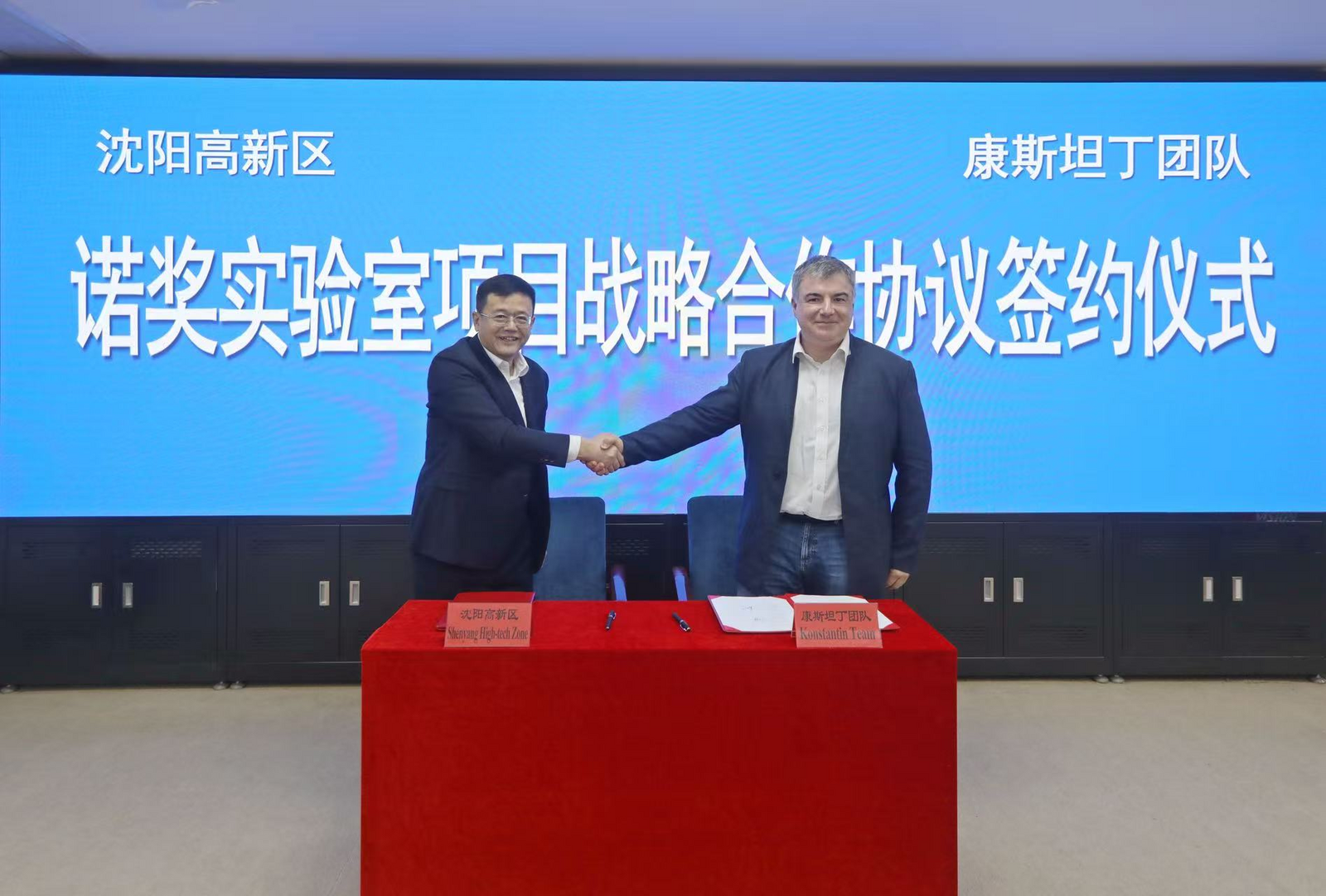
诺奖实验室项目落户沈阳浑南科技城
Liao Ning Ri Bao· 2026-01-21 01:49
Core Viewpoint - The establishment of the Konstantin Two-Dimensional Materials Research Center in Shenyang marks a significant advancement in the field of two-dimensional materials, led by Nobel laureate Konstantin Novoselov and his team, aiming to tackle key challenges in fundamental research and the industrialization of transformative products [1] Group 1 - The Konstantin Two-Dimensional Materials Research Center is the first Nobel Prize laboratory project in the province, located in Shenyang Hunnan Science and Technology City [1] - The center will focus on graphene material research and enhance the region's technological innovation capabilities in new materials, electronic information, new energy, and equipment manufacturing [1] - The team plans to attract high-level talent from around the world to conduct research in Shenyang and strengthen international scientific cooperation [1] Group 2 - The center aims to develop two-dimensional materials and related components for future industries such as low-altitude economy, aerospace, new energy, and quantum technology [1] - Konstantin Novoselov expressed gratitude for the support from Shenyang and Hunnan District, emphasizing the importance of building a world-class research ecosystem [1] - Academician Cheng Huiming highlighted that graphene is a typical representative of two-dimensional materials, which are at the forefront of new materials [1]
辽宁首个诺贝尔奖实验室项目落户浑南科技城
Xin Lang Cai Jing· 2026-01-20 21:54
Core Insights - The first Nobel Prize laboratory project in Liaoning has been officially signed and will be established in Hunnan Science and Technology City, led by Konstantin Novoselov, a Nobel laureate in Physics and a professor at the National University of Singapore [1][2] - The project, named the Konstantin Two-Dimensional Materials Research Center, aims to create a world-class laboratory focused on the fundamental research and industrialization of two-dimensional materials, particularly graphene [1][2] Group 1 - The laboratory will focus on addressing core challenges in the basic research and transformative practical product industrialization processes of two-dimensional materials [1] - Konstantin Novoselov expressed gratitude for the support from Shenyang City and Hunnan District, emphasizing the team's commitment to enhancing technological innovation capabilities in new materials, electronic information, new energy, and equipment manufacturing [1][2] Group 2 - The laboratory will prioritize the development of two-dimensional materials and related components for future industries such as low-altitude economy, aerospace, new energy, and quantum technology [2] - The collaboration will involve deep synergy in key dimensions such as industrial ecosystem cultivation and talent exchange, aiming to explore the full-chain development path from basic research to industrial application of two-dimensional materials [2] - The laboratory plans to establish a development framework centered on platform construction, with a strategy to attract, gather, and cultivate talent, aiming to recruit and train 300 high-level scientific talents [2]
辽宁首个诺贝尔奖实验室项目落户沈阳浑南科技城
Xin Lang Cai Jing· 2026-01-20 15:50
Core Insights - The first Nobel Prize laboratory project in Liaoning has been officially signed and will be located in the Hunnan Science and Technology City, led by Konstantin Novoselov, a Nobel laureate in Physics [1][3] Group 1: Project Overview - The project is named the Konstantin Two-Dimensional Materials Research Center, focusing on the fundamental research and industrialization of two-dimensional materials [3] - The laboratory aims to tackle key challenges in the core processes of two-dimensional materials and transformative practical products [3] Group 2: Research Focus and Goals - The research will primarily concentrate on graphene materials, enhancing the region's technological innovation capabilities in new materials, electronic information, new energy, and equipment manufacturing [3] - The laboratory plans to attract high-level talent from Singapore and around the world to strengthen international scientific cooperation and create a world-class research ecosystem [3] Group 3: Collaboration and Development Strategy - The signing involves deep collaborative efforts in industrial ecosystem cultivation and talent exchange, exploring a full-chain development path from basic research to industrial application of two-dimensional materials [4] - The laboratory will focus on platform construction, aiming to implement a strategy of "attracting, gathering, and nurturing talent," with plans to recruit and train 300 high-level scientific talents [4] - The development framework includes "five platforms, three centers, and nine teams," aiming to gather top global research forces to drive innovation in the field of two-dimensional materials [4]