兴趣课程

Search documents
教育行业周报:2026年普通高校招生工作部署,学科专业迭代优化-20260125
Guolian Minsheng Securities· 2026-01-25 13:15
Investment Rating - The report maintains a "Recommend" rating for the education industry, indicating a positive outlook for investment opportunities [5]. Core Insights - The education industry is experiencing a "three-dimensional resonance" with policy improvements, supply clearing, and demand release, shifting the investment logic from policy-driven to performance-driven. The industry is expected to benefit from a "Davis Double Play" in terms of performance and valuation under policy support [5][27]. - The integration of AI in education is highlighted as a key investment theme, with leading education companies likely to benefit from the "AI + Education" trend [5][27]. Summary by Sections 1. Education Industry Policy Dynamics - On January 16, 2026, the Ministry of Education issued a notice regarding the deployment of ordinary college admissions, emphasizing the need for optimization of academic disciplines and alignment with national strategic needs [8][9]. - On January 19, 2026, the Ministry of Education and six other departments released opinions to promote the inheritance and development of excellent Chinese language culture, aiming to enhance cultural literacy among the youth [8][9]. - Beijing's Human Resources and Social Security Bureau introduced a trial method for evaluating professional titles in robotics, set to be implemented in 2026 [11]. 2. Education Stock Dynamics - The report notes significant movements in individual stocks, with the top gainers being Qinsong Co. (+12.07%), Botong Co. (+4.18%), and Borui Communication (+3.71%). Conversely, the largest declines were seen in Huatu Shanding (-15.54%), Fangzhi Technology (-8.83%), and Xingdong Education (-3.47%) [21][22]. 3. Education Index and Stock Performance - The education sector outperformed the CSI 300 index during the week of January 19-23, 2026, with the CITIC Education Index showing a decline of only -0.12% compared to the CSI 300's -0.62% [17]. - Among the three sub-sectors of education, K12 training performed the best with a rise of 2.40%, while education information technology and online education saw a decline of 0.84% [19]. 4. Investment Recommendations - The report suggests focusing on three main investment lines: (1) "AI + Education" with potential leaders like Kevin Education and Kede Education, (2) performance and valuation resonance with Action Education and Xueda Education, and (3) companies like Botong Co. and Huatu Shanding seeking new growth avenues [27].
杭州青少年活动中心 在半山开“分号”啦
Hang Zhou Ri Bao· 2025-11-24 02:04
Core Insights - The Hangzhou Youth Activity Center's Banshan Branch, referred to as "Half-Mountain Disneyland," has become very popular among families, especially on weekends, with long queues for various attractions [1] - The Banshan Branch will start enrollment in mid-December, with classes beginning in the spring of next year [1] Group 1: Facilities and Design - The Banshan Branch covers an area of 22,300 square meters and features a park-like design with industrial relics nearby, providing a pleasant waiting area for parents [1] - The center consists of four buildings, each equipped with high-end facilities, including a projection classroom that can simulate different environments and a smart Go classroom with intelligent boards for tracking student progress [1] - A unique indoor model car racing track has been created on the rooftop, making it one of the few such facilities in Hangzhou and nationwide [1] Group 2: Course Offerings and Structure - The center plans to offer over 1,000 classes and more than 10,000 spots across seven categories, including sports, literature, arts, technology, international culture, dance, and early childhood education by the spring semester of 2026 [2] - Despite significant investment in facilities, the center maintains a public welfare attribute with affordable course pricing and small class sizes to cater to individual needs [2] Group 3: Faculty and Educational Quality - The Banshan Branch employs over 40 full-time teachers, with one-third being core teachers from the center, ensuring a strong faculty presence [2] - Two chief teacher trainees are also involved in the center, serving as regional and teaching supervisors, enhancing the quality of education provided [2]
消费第一城,为何把"增收"放首位?
Mei Ri Jing Ji Xin Wen· 2025-05-24 15:41
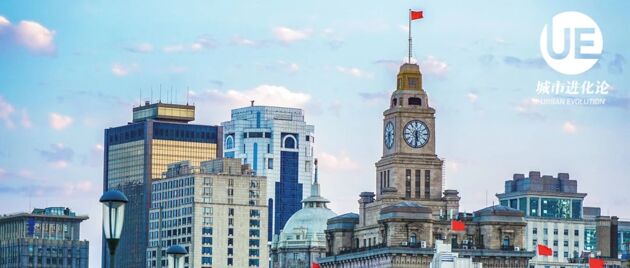
Group 1 - Shanghai has been surpassed by Chongqing in terms of total retail sales of consumer goods for the first time in seven years, with a gap of approximately 14.6 billion yuan [1][2] - The Shanghai government has introduced a comprehensive consumption promotion plan, which includes six major actions aimed at boosting consumer spending [1][3] - The plan emphasizes "increasing income for urban and rural residents" and "supporting consumption capacity," indicating a shift in focus towards income as a driver of consumption [1][3][5] Group 2 - Other provinces such as Hunan, Zhejiang, Guangdong, and Hubei have also launched similar consumption promotion policies, aligning with national strategies that prioritize income growth and consumption capacity [3][4] - Guangdong's approach focuses on attracting talent and supporting local employment, while Zhejiang emphasizes the role of enterprises in stabilizing employment [4][5] - Shanghai's strategy includes future-oriented initiatives like skill training in key industries, addressing structural employment issues, and enhancing family support measures [5][6] Group 3 - The shift in Shanghai's policy is crucial as consumer spending has been affected by stagnant income growth, with a notable decline in disposable income growth rates [6][12] - In 2022, Shanghai's per capita disposable income was 88,400 yuan, the highest in the country, but its growth rate was only 4.2%, marking a significant drop [6][12] - The relationship between income and consumption is highlighted, with a focus on increasing employment to enhance consumer spending capacity [13][14] Group 4 - The current consumption policies aim to bridge the gap between consumers' income and their spending capabilities, promoting a holistic approach to economic growth [14][16] - The transition from an investment-driven economy to a consumption-driven one is emphasized, with a need for structural reforms to stimulate consumer demand [17][18] - Shanghai's strengths in service consumption are noted, with rapid growth in this sector despite overall retail sales slowing down [18]