
再生砖

Search documents
复工复产开工忙 海州重点项目建设擂响奋进鼓
Yang Zi Wan Bao Wang· 2026-02-25 09:47
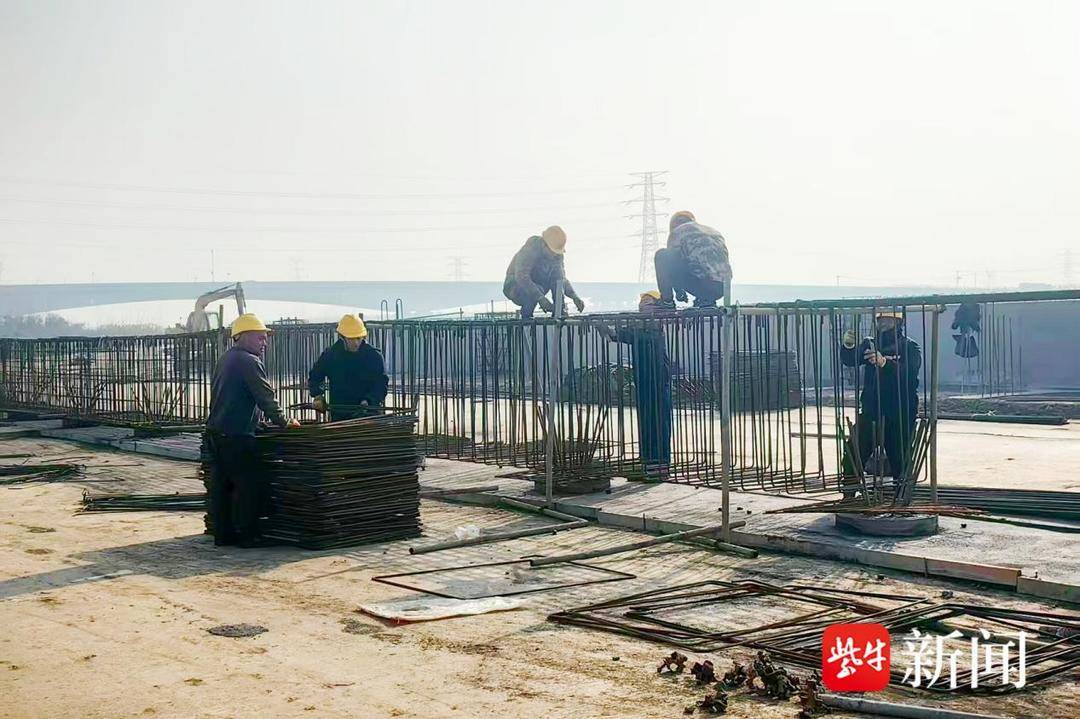
Core Viewpoint - The construction projects in Haizhou District of Lianyungang City are experiencing a significant acceleration in resumption and production, marking a strong start for high-quality development in the new year [1][8]. Group 1: Key Projects - The first phase of the construction waste resource disposal project in the Haizhou District Circular Economy Industrial Park has a total investment of approximately 200 million yuan, aiming to process 100,000 tons of renovation waste and 50,000 tons of demolition waste annually, producing 90,000 tons of recycled aggregate and 18 million recycled bricks [3]. - The second phase of the Banjiao operation area terminal project in the Lianyungang inland river port covers about 53 acres and is designed to have an annual throughput capacity of 2.14 million tons, with 75% of the total project volume already completed [5]. - The Baichuan Medical Device semi-finished product manufacturing project has a total investment of 220 million yuan and aims to produce 2,000 units each of pulse oximeters and blood pressure monitors annually, filling a gap in the regional medical device semi-finished product manufacturing sector [7]. Group 2: Development Goals - The comprehensive resumption of key projects in Haizhou District reflects the district's commitment to high-quality development, with a focus on accelerating project completion and early production to strengthen the foundation for building a modern urban center worth hundreds of billions [8].

听一块废砖“自述”在达孜如何走向“重生之路”
Ren Min Ri Bao· 2025-11-23 00:05
Core Insights - The company has successfully transformed construction waste into reusable building materials, demonstrating a sustainable approach to waste management and resource utilization [1][4] - Since its establishment in 2019, the company has processed over 250,000 tons of construction waste, achieving 100% recycling in the district and creating 137 jobs with an annual income increase of 4.7 million yuan [3] Group 1: Company Operations - The company collects construction waste from various sites, including old residential windows, broken tiles, and cement blocks, without incurring purchasing costs, thus maximizing resource reuse [1][2] - The waste materials are processed through crushing, magnetic separation, and screening, ultimately being transformed into new bricks through high-pressure solidification [3] Group 2: Community Impact - The company has contributed to local employment and income generation, with 137 individuals benefiting from job opportunities and a total annual income increase of 4.7 million yuan [3] - The factory's expansion in 2023 and the introduction of new production lines have enhanced processing capabilities, further supporting local economic growth [3] Group 3: Environmental and Social Responsibility - The initiative aligns with the ecological governance and livelihood improvement strategies of the Tibet Autonomous Region, serving as a model for sustainable development in highland cities [4] - The company has been recognized for its contributions to long-term stability and high-quality development, receiving awards for its efforts in resource recycling [3][4]
盐城东台建筑垃圾资源化利用率达90%的背后故事
Yang Zi Wan Bao Wang· 2025-08-25 07:28
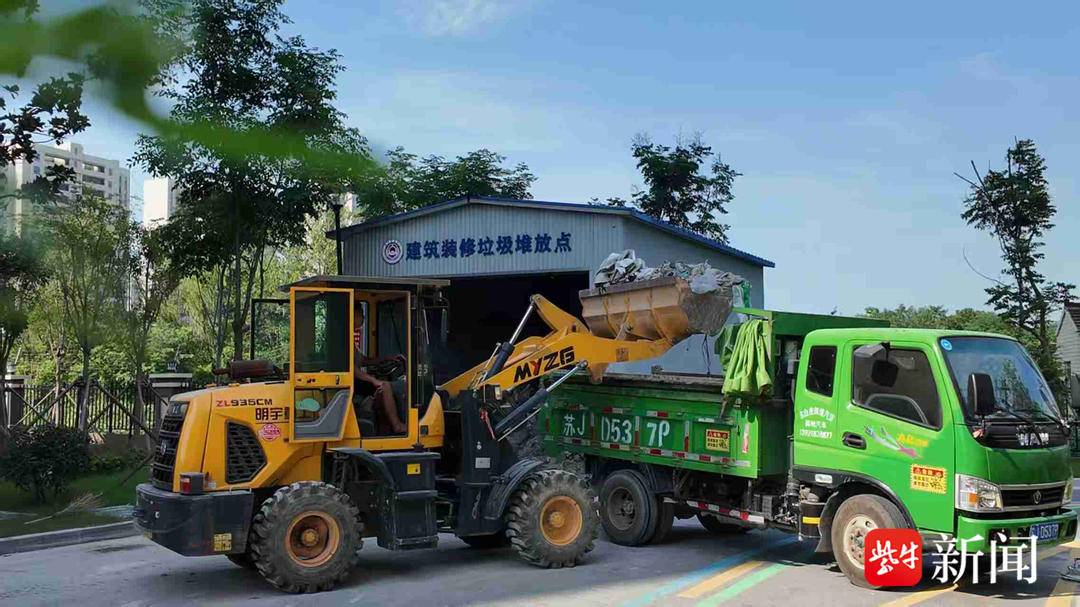
Core Viewpoint - Jiangsu Yancheng Dongtai has transformed construction waste from an urban issue into a resource for the circular economy, achieving a 90% resource utilization rate of construction waste through comprehensive management practices [1][7]. Group 1: Source Management - Construction waste is now organized in designated areas, improving management efficiency significantly, with 108 property communities covering waste disposal points [3]. - The city has implemented a system where every construction site has a "waste ID," ensuring that all construction waste is properly documented and managed [3]. Group 2: Transportation Control - A digital management platform has been established for 169 dump trucks, allowing for real-time tracking of vehicle routes and waste transport [5]. - Collaborative efforts among police, traffic, and urban management have led to the interception of illegal dumping activities, with 12 cases being strictly dealt with this year [6]. Group 3: End Processing - Construction waste is processed into recycled materials, producing 200 cubic meters of concrete and 70,000 to 100,000 bricks daily, indicating high demand for these recycled building materials [7]. - The city has established a closed-loop system for waste management, with 32,000 tons of waste being repurposed into new materials, contributing to local infrastructure projects [7].
我市将优先推广建筑垃圾再生品,政府投资工程使用比例不低于15%
Nan Jing Ri Bao· 2025-08-13 02:29
Group 1 - The core viewpoint of the news is the promotion of the use of recycled construction waste products in government investment projects in Nanjing, aiming to reduce, harmlessly dispose of, and resourcefully utilize construction waste [1][2] - The implementation plan requires that in government investment projects, recycled products should be prioritized in applicable areas, with a usage ratio of no less than 15% [1][3] - The initiative is seen as a significant benefit for the entire industry, as it shifts from traditional landfill methods to resource recycling, thus saving land resources and reducing environmental pollution [1][2] Group 2 - The company Jin Jianfeng has developed a production line capable of processing 300,000 tons of renovation waste annually, producing recycled products used in municipal pipelines and road subgrades [2] - The city has established a registration system for recycled construction waste products, allowing companies to register various types of products for selection by relevant units [2][3] - Nanjing aims to achieve a comprehensive utilization rate of construction waste of 90% and a resource utilization rate of 55% by 2030, as part of its carbon peak implementation plan [3]