
减毒活疫苗

Search documents
2025年中国乙脑病毒疫苗行业洞察报告:国家免规政策升级驱动市场扩容,“辽宁成大:成都生物制品研究所:康泰生物”三强地位形成稳态,新兴市场如何破局(精华版)
Tou Bao Yan Jiu Yuan· 2026-01-12 12:28
Investment Rating - The report indicates a stable investment outlook for the Japanese Encephalitis (JE) vaccine industry in China, driven by favorable national immunization policies and a concentrated market structure dominated by three major players [1][3]. Core Insights - The continuous optimization of the national immunization program (EPI) is identified as the key driver for the expansion of the JE vaccine market in China, with a significant increase in vaccination coverage and a reduction in disease incidence [3][5]. - The competitive landscape is stabilizing around three leading companies: Liaoning Chengda, Chengdu Biological Products Research Institute, and Kangtai Biological, which collectively hold over 90% market share [3][6]. - New entrants face high barriers to entry due to stringent regulatory requirements and the need for substantial investment in production capacity and distribution networks [4][6]. Summary by Sections National Immunization Policy and Market Dynamics - The JE vaccine market in China has expanded significantly since its inclusion in the EPI, with a reported market growth of approximately 2.8 billion yuan since 2007 due to increased vaccination rates [3]. - The demand for JE vaccines is expected to continue growing as the government aims to include more safe and effective vaccines in the EPI, enhancing the coverage of the population [3][5]. Competitive Landscape - The industry is characterized by a "three strong" market structure, where the leading companies have established significant technological and quality barriers, making it difficult for new entrants to disrupt the market [4][6]. - The focus of competition is shifting from product differentiation to a comprehensive competitive strategy that includes product technology upgrades, supply chain security, and regional penetration capabilities [7]. Vaccine Technology and Production - The JE vaccines in China are primarily categorized into live attenuated vaccines, inactivated vaccines, and mRNA vaccines, with live attenuated vaccines being the mainstay of the national immunization program [16][18]. - The production of JE vaccines relies heavily on standardized cell platforms, which ensure consistency and quality in vaccine manufacturing [30][32]. Vaccination Coverage and Public Health Impact - Vaccination coverage for JE vaccines has remained high, with rates stabilizing around 99% since 2010, indicating strong public health outcomes and effective immunization strategies [14][44]. - The report highlights the need for ongoing efforts to address vaccination gaps in high-risk populations, including rural areas and among migrant populations [44][28].


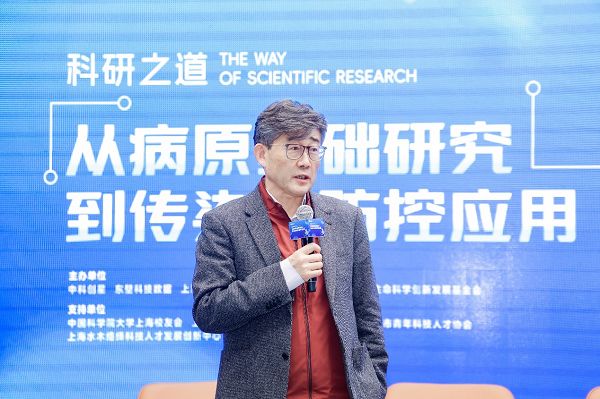
如何提高疫苗有效性与安全性?“好望角科学沙龙”探讨传染病防控新路径
Huan Qiu Wang Zi Xun· 2025-12-22 03:33
Group 1 - The discussion focused on improving vaccine effectiveness and safety, highlighting the limitations of current mucosal immune mechanisms and basic immunology research in developing efficient and long-lasting vaccines [1][3] - The event, part of the "Cape of Good Hope Science Salon," gathered over 130 participants, including experts, entrepreneurs, and investment leaders, to explore the latest research and investment logic in pathogen research and infectious disease prevention [1][3] Group 2 - Gao Fu, a prominent immunologist and academician, emphasized that the viruses likely to cause future large-scale outbreaks are influenza and coronaviruses due to their respiratory nature and propensity for mutation [3] - He discussed various vaccine development strategies adopted in China post-COVID-19, including inactivated, live attenuated, protein subunit, viral vector, mRNA, multivalent, and virus-like particle vaccines, with a focus on protein subunit vaccines [4] - Recent breakthroughs in vaccine research include the development of the world's first recombinant subunit vaccine for COVID-19, with advancements in design strategies to enhance broad-spectrum efficacy [4]

专家:带状疱疹并非老年人“专属疾病” 高危人群需尽早预防
Xin Lang Cai Jing· 2025-12-21 03:16
Core Viewpoint - Shingles is not exclusively a disease of the elderly; younger individuals with compromised immune systems are also at significant risk of infection [1] Group 1: High-Risk Populations - High-risk groups for shingles include patients with weakened immune systems due to conditions such as rheumatic diseases, blood cancers, and solid tumors [1] - Another high-risk group consists of individuals undergoing treatment with corticosteroids, immunosuppressants, or biological agents, which further weaken the immune system [1] - It is now recognized that individuals aged 18 and older with compromised immune function can develop shingles, contrary to the previous belief that it primarily affects the elderly [1] Group 2: Vaccination Recommendations - Vaccination is the most effective means of preventing shingles, but immunocompromised individuals have specific vaccine requirements [2] - Live attenuated vaccines are not recommended for patients with immune deficiencies; inactivated or recombinant vaccines are preferred due to their higher safety profile [2] - Patients recovering from shingles should evaluate vaccination options three months post-recovery [2] Group 3: Clinical Implications - Shingles can cause severe pain that may lead to sympathetic nervous system excitation, increasing the risk of coronary artery spasm and serious cardiovascular events [2] - Data indicates that shingles patients have a 78% increased risk of stroke and a 39% higher risk of developing shingles if they already have cardiovascular diseases [2] - The risk of shingles significantly increases with the number of comorbid chronic diseases, such as hypertension, hyperlipidemia, diabetes, and chronic obstructive pulmonary disease [2] Group 4: Current Vaccination Rates and Recommendations - Despite the significant benefits of vaccination, the current vaccination rate for shingles in China remains low [3] - Vaccination not only alleviates patient suffering but also reduces healthcare costs, as the treatment cost for a shingles patient often exceeds the vaccine cost [3] - The autumn and winter seasons are peak times for shingles outbreaks, and high-risk individuals, especially those with immune deficiencies and chronic diseases, are advised to consult healthcare providers for vaccination [3]