凯石元鑫混合发起式基金

Search documents
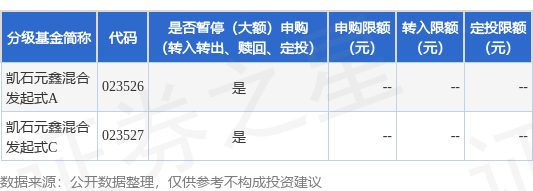
公告速递:凯石元鑫混合发起式基金基金暂停(大额)申购(转换转入、赎回、转换转出、定期定额投资)
Sou Hu Cai Jing· 2025-11-11 01:38
Core Viewpoint - Kaishi Fund Management Co., Ltd. announced the suspension of large-scale subscriptions for the Kaishi Yuanxin Mixed Initiated Securities Investment Fund starting from November 11, 2025, to protect the interests of fund shareholders and maintain stable fund operations [1] Summary by Category Fund Suspension Details - The fund will suspend large-scale subscriptions, conversions, redemptions, and regular investment plans [1] - The maximum subscription and conversion amount is set at 100 million yuan [1] Fund Classifications - The following fund classes are affected: - Kaishi Yuanxin Mixed Initiated A (Code: 023526) - Kaishi Yuanzhen Mixed Initiated C (Code: 023527) [1]

凯石基金董事长陈继武遭限消!公司旗下2/3产品长期跑输业绩基准,管理规模较峰值缩水逾九成
Sou Hu Cai Jing· 2025-06-13 03:36
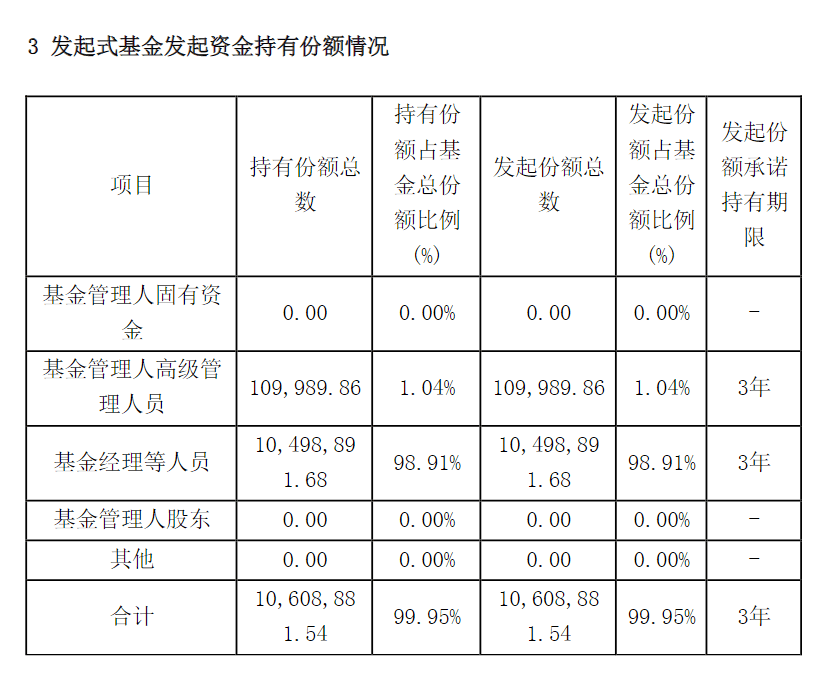
Core Viewpoint - The recent legal and operational challenges faced by Kaishi Fund and its chairman Chen Jiwu highlight the difficulties small and medium-sized public funds encounter in a competitive and heavily regulated market [6][7][8]. Group 1: Legal and Operational Challenges - Chen Jiwu, chairman of Kaishi Fund, has been subjected to consumption restrictions by the Shanghai Huangpu District People's Court, affecting his ability to engage in high-cost activities [1]. - Kaishi Wealth, a professional fund sales institution, has faced termination of business relationships with multiple public funds, including China CITIC Prudential Fund and Xinjiang Qianhai United Fund [2]. - Kaishi Fund Management Co., Ltd. has multiple equity freezes totaling over 300 million yuan, with the latest freeze lasting until 2027 [2]. Group 2: Financial Performance and Product Line - As of March 31, 2025, Kaishi Fund's total assets under management have plummeted to 117 million yuan, a decline of over 90% from its peak of 1.429 billion yuan in Q3 2019 [3]. - The company has seen a significant reduction in its product line, with several funds being liquidated since its establishment in 2017 [3]. - The recent launch of the Kaishi Yuanxin Mixed Fund raised only 10.61 million yuan, with no external subscriptions, indicating a lack of investor confidence [3]. Group 3: Industry Context and Future Outlook - The situation of Chen Jiwu and Kaishi Fund reflects the broader challenges faced by small public funds amid increasing market concentration, where top firms hold over 80% of market share [6][7]. - As of the end of 2024, Kaishi Fund's scale was merely 19 million yuan, ranking last among similar "private-to-public" companies, while competitors like Pengyang Fund exceeded 124.8 billion yuan [7]. - Industry experts suggest that building differentiated competitive advantages and addressing historical issues like equity freezes are crucial for the survival of small public funds [7].
这家公募基金董事长被限高
21世纪经济报道· 2025-06-12 23:37
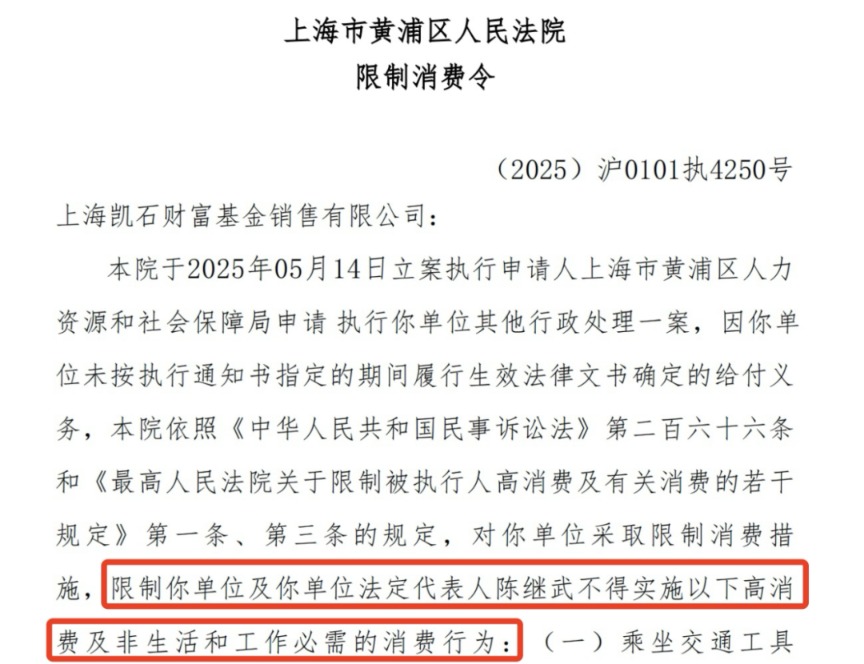
Core Viewpoint - The recent "consumption restriction order" against Chen Jiwu, chairman of Kaishi Fund, highlights the survival difficulties faced by small fund companies in China [3][8]. Group 1: Legal Issues and Financial Constraints - The Shanghai Huangpu District People's Court issued consumption restrictions against Kaishi Fund and its affiliated companies due to unresolved financial obligations, with a total unpaid amount of approximately 63.34 million yuan [5][6]. - Chen Jiwu's equity in multiple companies, including Kaishi Fund and Kaishi Wealth, has been frozen, with the total amount exceeding 300 million yuan, with the freeze lasting until December 2027 [7][8]. Group 2: Company Background and Development Challenges - Kaishi Fund, established in May 2017, is the second domestic public fund approved for the "private to public" transition and the first fully natural person-held public fund [10][12]. - Despite initial optimism regarding its innovative "private to public" model, Kaishi Fund has faced significant challenges, with its assets under management shrinking to 117 million yuan by the first quarter of 2025, down from a peak of 1.348 billion yuan in 2019 [14]. - The company has seen a series of fund closures, with only three public funds remaining as of early 2025, and its recent fund offerings have failed to attract external investment [14][15].

罕见!这家公募董事长被“限消”
Zhong Guo Ji Jin Bao· 2025-06-10 07:22
Core Viewpoint - The chairman of Kaishi Fund, Chen Jiwu, has been issued a consumption restriction order by the Shanghai Huangpu District People's Court, highlighting significant legal and operational challenges faced by the company in the public fund industry [1][2]. Group 1: Legal Issues - The Shanghai Huangpu District People's Court issued a consumption restriction order due to the company's failure to fulfill its financial obligations as determined by a legal document [2][3]. - The restriction prohibits high consumption behaviors, including travel by first-class or higher, staying in star-rated hotels, and purchasing non-essential vehicles [3][4]. Group 2: Company Background - Kaishi Fund was established on May 10, 2017, and is recognized as the second public fund in China to transition from private to public, being fully owned by individuals [5]. - Chen Jiwu, a veteran in the public fund industry, has a history of working with notable firms such as Southern Fund and Fuqun Fund before founding Kaishi Fund [5]. Group 3: Financial Performance - Over the past eight years, Kaishi Fund has struggled to grow, with only three funds remaining under management as of the end of Q1 this year, down from eight funds in 2020 [7]. - The total non-monetary assets managed by Kaishi Fund are less than 200 million yuan, a significant decline of approximately 90% from the peak of 1.425 billion yuan in Q3 2019 [7].
高管“挂帅”!这类基金持续发力
券商中国· 2025-03-20 23:23
Core Viewpoint - The active equity funds have regained market attention as the market conditions improve, with a notable focus on technology innovation-related themes [1][2][6] Group 1: Fund Issuance and Themes - As of March 20, a total of 17 new active equity funds have been launched, primarily focusing on technology innovation themes [1][2] - Among the 10 funds currently in the initial issuance phase, many are centered on technology sectors, including funds like Taiping Technology Pioneer Mixed and Deutsche Bank Emerging Industry Mixed [2] - Some funds are targeting specific themes, such as central enterprises and dividends, with examples like Rongtong Central Enterprise Selected Mixed focusing on high-dividend, stable cash flow companies [2][3] Group 2: Fund Issuance Strategies - Many funds are adopting a "initiated" issuance strategy due to concerns over unsuccessful fundraising, with 5 out of the 10 currently issuing funds being initiated funds [3][4] - Initiated funds require a minimum of 10 million yuan to establish and have shorter issuance periods, allowing for gradual scale growth post-establishment [4] Group 3: Fund Performance and Market Sentiment - Despite the increase in active equity fund issuance, there remains a cautious sentiment among fund companies due to recent failures in fundraising, with 3 funds reported to have failed to meet registration conditions this year [4][5] - The performance of active equity funds has shown promise, with the highest return exceeding 80% year-to-date, indicating potential for sustained performance as market conditions evolve [7]