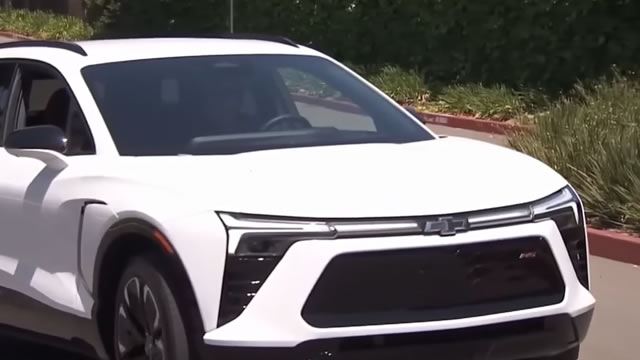
凯迪拉克凯雷德IQ

Search documents
通用汽车因缩减电动汽车业务发展规划 录得71亿美元亏损
Xin Lang Cai Jing· 2026-01-09 07:05
Core Viewpoint - General Motors (GM) has announced significant losses in its electric vehicle (EV) investments, primarily due to policy shifts favoring fossil fuels, leading to a decline in EV sales [2][7]. Group 1: Financial Impact - GM expects to report a loss of $7.1 billion by Q4 2025, reflecting the diminished value of investments in battery factories and EV assembly lines [2][7]. - The total loss includes approximately $1.1 billion related to restructuring costs for GM's non-EV business in China [2][7]. - In October of the previous year, GM reported a $1.6 billion loss due to factors related to EV assets [8]. Group 2: Policy Changes and Market Conditions - The Trump administration's policies have increased costs for multiple automakers, with Ford recently announcing a projected loss of $19.5 billion in its EV business [8]. - The cancellation of a federal tax credit of up to $7,500 for EV purchases or leases has significantly increased the difficulty of selling EVs [8]. - GM's recent filing indicates that the termination of consumer tax incentives and the relaxation of emission regulations have led to a slowdown in EV demand across North America [8]. Group 3: Product Line and Strategy - GM has one of the most extensive EV product lines among automakers outside of China, including luxury models like the Cadillac Escalade IQ and more affordable options like the Chevrolet Equinox EV [9]. - To achieve profitability for these models, GM needs to significantly increase production and sales to leverage economies of scale [9].


GM stock surges on earnings, CFO discusses tariff concerns and EV demand
Youtube· 2025-10-21 19:25
Core Viewpoint - General Motors (GM) has experienced a significant stock increase of over 10% in pre-market trading, driven by a mixed earnings report but an optimistic full-year guidance and improved tariff outlook [1][9]. Financial Performance - GM's full-year earnings guidance has been raised to between $9.75 and $10.50 per share, up from the previous range, with adjusted EBIT expected to exceed $13 billion [2][4]. - The company reported adjusted EPS of $2.80, while revenue was $44.3 billion, slightly below estimates, and adjusted EBIT was stronger than expected at $3.4 billion [4][9]. - Despite a mixed earnings picture, the positive outlook and earnings boost have contributed to the stock's double-digit gains [5][9]. Tariff Impact - GM anticipates a tariff-related hit of $3.5 to $4.5 billion this year, which is an improvement from earlier estimates [3][9]. - The company expects to offset about 35% of tariff costs due to new mitigation policies from the Trump administration [3][4]. - GM has revised its guidance downward on tariff impacts by approximately $500 million, indicating stabilization in tariff effects [12][42]. Vehicle Sales and Market Share - U.S. sales rose by 8% to over 710,000 vehicles, marking GM's best market share since 2017, with strong demand for gas-powered pickup trucks and SUVs [5][40]. - Electric vehicle (EV) sales reached a record of 66,000 units, although GM warns of a substantial slowdown in EV demand following the expiration of federal tax credits [6][9]. EV Strategy and Future Outlook - GM has taken a $1.6 billion charge related to its EV reassessment, indicating a more subdued view on near-term EV adoption [6][9]. - The company plans to use the current slowdown in EV demand as an opportunity to improve battery technology and production efficiency [7][32]. - GM remains optimistic about the long-term viability of the EV market, despite current challenges [30][50]. Management and Operational Adjustments - GM's management has demonstrated increased agility in responding to market changes, reducing inventory levels and adjusting production strategies more rapidly than in the past [10][38]. - The company is focusing on reshoring jobs and increasing domestic production to mitigate tariff impacts and enhance competitiveness [14][23]. - GM's financial team has maintained strong credit quality in its loan portfolio, despite industry concerns about auto loan delinquencies [33][36].