
前海开源人工智能主题混合

Search documents
2/24财经夜宵:得知基金净值排名及选基策略,赶紧告知大家
Sou Hu Cai Jing· 2026-02-24 15:39
Group 1 - The article provides an objective ranking of open-end fund net values, highlighting the top and bottom performers without subjective bias [1] - The top 10 funds with the highest net value growth include Wanji Cycle Vision Stock Initiation C, Wanji Cycle Vision Stock Initiation A, and Huaxia Digital Industry Mixed A, among others, with growth rates ranging from 5.80% to 7.40% [2] - The bottom 10 funds with the lowest net value growth include Qianhai Kaiyuan Artificial Intelligence Theme Mixed C and A, with declines ranging from -6.42% to -8.04% [4] Group 2 - The Shanghai Composite Index opened high and experienced a narrow range of fluctuations, with a total transaction volume of 2.21 trillion, and a stock rise-to-fall ratio of 4006:1392 [6] - Leading sectors included oil and building materials, with gains exceeding 4%, while media, entertainment, tourism, and internet sectors saw declines of over 2% [6] - The fund with the fastest net value growth is Huaxia Digital Industry Mixed A, while the fund with the poorest performance is Qianhai Kaiyuan Artificial Intelligence Theme Mixed C [6][8] Group 3 - The top holdings of the funds show a concentration in the technology and communication sectors, with significant daily gains in stocks like Shengyi Technology and Zhongji Xuchuang [7][8] - The top ten holdings account for 72.99% of the total holdings in one fund, indicating a strong focus on specific sectors, particularly in artificial intelligence [7] - Another fund shows a top holding concentration of 61.18%, with notable daily gains in stocks like Changfei Optical Fiber and Zhongji Xuchuang, suggesting a shift in investment strategy [8]

前海开源人工智能年内逆势下跌 4个季度目前3个季度跌
Zhong Guo Jing Ji Wang· 2025-12-23 08:03
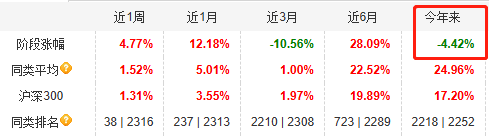
Core Insights - Since 2025, the AI sector has emerged as a significant winner, with many AI-themed actively managed equity funds seeing gains exceeding 50%, while several tech-themed funds heavily invested in AI stocks have doubled their returns [1] - However, the Qianhai Kaiyuan AI Theme Mixed Fund has experienced a decline, with a return of -4.42% for its A share and -9.55% for its C share since their respective inception dates [1] Fund Performance Summary - The Qianhai Kaiyuan AI Theme Mixed Fund A has shown a year-to-date return of -4.42%, while its C share has returned -9.55% since its inception on January 20, 2025 [2] - In comparison, the average return of similar funds is 24.96% year-to-date, indicating a significant underperformance [2] Quarterly Performance Analysis - The fund's quarterly performance shows a stark contrast, with a 39.01% gain in Q3 2025, but declines of -18.20% and -2.90% in Q2 and Q1 respectively [5] - The fund's high turnover rate of 420.79% in the first half of 2025 suggests that it has not effectively captured the leading stocks in the AI sector [5] Management and Historical Performance - The fund was co-managed by Qu Yang and Wei Chun from March 16, 2021, to June 2, 2025, during which it recorded a return of -41.32% [8] - Wei Chun has been managing the fund alone since June 3, 2025, and while there has been some recovery, the fund has not yet reversed its year-to-date decline [8]
年内下跌7%,前海开源的人工智能基金“翻车”了
3 6 Ke· 2025-12-19 10:27
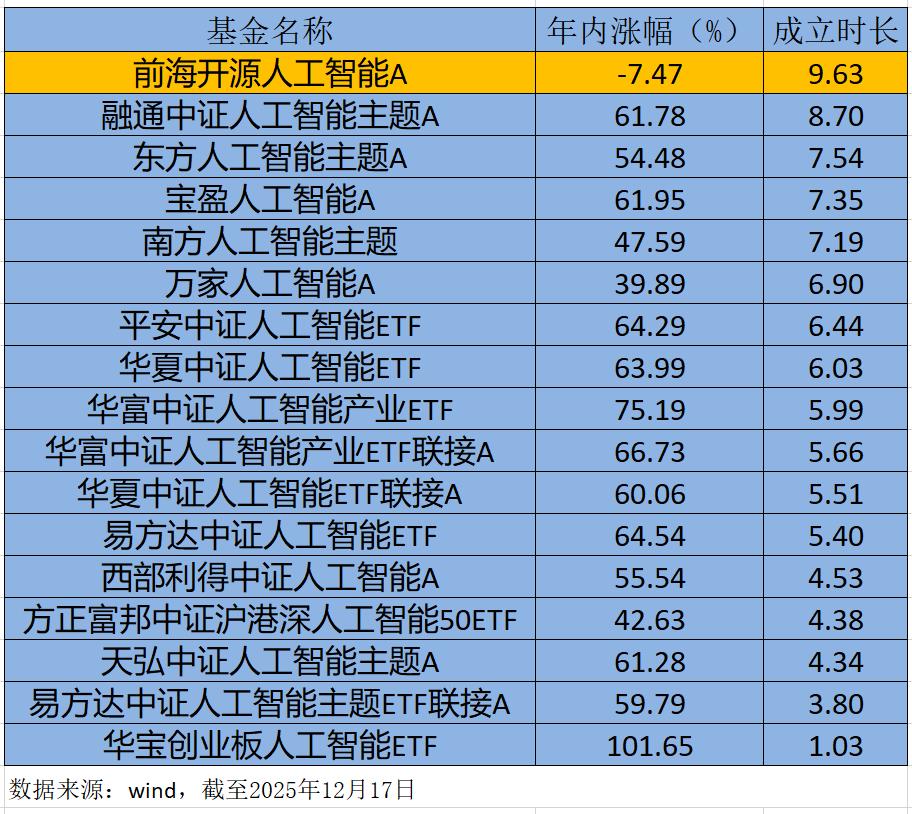
Core Viewpoint - The AI sector is experiencing a significant boom, with Nvidia's CEO asserting it as the most influential technology of the era. However, the Qianhai Kaiyuan AI fund has underperformed, contrasting sharply with the overall success of similar funds in the market [1][2]. Group 1: Fund Performance - The Qianhai Kaiyuan AI fund has seen a year-to-date decline of 7.47% as of December 17, 2025, while most comparable AI-themed funds have gained over 30% [1][4]. - Among 63 AI-themed funds, 16 out of 17 funds that have been established for over a year have increased by more than 30% since 2025, with some exceeding 100% [2][3]. - The fund's long-term performance shows a cumulative return of 38.05% since its inception in May 2016, but it has faced significant short-term losses [5]. Group 2: Investor Sentiment - Investors have expressed frustration over the fund's performance, with some reporting losses of up to 31% over five years, questioning its alignment with the booming AI sector [2][6]. - The fund's community has been vocal about their disappointment, highlighting the stark contrast between their experiences and the performance of other AI funds [2]. Group 3: Management and Strategy - The fund has been managed by two fund managers, with the first manager, Qu Yang, achieving a return of 93.30% during his tenure. After his departure, the fund's performance declined significantly under the management of Wei Chun [8][9]. - The fund's high turnover rate of 420.79% in the first half of 2025 indicates a strategy that may have contributed to its underperformance, as it frequently changed its top holdings [12][11]. - The fund's focus on end-side AI stocks has been criticized for missing out on the broader market trends that favored foundational AI infrastructure and chips, leading to its losses [14].
年内下跌7%,前海开源的人工智能基金“翻车”了!
Xin Lang Cai Jing· 2025-12-19 09:23
Core Viewpoint - The AI sector is experiencing a significant boom, with Nvidia's CEO asserting it as the most influential technology of the era. However, the Qianhai Kaisheng AI-themed fund has underperformed, losing 7.47% year-to-date, contrasting sharply with other AI funds that have gained over 30% [1][18][20]. Group 1: Fund Performance - As of December 17, 2025, the Qianhai Kaisheng AI-themed fund has declined by 7.47%, making it the only fund among 17 similar products with over one year of establishment to report a loss this year [18][21]. - In comparison, the CSI AI Index has risen by 69.89% year-to-date, and most AI-themed funds have seen significant gains, with 16 out of 17 funds achieving over 30% growth [4][5][20]. - The Qianhai Kaisheng AI fund has shown a cumulative return of 38.05% since its inception in May 2016, but its short-term performance has been disappointing, with various periods showing underperformance against the CSI 300 Index [22][24]. Group 2: Fund Management - The fund has been managed by two fund managers over its nine-year history, with the first manager, Qu Yang, achieving a return of 93.30% during his tenure. After his departure, the fund's performance declined significantly under the management of Wei Chun [9][24][25]. - The fund's high turnover rate of 420.79% in the first half of 2025 indicates a rapid trading strategy, which may have contributed to its poor performance [13][28]. - The fund's investment strategy has focused heavily on semiconductor stocks, which did not align with the broader market trends favoring infrastructure and computing power stocks in the AI sector [11][30][31]. Group 3: Investor Sentiment - Investors have expressed frustration over the fund's performance, questioning its alignment with the booming AI sector and expressing disappointment in its management [2][18]. - The fund's community feedback highlights a stark contrast between the expected performance in a thriving sector and the actual results, leading to a perception of it being a "fake" AI-themed fund [1][18].
10月份混基排行榜垫底:前海开源周期精选跌逾15%
Zhong Guo Jing Ji Wang· 2025-11-04 07:48
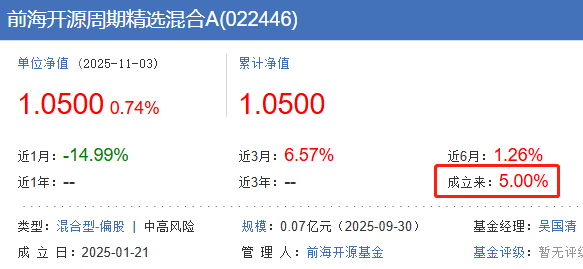
Core Insights - The performance of Qianhai Kaiyuan Cycle Selected Mixed Fund A/C and C in October was notably poor, with returns of -15.61% and -15.65%, placing them at the bottom of the monthly mixed fund performance rankings [1][2] - Despite a strong A-share market in 2023, the cumulative return of Qianhai Kaiyuan Cycle Selected Mixed Fund was only 5% as of November 3 [2] - The Qianhai Kaiyuan Artificial Intelligence Theme Mixed Fund C also underperformed, with a cumulative return of -8.91% since its inception [2][3] Fund Performance - Qianhai Kaiyuan Cycle Selected Mixed Fund A/C has been managed by Wu Guoqing since its establishment on January 21, 2023, who has 10 years of management experience [1][2] - The fund's top holdings included gold and mining stocks in the first half of the year, but shifted entirely to the semiconductor sector in the third quarter, which still resulted in only a 23% quarterly increase [2] - The top holdings of Qianhai Kaiyuan Artificial Intelligence Theme Mixed Fund C included companies like Goertek and Rockchip, but it still recorded a negative return since inception [2][3] Fund Rankings - In the October mixed fund performance rankings, Qianhai Kaiyuan Cycle Selected Mixed Fund A/C and C ranked among the top six funds with the largest declines [4][5] - The specific rankings were as follows: Qianhai Kaiyuan Cycle Selected Mixed Fund C at -15.65%, Qianhai Kaiyuan Cycle Selected Mixed Fund A at -15.61%, and Qianhai Kaiyuan Artificial Intelligence Theme Mixed Fund C at -12.70% [5]
又见“清仓式”卸任!部分知名基金经理卸任绩差产品
Mei Ri Jing Ji Xin Wen· 2025-06-18 01:42
Group 1 - Multiple public funds announced changes in fund managers, with some managers resigning in a "clearance" manner [1][2] - Wu Huijuan from Green Fund resigned from managing three funds on June 16, 2023, after less than six months in the role, with the highest return of 1.35% for one fund [2] - Qi Jieping from Chunhou Fund also resigned from managing four funds on June 14, 2023, due to personal reasons [2][3] Group 2 - Liu Taiyang from Penghua Fund resigned from three funds in June, leaving only one fund under management [3] - The resignation of fund managers has increased the burden on remaining managers, with some now managing multiple funds [3] - Notably, larger fund companies and star fund managers are also experiencing significant changes in their managed products, including resignations from underperforming funds [4] Group 3 - As of June 17, 2023, there have been 2,314 fund manager changes since 2025, with 1,254 managers resigning [5] - The high turnover of fund managers is closely linked to market cycles, with a shift towards team-based operations and a trend of managers seeking better career opportunities [6]
这类ETF规模较去年末增长超两倍;多位基金经理卸任绩差产品丨天赐良基早参
Mei Ri Jing Ji Xin Wen· 2025-06-16 01:35
Group 1: Company Changes - ICBC Credit Suisse Fund has completed a shareholding change, with UBS AG becoming a shareholder holding over 5% of the company, representing 20% of its registered capital [1] - The registered capital of ICBC Credit Suisse Fund remains unchanged, with ICBC still holding 80% of the shares [1] - The English abbreviation of the company has changed from "ICBCCS" to "ICBCUBS" effective June 13, 2025 [1] Group 2: Market Trends - The total scale of credit bond ETFs has reached 1669.87 billion yuan as of June 11, 2025, more than doubling since the end of last year [2] - Eight newly established benchmark credit bond ETFs have seen their total scale increase from 217.10 billion yuan to 817.91 billion yuan, a growth of over 2.7 times [2] - Several credit bond ETFs have joined the "100 billion club," indicating strong market interest and investment [2] Group 3: Fund Management Changes - Multiple fund managers have resigned from underperforming products, including Qu Yang from Qianhai Kaiyuan Fund, whose fund has seen a return of only 14.19% over more than 9 years [4] - Liu Ming, the general manager of Dongfang Alpha Fund, also resigned from a fund that has lost over 50% during his 4-year tenure [4] - Other notable resignations include senior managers from Penghua Fund and well-known economist Deng Haiqing from poorly performing products [4] Group 4: New Fund Issuance - As of June 12, 2025, there are eight funds related to the CSI A500 index currently in issuance [5][6] - New funds include the CSI A500 Index Enhanced Fund by CITIC Construction Investment Fund and the CSI A500 Enhanced Strategy ETF by Guolian An Fund, both launched in June 2025 [5][6] Group 5: Market Performance - On June 13, 2025, the market experienced a downturn, with the Shanghai Composite Index falling by 0.75% and the Shenzhen Component Index by 1.10% [8] - The total trading volume in the Shanghai and Shenzhen markets reached 1.47 trillion yuan, an increase of 195.5 billion yuan from the previous trading day [8] - The oil and gas sector showed strong performance, with several stocks hitting the daily limit, while automotive-related ETFs in the Hong Kong market faced declines [8]