
动车组列车

Search documents
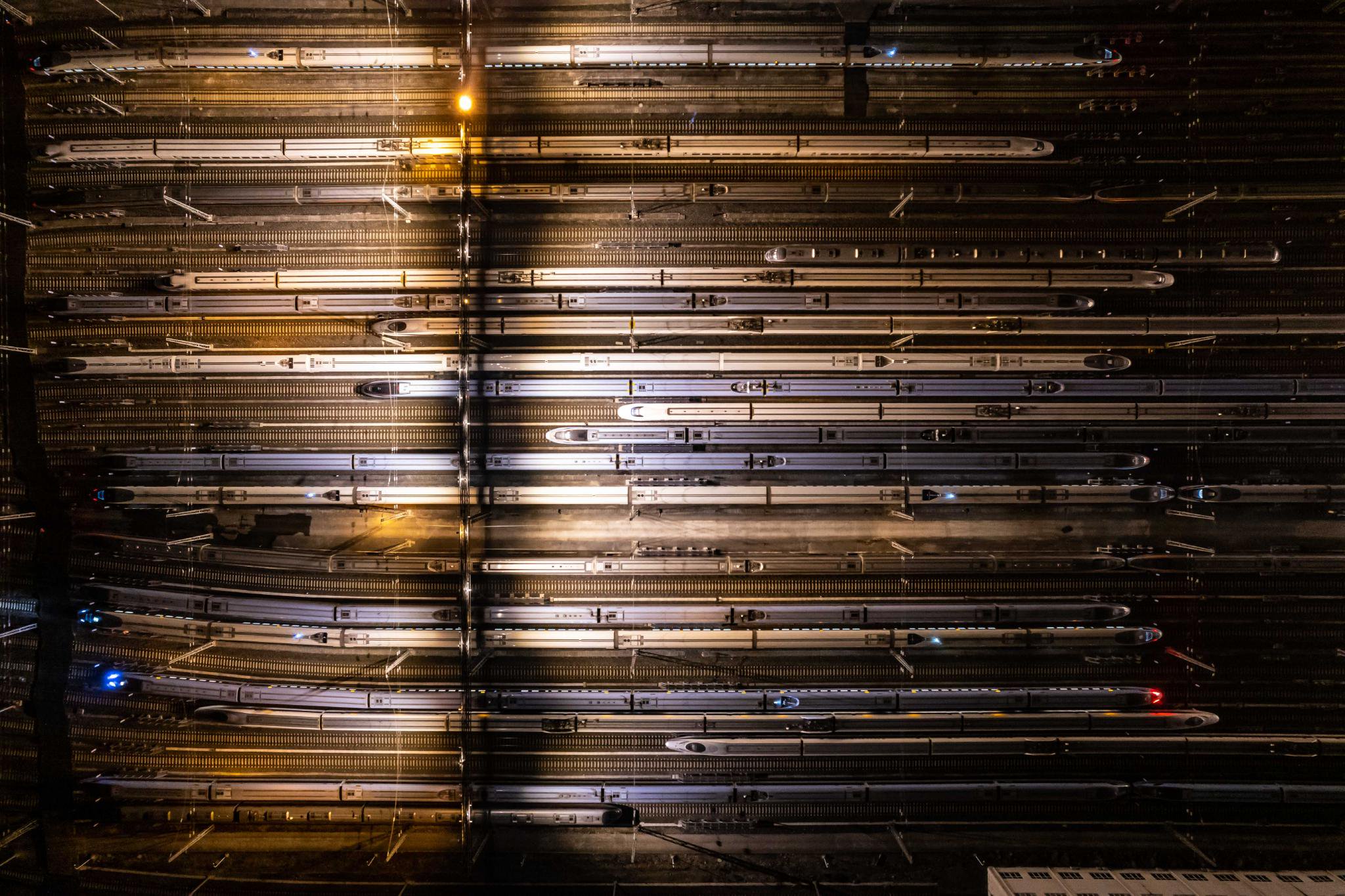
回家的节拍丨“钢铁巨龙”蓄势待发 贵阳北动车运用所开启春运护航模式
Xin Lang Cai Jing· 2026-02-02 09:46
Group 1 - The article highlights the preparations for the Spring Festival travel rush, emphasizing the readiness of the Guiyang North EMU depot, where technicians are conducting thorough inspections and repairs on the trains to ensure safety and reliability for passengers [1][4]. - The article describes the scene at the depot, portraying the EMU trains as "steel dragons" poised for departure, symbolizing the commencement of the 2026 Spring Festival travel season [1]. - The focus is on the comprehensive "health check" of the 101 EMU trains, aimed at restoring their technical status and enhancing operational quality to ensure smooth transportation during the Spring Festival [4].

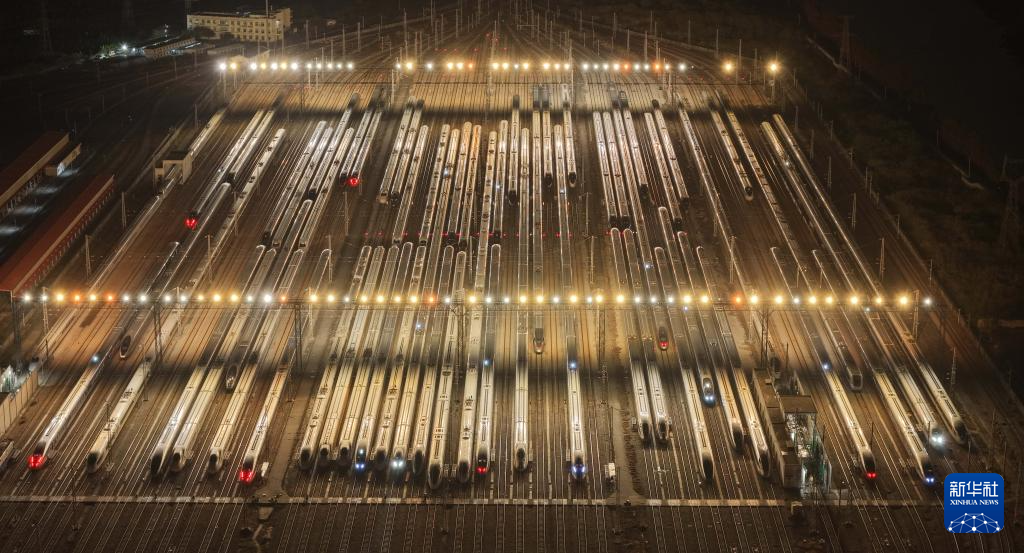
“陆地舰队”整装待发
Xin Hua Wang· 2026-02-01 02:13
Group 1 - The Spring Festival travel rush in 2026 will officially begin on February 2 [1] - Multiple high-speed trains are lined up at the Guangzhou动车段 storage yard, resembling a "land fleet" ready for departure [1] Group 2 - High-speed trains are currently stationed at the Guangzhou动车段 storage yard, as captured in drone photographs [2][4][6][7]
创新高!春运进出京客流预计达1.1亿人次
Xin Lang Cai Jing· 2026-01-30 22:49
Core Insights - The 2026 Spring Festival travel season will last for 40 days, from February 2 to March 13, with an expected total passenger flow of 110 million, setting a new historical record [1] Group 1: Passenger Flow Trends - The overall passenger flow during the Spring Festival is expected to show a pattern of "increasing total volume, scattered before the festival, and concentrated after" [3] - Daily average passenger flow in and out of Beijing is projected to be approximately 2.83 million, with over 50% of travelers using private vehicles [3] - The peak passenger flow is anticipated on February 23 (the seventh day of the lunar new year), reaching 3.94 million, a 3.4% increase compared to the peak in 2025 [3][4] Group 2: Transportation Pressure Points - Key transportation hubs such as "Eight Stations and Two Airports," highways, and public transport stations will face significant pressure due to increased passenger flow [4] - Beijing South Station is expected to exceed 400,000 passengers on peak days, with additional pressure on the subway system after the holiday [4] Group 3: Traffic Management Strategies - The transportation department will implement tailored passenger transfer plans for key stations, utilizing a collaborative approach with rail and aviation sectors [5] - Measures include extending operating hours for major subway lines during peak days and increasing bus services to train stations [5] - Real-time monitoring of passenger flow will be conducted, with additional temporary services introduced as needed to ensure smooth transportation [6]
郑州铁路实行新的列车运行图
Zheng Zhou Ri Bao· 2026-01-27 01:00
Group 1 - The core point of the news is the implementation of a new train operation schedule by the Zhengzhou Bureau of China Railway Group, which increases the number of scheduled passenger and freight trains to enhance transportation capacity and service quality [1][4]. - As of January 26, the new schedule includes 1,425 scheduled passenger trains, an increase of 23 trains compared to the previous schedule, and 151 freight trains, an increase of 6 trains [1]. - The Zhengzhou Bureau has optimized the train operation structure, adding 17 direct passenger trains to various destinations, including Jinan East, Qingdao North, Nanchang West, and Xi'an, to provide more travel options for passengers [1][2]. Group 2 - The Zhengzhou Bureau has extended the operational segments of several trains to improve connectivity, such as extending the Zhengzhou East to Jinan East train to start from Zhoukou East, and adjusting other routes to enhance accessibility for travelers [2]. - Train classifications have been upgraded, with several trains transitioning from older models to modern "AD calcium milk" high-speed trains, significantly reducing travel times by up to 2 hours and 33 minutes [3]. - To meet freight market demands, the Zhengzhou Bureau has optimized freight train offerings, including the introduction of new express and rapid freight trains, thereby enhancing cargo transportation capabilities [4]. Group 3 - Tickets for the new train schedule have started to be sold [5].
宁夏银川与北京铁路运行实现“半日往返”
Zhong Guo Xin Wen Wang· 2026-01-26 06:44
Core Viewpoint - The implementation of the new train schedule on January 26 has significantly reduced travel time between Yinchuan and Beijing to 6 hours and 22 minutes, facilitating a "half-day round trip" [1] Group 1: Train Schedule Changes - The new Yinchuan to Beijing North benchmark high-speed train service has reduced travel time by approximately 1 hour compared to previous routes [1] - The introduction of a new train service from Yinchuan to Datong South Station will take about 5 hours and 30 minutes, enhancing connectivity to northern Shanxi, western Hebei, and southern Inner Mongolia [1] Group 2: Increased Train Services - Following the schedule adjustment, Yinchuan Railway Station will operate a total of 103 pairs of trains, including 87 pairs of high-speed passenger trains and 16 pairs of conventional passenger trains, providing more travel options for passengers [1] Group 3: Regional Connectivity - The new schedule will strengthen the connection between the northwest region and the Beijing-Tianjin-Hebei area, with travel times from Hohhot to Yinchuan, Lanzhou West, and Xining being reduced to 3 hours and 34 minutes, 6 hours and 27 minutes, and 7 hours and 45 minutes respectively [1] - Travel times from Wuhai and Bayannur to Beijing have been reduced to 5 hours and 7 minutes and 4 hours and 20 minutes, respectively, compared to conventional trains, which is a reduction of 10 hours and 35 minutes and 8 hours and 31 minutes [1]
全国铁路26日起实行新列车运行图 京津冀环线高铁列车开行
Yang Guang Wang· 2026-01-26 01:56
Core Insights - The new train operation schedule implemented on January 26 aims to enhance the capacity and efficiency of national railway passenger and freight transport, supporting high-quality economic and social development [1] Group 1: Train Operation Enhancements - The new schedule significantly improves regional accessibility, with the opening of multiple new lines since 2025 [1] - The travel time from Yinchuan to Beijing has been reduced to 6 hours and 22 minutes following the opening of the Baoyin High-speed Railway [1] - A direct high-speed train service from Yan'an to Beijing has been introduced, allowing travel in as little as 5 hours and 42 minutes [1] Group 2: Regional Connectivity - The Guangzhang and Shantou High-speed Rail operations enhance the integration of the western and eastern Guangdong regions with the Guangdong-Hong Kong-Macao Greater Bay Area [1] - The new Beijing-Tianjin-Hebei circular high-speed train service provides more commuting options for passengers traveling between Beijing, Tianjin, and Xiong'an [1] Group 3: Service Improvements - The high-speed sleeper train service from Hong Kong West Kowloon to Shanghai Hongqiao has been upgraded to daily operations, increasing travel options for passengers [2] - The Guangzhou-Shenzhen-Hong Kong high-speed rail has added 52 new trains, bringing the total to 415, making it the most densely operated high-speed rail line in the country [2] - A new high-speed train service connecting Zhuhai and Fuzhou has been launched, facilitating business and tourism between the two regions [2]
高铁车厢二氧化碳超标?专家澄清
第一财经· 2026-01-25 09:16
Core Viewpoint - The article addresses concerns regarding the carbon dioxide (CO2) concentration levels in high-speed train carriages, clarifying that the reported levels exceed standard limits due to a misunderstanding of applicable regulations [3]. Group 1: Standards and Regulations - The CO2 concentration control standard for passenger trains in China is governed by TB/T 3493-2017, which sets the limit at 2500 ppm under normal operating conditions [3]. - In comparison, European standards (EN13129-2016) allow for a CO2 concentration limit of up to 5000 ppm for passenger trains [3]. - The reported passenger measurements referenced the GB 50736-2012 standard for civil buildings, which is not applicable to passenger trains [3]. Group 2: Train Design and Air Quality Management - High-speed trains are designed with fully sealed car bodies, and air exchange is managed entirely by the air conditioning ventilation system, providing a fresh air volume of over 15 m³/h per person [4]. - The trains achieve an air exchange rate of 6 to 12 times per hour, and are equipped with a pressure protection system [4]. - During normal operation outside of tunnels, CO2 levels typically do not exceed 1500 ppm; however, in tunnels, the system temporarily closes external air passages to prevent pressure fluctuations, which may cause a short-term increase in CO2 levels without impacting passenger health [4].

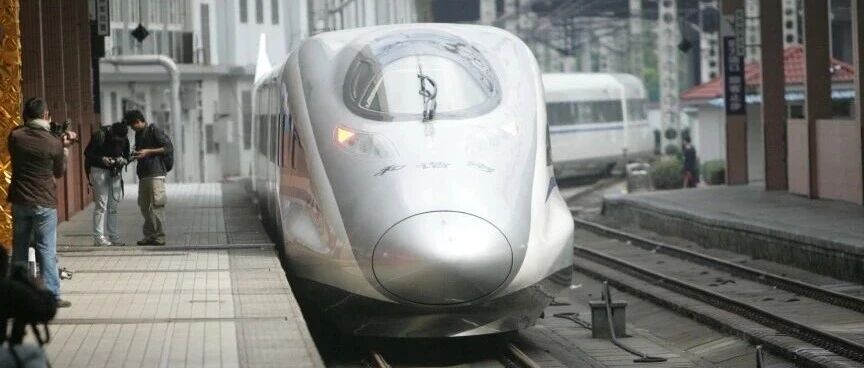
我国旅客列车室内二氧化碳浓度标准限值为2500ppm ,对旅客健康无影响
Xin Hua She· 2026-01-25 03:33
Group 1 - The reported CO2 concentration in high-speed train carriages exceeds the standard limit of 1000ppm, but this information is based on a standard not applicable to passenger trains [1] - The CO2 concentration control standards for passenger trains in China are defined by TB/T 3493-2017, with a normal operational limit of 2500ppm, while European standards set the limit at 5000ppm [1] - The standards for passenger trains are based on the unique characteristics of mobile transport equipment, considering factors like internal pressure fluctuations and overall comfort indicators [1] Group 2 - The train sets are fully airtight, with air exchange entirely managed by the air conditioning ventilation system, providing a fresh air volume of over 15m³/h per person and achieving 6 to 12 air changes per hour [2] - During normal operation outside tunnels, CO2 concentration typically does not exceed 1500ppm; however, in tunnels, pressure protection measures may temporarily increase CO2 levels without affecting passenger health [2] - The pressure protection system is designed to prevent external air exchange during tunnel passages to mitigate ear discomfort caused by pressure fluctuations [2]
高铁一坐就困?最新回应
Xin Lang Cai Jing· 2026-01-24 14:28
Core Viewpoint - The reported CO2 concentration levels in high-speed train carriages exceed the standard limit of 1000ppm, but the standards applicable to passenger trains differ from those for buildings, with higher acceptable limits in place for rail vehicles [1][2]. Group 1: Standards and Regulations - The CO2 concentration control standard for passenger trains in China is defined by TB/T 3493-2017, which allows a maximum of 2500ppm under normal operating conditions [1]. - European standards EN13129-2016 set the limit for CO2 concentration in passenger trains at 5000ppm [1]. - The reported values were compared against GB 50736-2012, which is not applicable to passenger trains, as it pertains to indoor air quality in buildings [1]. Group 2: Air Quality Management in Trains - The train carriages are designed with a fully sealed body, and air exchange is managed entirely by the air conditioning ventilation system, providing over 15m³/h of fresh air per person [2]. - The air exchange rate in the train is between 6 to 12 times per hour, and a pressure protection system is in place [2]. - During operation in non-tunnel areas, CO2 concentration typically does not exceed 1500ppm; however, in tunnels, the system temporarily closes external air access to prevent ear discomfort, which may lead to a short-term increase in CO2 levels without health risks to passengers [2].
铁路专家:我国旅客列车二氧化碳浓度标准限值为不超过2500ppm
Xin Hua She· 2026-01-24 13:32
Core Viewpoint - The discussion regarding the carbon dioxide concentration in high-speed train carriages exceeding 1000ppm is addressed, clarifying that the standards for passenger trains differ from those for civil buildings [1] Group 1: Standards and Regulations - The carbon dioxide concentration control standard for passenger trains in China is based on TB/T 3493-2017, which sets the limit at 2500ppm under normal operating conditions, while European standards allow up to 5000ppm [1] - The reported passenger measurements reference GB 50736-2012, which is not applicable to passenger trains, as each country's standards are based on the unique characteristics of mobile transport equipment [1] Group 2: Air Quality Management in Trains - China's passenger trains, including high-speed trains, are designed to meet ventilation needs, ensuring continuous supply of fresh air and removal of waste gases, with parameters like air cleanliness and temperature uniformity meeting national railway standards [2] - High-speed trains utilize a ventilation system that includes pressure protection, with an average fresh air supply of over 15m³/h per person and air exchange rates of 6 to 12 times per hour [2] - During operation in non-tunnel sections, carbon dioxide levels typically do not exceed 1500ppm; however, in tunnels, pressure protection measures may temporarily increase CO2 levels due to the closure of external air passages [2]