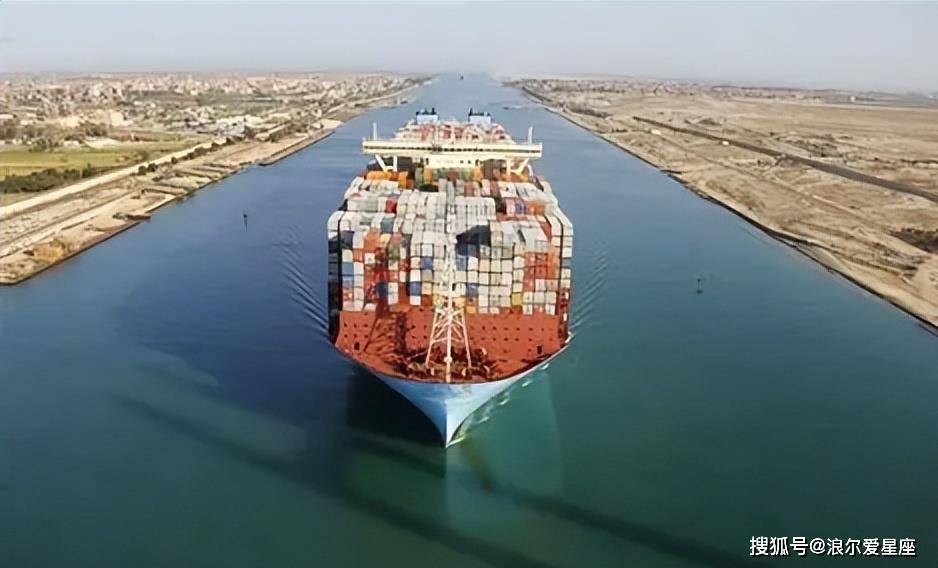
北极航道运输服务

Search documents
俄罗斯提速北极开发,鼓励中日印参与
Xin Lang Cai Jing· 2026-01-21 10:21
Core Insights - Russia aims to accelerate Arctic development to break Western sanctions and enhance logistics through the Arctic route, which is seen as a vital international shipping corridor [1][3][5] Group 1: Arctic Development Challenges - Russia faces significant challenges in Arctic development, including harsh natural conditions, labor shortages, high costs, outdated infrastructure, and financing difficulties [3][5] - The ongoing Ukraine conflict limits the government's ability to invest heavily in Arctic projects, making foreign investment crucial [3][5] Group 2: Investment and Infrastructure - The Arctic region comprises 10 federal subjects, covering 22% of Russia's territory, with a resident population of 2.36 million, only 1.6% of the national total [1] - The Russian government is focusing on attracting foreign investment to develop the Arctic shipping route, which is expected to optimize global trade and logistics [3][5] - Key ports along the Arctic route include Murmansk, Arkhangelsk, Sabetta, Dukinka, and Provideniya, which are being developed to support shipping operations [5][8] Group 3: Future Projections and Plans - By 2025, the cargo volume along the Arctic route is projected to reach 33.5 million tons, with expectations to exceed 270 million tons annually by 2035 [8] - The Russian government plans to establish a clear management structure for Arctic development and may create an "Arctic Development Company" to facilitate investment [8][11] - The government aims to improve living conditions in the Arctic, targeting an average life expectancy of 72.4 years and a natural population growth rate of 2% by enhancing various sectors [10][11] Group 4: International Collaboration - Russia is actively seeking foreign partners for Arctic projects, with countries like China, Japan, and India showing interest [11] - The "Arctic Express No. 1" logistics route has been established to connect Russian ports with Chinese ports, significantly reducing shipping times and costs [13][14]


变局出现!继白俄之后,又有一国接盘中欧班列,从我这过运量翻倍
Sou Hu Cai Jing· 2026-01-20 09:36
Core Insights - The article highlights the impact of the 2025 border blockade in Poland on the Central European supply chain, exemplified by a Shanghai auto parts company's losses of over 7.7 million due to daily costs of 700,000 [1][4] - Kazakhstan emerges as a key player in the logistics landscape, claiming it can double its transport capacity as Central European rail freight routes are redirected [3][9] Group 1: Logistics Crisis - The blockade lasted 13 days, severing a critical transport route that handled 90% of Central European rail freight [4] - The closure of the Brest port led to over 300 trains stranded in Belarus, with daily costs for empty containers reaching 180,000 USD, forcing many SMEs to halt production [6] - Companies are rapidly adjusting their logistics strategies, moving away from single-source dependencies, with a Dresden auto parts supplier reducing reliance on the Central European rail line from 30% to 5% [6] Group 2: Adaptation Strategies - A small appliance factory in Cixi, Zhejiang, adopted a flexible approach by splitting Christmas orders into four parts, resulting in a three-day reduction in delivery time and a decrease in inventory costs by 8.5 million yuan [8] - Kazakhstan's middle corridor is gaining trust due to its operational efficiency, with a cargo ship completing land-sea transfers in just 18 minutes [9] Group 3: Infrastructure and Investment - Kazakhstan has invested in infrastructure to support a target of doubling its transport capacity from 4.5 million tons to 10 million tons, including the construction of 13 new transshipment points and the acquisition of 120 broad-gauge locomotives [9][13] - The stability of the Caspian Sea transport route has exceeded expectations, with daily operations maintaining a high punctuality rate of 89.7% [11] Group 4: Financial and Policy Support - The middle corridor is receiving significant financial backing, including a 65 million USD project from the World Bank and an additional 500 million euros from the EU for customs facility upgrades [13] - China is also contributing 1.5 billion yuan to support livelihood projects and is involved in building a multimodal transport information platform to streamline customs processes [13] Group 5: Emerging Multi-Channel Logistics - The Arctic route is becoming more commercially viable, with China's first 15,000-ton ice-class cargo ship launched, and insurance premiums decreasing by 30% [15] - The China-Kyrgyzstan-Uzbekistan railway is set to enhance connectivity, potentially reducing travel distance to Southern Europe by 1,000 kilometers, with an expected annual freight volume of 15 million tons by 2030 [15] Group 6: Poland's Challenges - Despite reopening its borders on September 25, Poland has lost its competitive edge, with a projected 18% decline in freight volume by Q4 2025 [17] - The shift in trust and logistics dynamics indicates a long-term change in the global supply chain, with Kazakhstan transitioning from an energy exporter to a logistics hub [17][19]
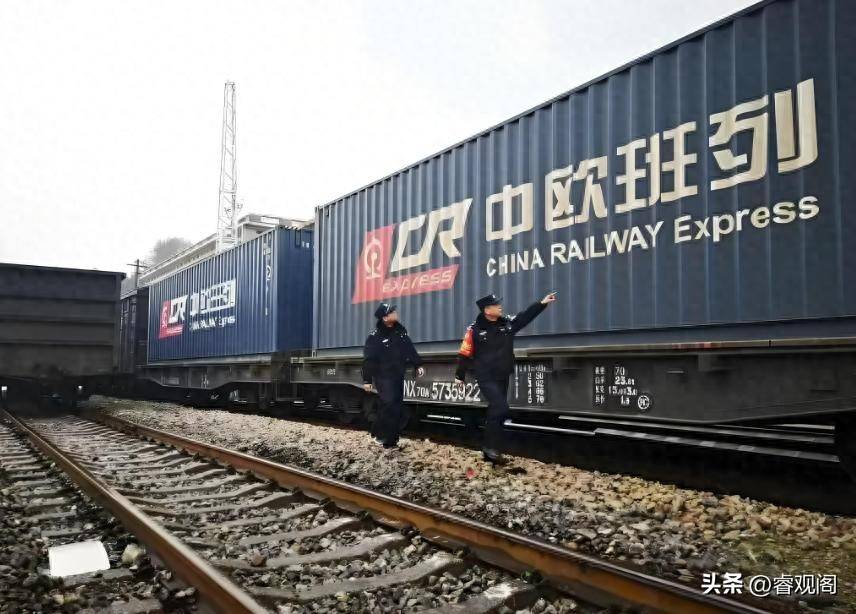
俄方:中国至欧洲首艘北极航道过境货船已完成运输
Xin Lang Cai Jing· 2025-10-14 09:53
Core Viewpoint - The first direct container ship from China to Europe via the Northern Sea Route has successfully completed its journey, significantly reducing transportation time compared to traditional routes [1] Group 1: Transportation Efficiency - The container ship arrived at Felixstowe Port in the UK on October 13, 2025, after departing from Ningbo Port on September 23 [1] - The journey through the Russian Arctic took 20 days, which is nearly half the time required for traditional southern routes [1] Group 2: Strategic Importance - This historic voyage marks a significant step in the development of the Northern Sea Route as a sustainable logistics corridor between Europe and Asia [1] - The route is expected to complement existing shipping lanes and contribute significantly to global trade growth [1] Group 3: Cargo Details - The container ship had a carrying capacity of nearly 25,000 tons and entered the Northern Sea Route waters on October 1 [1] - After unloading at Felixstowe, the ship is set to continue to other European ports [1]
波兰封锁中欧班列,中国24小时内打出王牌,欧亚贸易格局正在改变
Sou Hu Cai Jing· 2025-09-22 23:25
Core Viewpoint - The sudden closure of Poland's border with Belarus has disrupted a significant trade route between China and Europe, affecting approximately 90% of railway freight traffic and halting trade valued at around €25 billion [1][2]. In response, China is activating the Arctic shipping route as an alternative, showcasing its strategic foresight and long-term planning in global trade [4][10]. Group 1: Impact of Poland's Border Closure - Poland's decision to close its border is framed as a security concern, particularly in light of recent military exercises by Russia and Belarus, but the prolonged closure suggests deeper geopolitical motivations [1][14]. - The closure has significant economic implications for Poland, particularly for border cities that relied on the transit of goods via the China-Europe Railway, which previously generated substantial revenue from transit fees and related services [13]. Group 2: Emergence of the Arctic Shipping Route - China is launching the "Northern Sea Route" as a strategic alternative to the disrupted China-Europe Railway, aiming to connect northeastern China with Western Europe through the Arctic [4][10]. - The new Arctic route offers substantial advantages, including a reduced travel distance of approximately 7,000 nautical miles (about 13,000 kilometers) and a transit time of around 18 days, significantly faster than traditional routes [6]. - The Arctic route also provides cost savings of 30-40% on fuel expenses, which is particularly beneficial given the current high global energy costs [8]. Group 3: Long-term Strategic Development - The development of the Arctic shipping route is part of China's broader strategic vision, having gained observer status in the Arctic Council in 2013 and outlined its Arctic policy in 2018 [10]. - The cargo volume along the Arctic route reached 35.6 million tons in 2023, marking a 9% increase from the previous year, with plans to double this volume by 2030 through joint development with Russia [10]. - The melting ice due to climate change is expected to extend the navigable window for the Arctic route, with projections for year-round navigation starting in 2024 [10]. Group 4: Reshaping Eurasian Trade Dynamics - The rise of the Arctic route is poised to reshape the Eurasian trade landscape, potentially diminishing Poland's role as a critical transit point and enhancing the importance of traditional European ports like Rotterdam and Hamburg [13]. - The future logistics network between China and Europe is expected to evolve into a multi-modal system incorporating land, sea, and ice routes, enhancing resilience against geopolitical disruptions [13][14]. - The successful trial of the "Istanbul Bridge" container ship on the Arctic route symbolizes a significant advancement in international trade logistics for China, providing a strategic advantage in global competition [14].