中欧班列运输服务

Search documents
中欧班列东通道今年通行量突破1000列 “钢铁驼队”跑出加速度
Zheng Quan Ri Bao Wang· 2026-02-27 11:44
Group 1 - The China-Europe Railway Express East Corridor has shown significant growth in 2026, with a total of 1,034 trains and 105,170 TEUs transported, representing year-on-year increases of 48.4% and 43.2% respectively [1] - The East Corridor consists of 27 operational routes, connecting over 60 cities in China to 14 countries in Europe, including Poland, Germany, and the Netherlands [1] - The overall operation of the China-Europe Railway Express has achieved a milestone with over 20,022 trains operated in 2025, marking the first time the annual number exceeded 20,000 [1] Group 2 - The China Railway Harbin Group has prioritized the operation of the China-Europe Railway Express, enhancing efficiency through a "digital port" system and reducing customs clearance time to under 30 minutes, improving overall transport efficiency by nearly 10% [2] - The cargo structure of the China-Europe Railway Express is evolving, with an increasing focus on high-value goods such as machinery and new energy products, which enhances trade quality and value [2] - Companies in logistics, port services, and supply chain services are actively engaging in the China-Europe Railway Express, responding to the growing demand for cross-border logistics from foreign trade enterprises [2] Group 3 - Henan Xinning Modern Logistics Co., Ltd. has been expanding its cross-border transport services through the China-Europe Railway Express, with a significant contribution to revenue from this business in the fourth quarter of 2025 [3] - Liaoning Port Co., Ltd. has been developing port logistics services aimed at the EU, establishing direct container shipping routes and utilizing the China-Europe Railway Express for a two-way logistics channel [3] - Chongqing Port Co., Ltd. has a well-connected logistics network, linking the Pacific through the Yangtze River and facilitating access to over 200 countries, while also integrating with the China-Europe Railway Express for efficient logistics [3]

今年通行量突破1000列
Xin Lang Cai Jing· 2026-02-26 18:39
Core Insights - The China-Europe Railway Express East Corridor has surpassed 1,000 trains in transit this year, achieving this milestone 26 days earlier than in 2025 [3]. Group 1: Operational Highlights - As of February 26, 2026, a total of 1,034 trains have entered and exited through the East Corridor, transporting 105,170 TEUs (Twenty-foot Equivalent Units) [3]. - The East Corridor consists of railway ports in Manzhouli, Suifenhe, and Tongjiang, with 27 operational train routes [3]. Group 2: Geographic Coverage - The East Corridor connects to 14 countries, including Poland, Germany, and the Netherlands, and links over 60 cities in China, such as Changsha, Zhengzhou, and Chengdu [3].

中欧班列“东通道”今年通行量突破1000列
Zhong Guo Xin Wen Wang· 2026-02-26 08:38
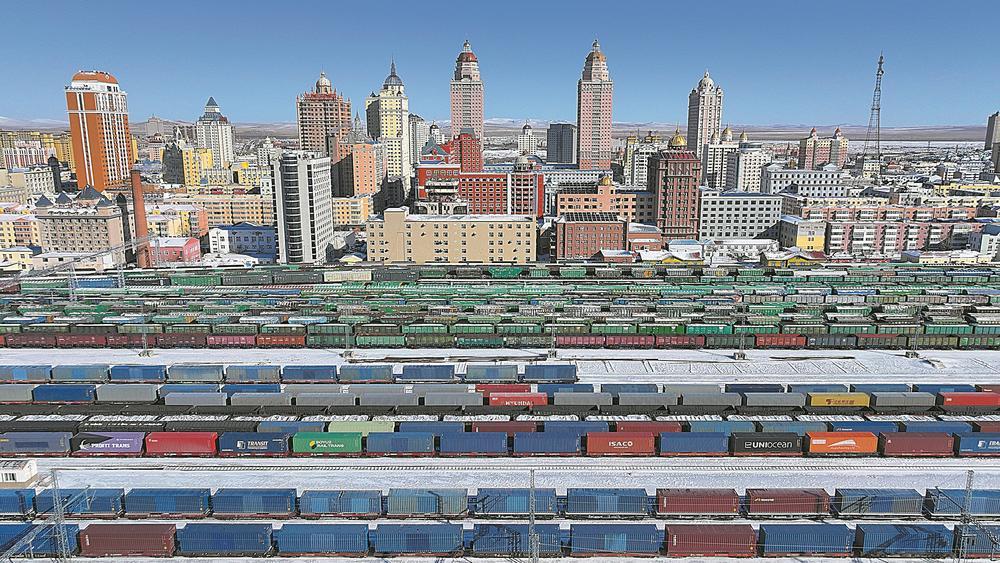
Core Insights - The China-Europe Railway Express "Eastern Corridor" has surpassed 1,000 trains this year, with a total of 1,034 trains and 105,170 TEUs transported, marking year-on-year increases of 48.4% and 43.2% respectively, achieving this milestone 26 days earlier than last year [1][3]. Group 1: Operational Efficiency - The Eastern Corridor consists of three major railway ports: Manzhouli, Suifenhe, and Tongjiang, with 27 stable operating routes connecting to 14 countries including Poland, Germany, and the Netherlands, linking over 60 cities in China [3]. - The China Railway Harbin Group has prioritized the operation of the China-Europe trains, utilizing a "digital port" intelligent system to enhance collaboration with customs and border inspection departments, optimizing processes to reduce customs clearance time to under 30 minutes, resulting in a nearly 10% improvement in overall transportation efficiency [3][4]. Group 2: Cargo Volume and Growth - Manzhouli Station has played a crucial role as a cross-border logistics hub, achieving an import and export cargo volume of 3.5088 million tons by February 25, with a year-on-year increase of 191,600 tons, representing a growth rate of 5.8% [3]. - During the Spring Festival period, Suifenhe Station focused on key imports such as coal, iron concentrate, and timber, leveraging the brand advantage of the China-Europe trains to enhance efficiency in processing import/export documentation and transshipment operations, resulting in over 178,000 tons of cargo handled in just nine days [3]. Group 3: Future Potential - The Tongjiang North Station has effectively monitored export train dynamics, ensuring smooth outbound passage, with 37 export trains and 33,000 tons operated by February 25, reflecting increases of 236.4% and 312.5% year-on-year respectively [4]. - The ongoing expansion project of the Jiamusi to Tongjiang railway is expected to triple the throughput capacity of the Tongjiang railway port, further unlocking the transportation potential of the China-Europe Railway Express Eastern Corridor [4].
大湾区开出2026年春节首趟中欧班列
Xin Lang Cai Jing· 2026-02-17 15:25
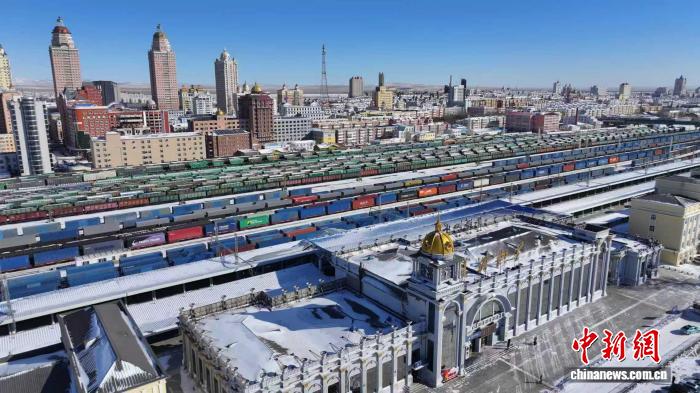
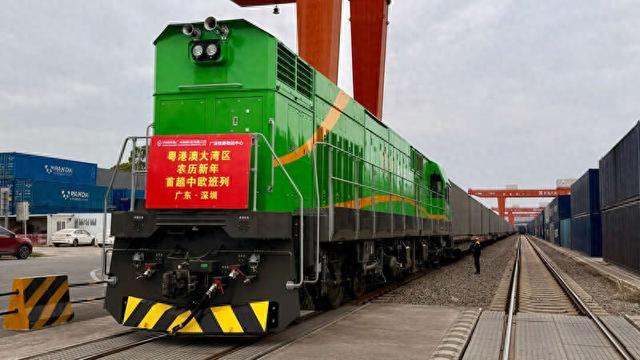
Core Insights - The first China-Europe freight train of the 2026 Spring Festival departed from Shenzhen, marking the start of the new year's foreign trade logistics for the Guangdong-Hong Kong-Macao Greater Bay Area [1][3] - This train service is expected to enhance the delivery of goods from the Greater Bay Area to the Eurasian market, contributing to a strong start in foreign trade for the new year [1] Summary by Sections Train Operations and Logistics - The train X8426, loaded with home appliances, electronic products, and cross-border e-commerce packages, is scheduled to arrive in Russia and Poland in approximately 14 days [1] - The logistics center at Pinghu South Station has implemented a "one declaration, one inspection, one release" model, which has improved cargo turnover efficiency by about 20% [3] Growth and Expansion of Services - Since the inaugural "Bay Area" train to Duisburg, Germany, on August 18, 2020, a total of 975 trains have been operated, transporting over 90,000 TEUs (Twenty-foot Equivalent Units) with a total value exceeding $3.1 billion [3] - The number of operational routes has expanded from 1 to 27, covering 47 countries and regions, including Germany and Russia, and serving over 7,000 enterprises in the Greater Bay Area [3] Infrastructure Development - The Pinghu South Railway Logistics Business Department is enhancing its "channel + industry" development model by expanding international LCL (Less than Container Load) services to provide efficient export pathways for small and medium-sized enterprises [3] - The second phase of the Pinghu South comprehensive logistics hub, covering 686 acres, is nearing completion, with 11 high-standard warehouses and supporting railway lines set to enhance the operational capacity of the China-Europe freight trains [3] Economic and Trade Impact - The ongoing operation of the China-Europe freight trains is vital for fostering an open economic structure in the Greater Bay Area, facilitating trade, industrial collaboration, and cultural exchange [3]
长三角农历新年首趟中欧班列从义乌开出
Xin Lang Cai Jing· 2026-02-17 09:07
Core Points - The first China-Europe freight train of the Year of the Horse from Yiwu departed on February 17, carrying 110 standard containers of cultural products, daily necessities, and medical equipment, expected to reach Madrid, Spain in approximately 18 days [1][3] - During the Spring Festival holiday, Yiwu's China-Europe freight trains maintained regular operations, with over 40 trains planned to run during the 9-day holiday, averaging about 5 trains per day [2] - The train service aims to promote Yiwu's cultural brand, featuring the slogan "Have feelings and righteousness, World Yiwu," and highlights the city's six virtues: loyalty, filial piety, benevolence, trustworthiness, chivalry, and integrity [2] - Since 2026, Yiwu's China-Europe freight trains have dispatched over 220 trains, transporting more than 22,000 standard containers to over 160 cities in more than 50 countries across Eurasia, including Russia, Poland, Germany, and Kazakhstan [2] - The source of goods for Yiwu's China-Europe freight trains has expanded from local and surrounding cities to include various regions in Zhejiang, the Yangtze River Delta, and the Guangdong-Hong Kong-Macau Greater Bay Area, enhancing regional economic development [2]
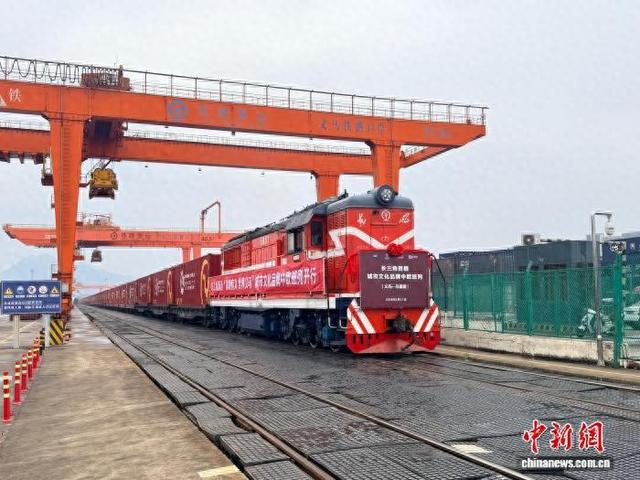
多地中欧班列迎来“开门红” 中国外贸“换挡向上”、“朋友圈”越来越大
Yang Shi Wang· 2026-02-17 03:57
Group 1 - The core viewpoint of the news highlights the significant growth in foreign trade in the Yangtze River Delta region during the 14th Five-Year Plan period, with a total import and export value of 77.28 trillion yuan, representing a year-on-year increase of 45.5% [1] - Exports reached 47.26 trillion yuan, while imports totaled 30.02 trillion yuan, with trade with the EU and ASEAN markets growing by 42.8% and 70.7% respectively [1] - Trade with countries involved in the Belt and Road Initiative amounted to 36.43 trillion yuan, marking a year-on-year growth of 69.6%, contributing over 60% of the region's total import and export growth [1] Group 2 - In January, the Shanghai Cooperation Organization demonstration zone saw a total of 98 China-Europe freight trains dispatched, transporting 70,000 tons of goods, with both the number of trains and freight volume increasing by over 10% year-on-year [3] - Since the establishment of the demonstration zone in 2018, a total of 5,589 China-Europe freight trains have been monitored by Qingdao Customs, with 458,000 TEUs and 3.87 million tons of goods imported and exported [3] Group 3 - The Inner Mongolia region reported that the volume of China-Europe freight trains on the "China Corridor" surpassed 500 trains, achieving this milestone 14 days earlier than the previous year [4] - During the Spring Festival, the railway port in Erenhot, Inner Mongolia, enhanced communication with Mongolian railway departments to optimize train schedules and improve operational efficiency, resulting in a year-on-year reduction of over 5% in customs clearance time for China-Europe freight trains [5] Group 4 - The total number of port routes has increased to 75, connecting to over 10 countries and more than 70 hub stations abroad, while domestically covering most of the initial cities for China-Europe freight trains [7]
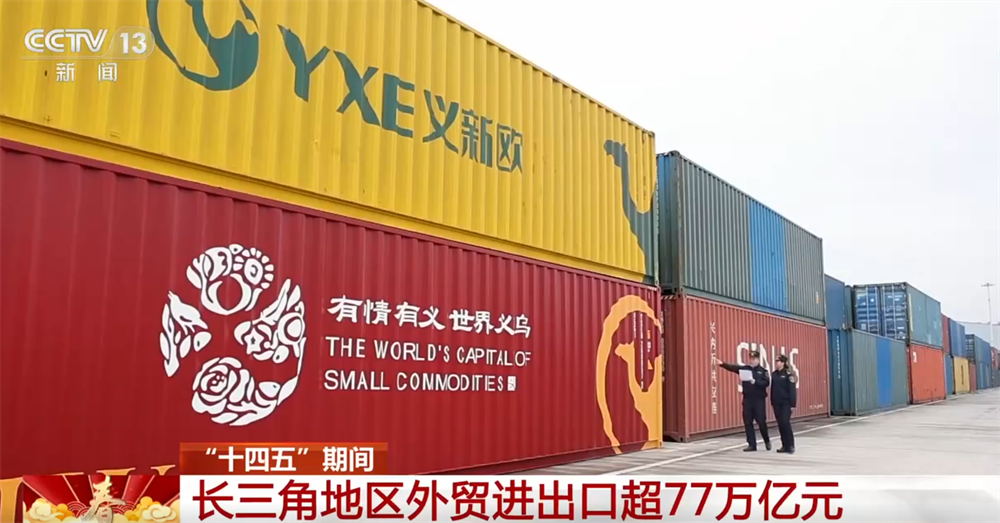
厦门国际物流港冲刺春运,中欧班列运输高效畅通
Sou Hu Cai Jing· 2026-02-15 19:31
Core Insights - The Xiamen International Logistics Port is operating in a "sprint" mode to handle the logistics peak before the Spring Festival, with a daily cargo throughput increase of 26.27% compared to the previous year [1] Group 1: Operations and Logistics - The Fuzhou Locomotive Section's Xiamen North Depot has implemented a "people stop, train keep running" mechanism to ensure 24-hour continuous operations during the Spring Festival [1] - The East Fuzhou A Locomotive Group has prepared thoroughly for the logistics peak, ensuring fast and stable loading and unloading operations while enhancing coordination with various departments [2] - The East Fuzhou A Locomotive Group is optimizing operational processes, enhancing personnel training, and improving equipment performance to ensure smooth operation of the China-Europe Railway Express during the Spring Festival [2] Group 2: Infrastructure and Capacity - The front cargo yard has two dedicated tracks for the China-Europe Railway Express, capable of loading up to 50 containers at a time [4] - The average performance of shunting drivers at the front cargo yard is 4-5 shunts per hour, with each shunt taking approximately 20 minutes [4] - Once loading is completed, the China-Europe Railway Express is confirmed to be ready for departure, with signal and switch checks conducted by the East Fuzhou A Locomotive Group [7]
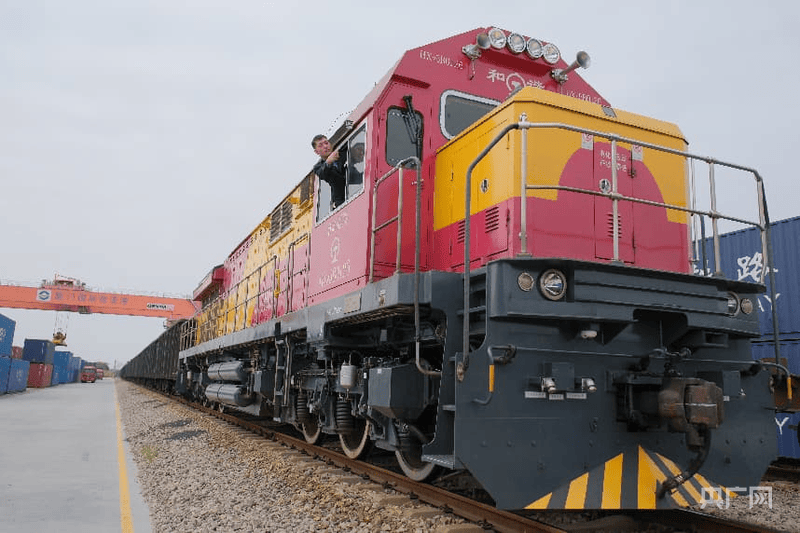
春运不停歇,北京地区中欧班列稳定开行
Xin Lang Cai Jing· 2026-02-15 12:40
Group 1 - The article highlights the launch of a China-Europe freight train from Fangshan District, Beijing, carrying light industrial products and green travel equipment to Russia, emphasizing the importance of maintaining stable operations during the Spring Festival period [2] - The Beijing International Land Port is playing a crucial role in ensuring the smooth operation of international logistics channels, reflecting the capital's continuous improvement in its openness to the outside world [2] - The land port aims to strengthen its hub functions, expand routes, and enhance efficiency, contributing to the connectivity of the Belt and Road Initiative and the capital's development in the new era [2]
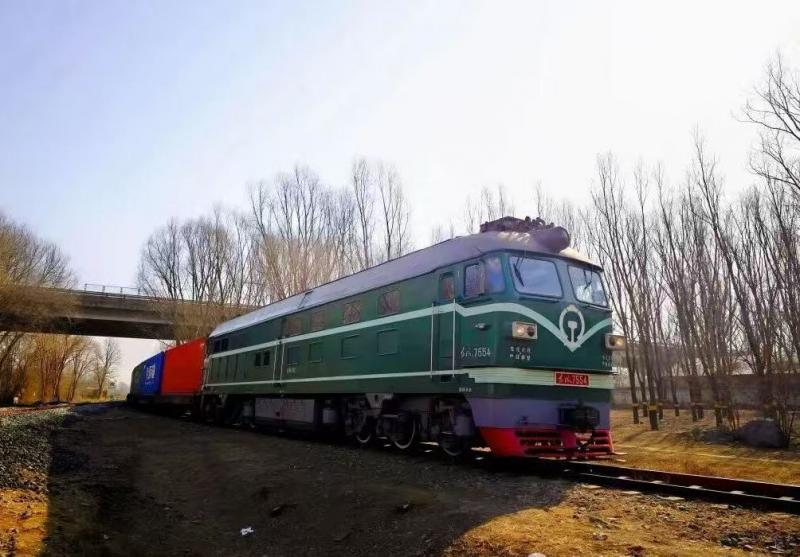
中欧班列(长沙)开行量实现开门红 1月开行109列,同比增长101.9%
Chang Sha Wan Bao· 2026-02-13 01:51
Core Insights - The China-Europe Railway Express (Changsha) has shown significant growth in cargo exports, with a notable increase in goods from provinces outside Hunan, such as Zhejiang, Jiangxi, Anhui, and Hubei [1] - In January 2026, the Changsha customs supervised 109 China-Europe Railway Express trains, marking a year-on-year increase of 101.9%, indicating robust growth in import and export activities [1] - In 2025, the Changsha route achieved a total of 1,037 train operations, surpassing the 1,000 mark for the fifth consecutive year and maintaining its position among the top railway routes in China [2] Group 1 - The first train of the year departed from Changsha International Railway Port, carrying engineering machinery, automobiles, parts, and small appliances, expected to reach Russia in 14 days [1] - The operational efficiency at Changsha International Railway Port is highlighted by the busy customs supervision and the effective handling of cargo [1] - The Changsha route has established 12 regular "premium routes," covering nearly 30 countries and 100 cities across Eurasia [2]
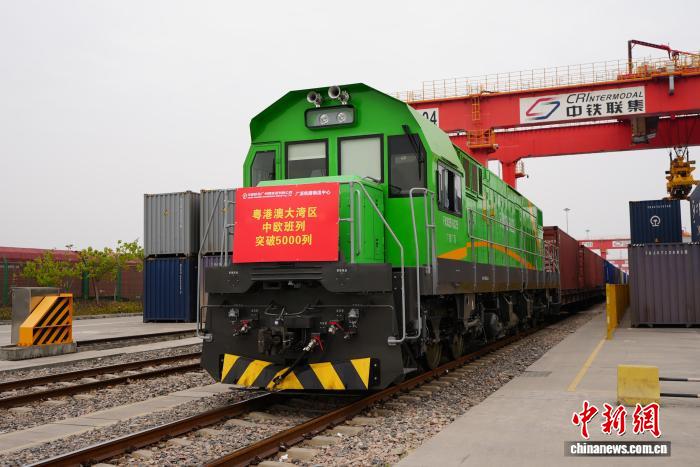
(粤港澳大湾区)粤港澳大湾区中欧班列开行突破5000列
Zhong Guo Xin Wen Wang· 2026-02-12 00:21
Core Insights - The Guangdong-Hong Kong-Macao Greater Bay Area's China-Europe Railway Express has officially surpassed 5,000 trips since its inaugural run in 2013, marking a significant milestone in logistics and trade connectivity [1][2]. Group 1: Operational Milestones - As of February 10, 2026, the total value of goods transported by the Greater Bay Area's China-Europe Railway Express has exceeded 200 billion RMB, with a total weight of approximately 2.8 million tons [2]. - The railway service operates over 30 trips weekly, serving more than 6,000 enterprises and connecting over 20 cities in countries such as Germany, Poland, and Russia, establishing a high-density transport network [2]. Group 2: Service Efficiency and Environmental Impact - The railway transport time is consistently maintained between 15 to 18 days, with carbon emissions being only one-seventh of that of road transport, showcasing enhanced stability and reliability in complex international environments [2]. - The implementation of intelligent scheduling systems and automated loading equipment has reduced the loading time per train from 6 hours to 4 hours, improving port clearance efficiency by approximately 30% [2]. Group 3: Industry Transformation - The cargo structure has evolved significantly, shifting from labor-intensive products like clothing and toys to high-value items such as new energy vehicles, photovoltaic products, and smart electronics, which now account for over 70% of the transported goods [3].