
北极航道

Search documents
美国驻格陵兰岛特使:美国需获得“完全不受限制的使用权”
Xin Lang Cai Jing· 2026-01-29 08:08
Core Viewpoint - The article discusses a framework agreement announced by President Trump that aims to grant the United States unrestricted access to Greenland, enhancing security cooperation and defense obligations in the region [1] Group 1: Agreement Details - The framework agreement is based on the 1941 and 1951 defense agreements between the United States and Denmark, which will strengthen security guarantees for the U.S., NATO, and Greenland [1] - The agreement is expected to expand U.S. operational freedom and facilitate the construction of new bases and infrastructure, including advanced missile defense systems like the "Iron Dome" [1] Group 2: Strategic Importance of Greenland - Greenland is strategically located at the midpoint between Washington and Moscow, housing critical early warning and missile defense infrastructure [1] - The article emphasizes that the perception of the Arctic as a remote or secondary area is outdated, highlighting its growing importance in global security dynamics [1]
美国为何“需要”格陵兰岛
Di Yi Cai Jing· 2026-01-29 04:01
Group 1: Core Insights - The U.S. has expressed a renewed interest in acquiring Greenland, citing national security concerns, with President Trump reiterating this intention shortly after military actions in Venezuela [1] - The strategic significance of Greenland is rooted in its unique geopolitical position, high autonomy, and reliance on external financial support, with a GDP of approximately $3.3 billion and a per capita GDP of $58,499 [2] - Greenland is rich in critical minerals, including 25 of the 30 raw materials identified by the EU, making it a key player in the global supply chain for resources like graphite and rare earth elements [2][3] Group 2: Resource Development - The Amisok graphite project in Greenland is highlighted as a strategic asset due to its high carbon content, which is crucial for lithium-ion batteries, amidst rising global demand for electric vehicles [3] - The development of rare earth resources in Greenland, particularly in the Kvanefjeld and Tanbreez projects, is seen as vital for reducing dependence on Chinese supply chains [4] - The U.S. is actively supporting the Tanbreez project with a $120 million loan proposal to facilitate its development, indicating a strategic push to secure critical resources [4] Group 3: Geopolitical Context - Greenland's military value is underscored by its role in the GIUK gap, which is crucial for intercepting Russian submarines and maintaining NATO's strategic advantage in the North Atlantic [7] - The U.S. military presence in Greenland, including the Thule Air Base, enhances its missile defense capabilities against potential threats from Eurasia [8] - The geopolitical landscape in the Arctic is increasingly competitive, with Russia holding significant advantages in terms of military presence and operational capabilities [11] Group 4: U.S. Legislative Challenges - Historical attempts by the U.S. to purchase Greenland have faced numerous legislative hurdles, with Congress showing resistance to direct acquisition proposals [13] - Current discussions in Congress reflect a mix of support and opposition to the idea of acquiring Greenland, with various bills being proposed to either facilitate or block such actions [16][17] - The legal complexities surrounding Greenland's self-determination rights pose significant challenges to any U.S. acquisition efforts, as the island's population has expressed mixed feelings about U.S. control [18][19] Group 5: Strategic Pathways - The U.S. may employ a strategy of geopolitical pressure and investment to influence Greenland's governance and reduce its reliance on Denmark, potentially leading to a form of functional absorption [19][20] - Proposed initiatives could include direct financial support for infrastructure development in Greenland, aimed at fostering economic independence from Denmark [19] - The potential for a "Compact of Free Association" similar to agreements with other Pacific nations could provide a framework for U.S. influence while respecting Greenland's autonomy [20]

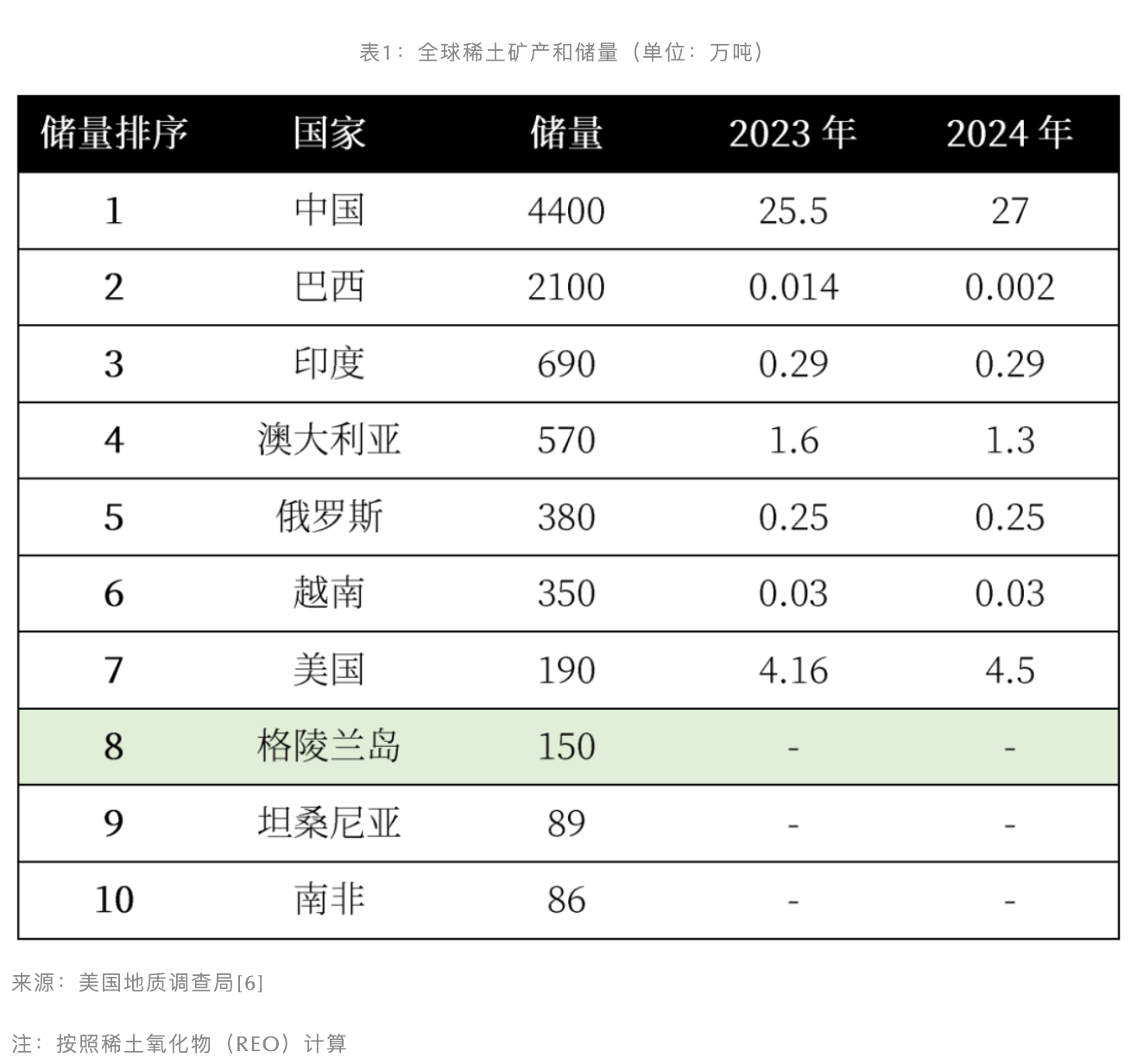
走笔天下丨一条中欧贸易的“冰海新途”徐徐展开
Xin Hua Wang· 2026-01-29 01:26
Core Viewpoint - The article discusses the significance of the first cargo ship, "Istanbul Bridge," arriving at Felixstowe Port via the new Central Europe Arctic Fast Shipping Route, highlighting the potential of Arctic shipping routes for trade between China and Europe as climate change opens up these pathways [1][3][4]. Group 1: Arctic Shipping Routes - The Northeast Passage, traversed by "Istanbul Bridge," connects the Pacific and Atlantic Oceans and is a core channel of the "Ice Silk Road," primarily along the Russian coast [4]. - The Northwest Passage, which has historical significance, requires ships to navigate through complex waterways in northern Canada, presenting unique challenges [4][6]. - Advances in navigation technology and climate change have made regular commercial shipping activities in Arctic routes feasible, marking a shift from historical exploration tragedies to modern trade opportunities [6][7]. Group 2: Trade Opportunities - The "Istanbul Bridge" completed its journey in 20 days, utilizing a favorable navigation window, which is significantly shorter than traditional routes like the China-Europe Railway Express (25 days) and the Suez Canal (40 days) [7][9]. - The cargo included high-demand products from China, such as new energy exports and e-commerce goods, indicating a growing trend in time-sensitive trade [9][10]. - The successful operation of this route enhances the potential for Chinese brands to expand internationally and provides greater supply chain reliability [10]. Group 3: Geopolitical Context - The article notes the resilience of China-Europe trade amidst complex geopolitical dynamics, with China being the largest trading partner for both the EU and the UK [13]. - The development of Arctic shipping routes faces geopolitical challenges, such as Canada's claims over the Northwest Passage and Russia's stance on the Northeast Passage, which could impact future trade [13][14]. - China's approach emphasizes pragmatic cooperation in Arctic development, as demonstrated by the "Istanbul Bridge" voyage, which seeks to avoid geopolitical disputes while promoting trade [14].
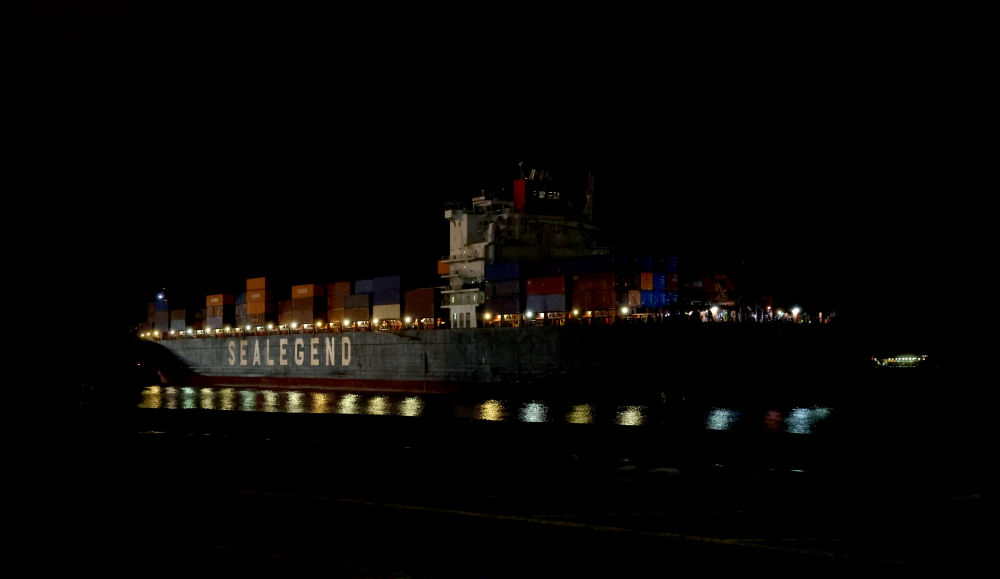
全场爆笑,普京:这么多国家盯着呢,我们肯定要开发北极
Xin Lang Cai Jing· 2026-01-24 16:32
Core Viewpoint - Russia is committed to developing the Arctic region regardless of global climate changes, emphasizing its strategic importance for the country [1][3]. Group 1: Arctic Development Strategy - President Putin highlighted that approximately 70% of Russia's territory is located in high-latitude northern regions, making Arctic development crucial for national strategy [3]. - The development of the Northern Sea Route is not only vital for Russia's growth but also holds significant value for international trade and global logistics [3]. - Russia has been a leader in Arctic scientific research for decades, possessing unique core technologies and is currently enhancing its nuclear icebreaker capabilities [3]. Group 2: Infrastructure and Investment - The construction of the "Leader" nuclear icebreaker is progressing as planned, with expectations to have it operational by 2030, capable of breaking through ice several meters thick [3]. - Russia currently operates 34 diesel-powered icebreakers and 8 active nuclear icebreakers, with additional nuclear icebreakers under construction [3]. - The Russian government has initiated significant infrastructure projects along the Arctic route, focusing on developing key ports to support logistics and operations [7]. Group 3: International Interest and Cooperation - Many countries, including China, Japan, and India, have expressed interest in participating in Arctic development projects, with ongoing discussions about potential collaborations [7]. - A successful trial voyage of a Chinese container ship through the Arctic route to Europe demonstrates the potential for this route to become a major international trade pathway [8][10]. - The Chinese government emphasizes its role as a key stakeholder in Arctic affairs, advocating for cooperation and sustainable development in the region [10].

俄罗斯提速北极开发,鼓励中日印参与
Xin Lang Cai Jing· 2026-01-21 10:21
Core Insights - Russia aims to accelerate Arctic development to break Western sanctions and enhance logistics through the Arctic route, which is seen as a vital international shipping corridor [1][3][5] Group 1: Arctic Development Challenges - Russia faces significant challenges in Arctic development, including harsh natural conditions, labor shortages, high costs, outdated infrastructure, and financing difficulties [3][5] - The ongoing Ukraine conflict limits the government's ability to invest heavily in Arctic projects, making foreign investment crucial [3][5] Group 2: Investment and Infrastructure - The Arctic region comprises 10 federal subjects, covering 22% of Russia's territory, with a resident population of 2.36 million, only 1.6% of the national total [1] - The Russian government is focusing on attracting foreign investment to develop the Arctic shipping route, which is expected to optimize global trade and logistics [3][5] - Key ports along the Arctic route include Murmansk, Arkhangelsk, Sabetta, Dukinka, and Provideniya, which are being developed to support shipping operations [5][8] Group 3: Future Projections and Plans - By 2025, the cargo volume along the Arctic route is projected to reach 33.5 million tons, with expectations to exceed 270 million tons annually by 2035 [8] - The Russian government plans to establish a clear management structure for Arctic development and may create an "Arctic Development Company" to facilitate investment [8][11] - The government aims to improve living conditions in the Arctic, targeting an average life expectancy of 72.4 years and a natural population growth rate of 2% by enhancing various sectors [10][11] Group 4: International Collaboration - Russia is actively seeking foreign partners for Arctic projects, with countries like China, Japan, and India showing interest [11] - The "Arctic Express No. 1" logistics route has been established to connect Russian ports with Chinese ports, significantly reducing shipping times and costs [13][14]
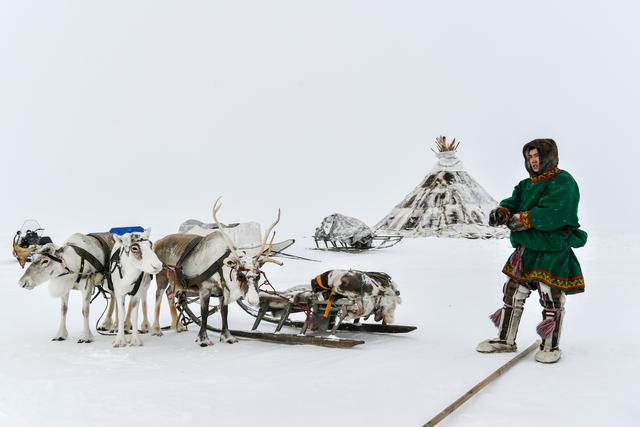
“全球第一岛”资源是个宝!竟可支持造10亿辆电动汽车?
Zhong Guo Qi Che Bao Wang· 2026-01-09 04:49
Core Insights - Greenland has become a focal point due to its vast natural resources and strategic location, with significant reserves of rare earth elements, oil, natural gas, and minerals essential for electric vehicle production [3][8][9] Resource Potential - Greenland's proven rare earth reserves amount to 28.2 million tons, ranking it among the top globally [3] - The island is estimated to hold up to 90 billion barrels of oil and over 1,600 trillion cubic feet of natural gas, which could significantly impact global energy dynamics [8] - Lithium reserves in Greenland, particularly at Cape Farewell, are estimated at 2.8 million tons, accounting for about 10% of the world's current lithium resources, attracting interest from companies like Tesla [9] Strategic Importance - Greenland's geographical position makes it a key hub for the Arctic shipping routes, which can save 9 to 15 days of transit time compared to traditional routes, enhancing its commercial viability [5][6] - The Arctic shipping routes are viewed as potentially transformative for global trade, akin to the Suez and Panama Canals [6] Environmental and Cultural Considerations - The indigenous Inuit population has a deep connection to the land, and large-scale industrial development could disrupt their traditional lifestyle and cultural heritage [10] - Experts emphasize the need for respecting indigenous rights and ensuring their participation in resource development to achieve sustainable growth [10]
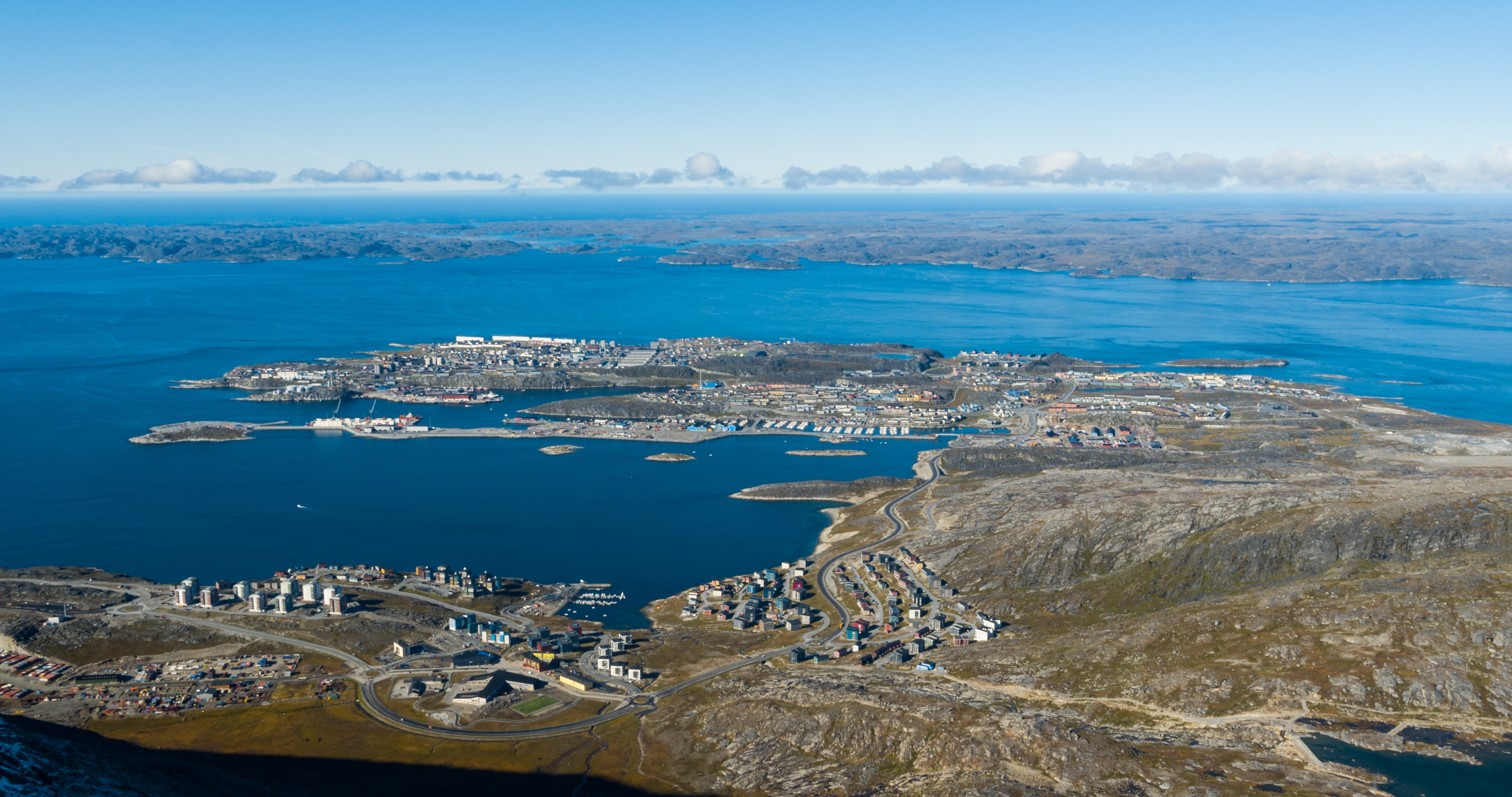
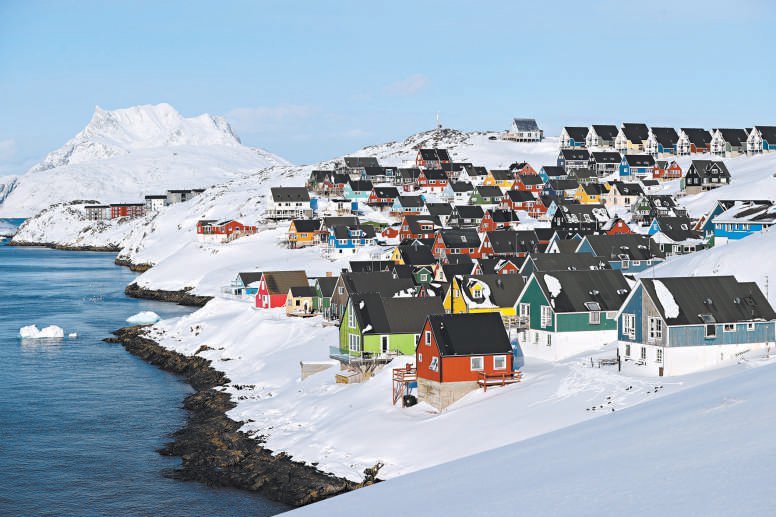
格陵兰岛为何让美国如此垂涎
Xin Lang Cai Jing· 2026-01-07 22:24
Group 1 - The U.S. government, under President Trump, is exploring options to acquire Greenland, including potential military involvement [1] - Greenland's strategic location is highlighted as a key reason for U.S. interest, serving as a critical point for military and shipping routes [3] - The melting Arctic ice is increasing the commercial potential of Arctic shipping routes, making Greenland's position even more significant [3] Group 2 - Greenland is rich in natural resources, including rare earth elements, graphite, copper, and nickel, which are essential for energy transition and chip manufacturing [4] - The area has approximately 400,000 square kilometers of ice-free land, making it ideal for mineral exploration and development [5] - As climate change reduces ice cover, resource extraction in Greenland and surrounding waters is expected to become easier, with only two mining projects currently operational [5][6]
俄方欢迎外国伙伴参与跨北极运输走廊建设
Yang Shi Xin Wen· 2025-12-09 21:55
Core Viewpoint - The Arctic transport corridor is highlighted as a significant international transportation route, with Russia inviting foreign partners to participate in its development [1] Group 1: Investment and Development - Russia is currently implementing thousands of projects in the Arctic region, with total investments reaching 35 trillion rubles (approximately 3.2 trillion yuan) [1] - There is a strong emphasis on enhancing oil, gas, and mineral development in the Arctic, along with initiating new projects in resource exploration, extraction, and deep processing to ensure the efficiency of the Arctic transport corridor [1] Group 2: Infrastructure and Global Trade - The Arctic transport corridor is described as an "international transportation artery" that could serve as a new option for global logistics and potentially improve the global trade structure [1] - The corridor includes the Arctic route and related infrastructure such as ports, with the Arctic route being the shortest maritime route connecting Asia, Europe, and North America [1] - Russia aims to position the Arctic route as an alternative to the Suez Canal route to reduce transportation costs [1]
美国土安全部炒作中美北极竞争,专家:美方面临“心有余而力不足”困境
Huan Qiu Shi Bao· 2025-11-26 23:02
Core Viewpoint - The U.S. is increasingly concerned about China's growing presence in the Arctic, with a focus on the potential challenges to U.S. maritime sovereignty and national security due to the expansion of China's icebreaker fleet [1][2]. Group 1: U.S. Government Actions and Plans - The U.S. Department of Homeland Security (DHS) warns that by 2025, the number of Chinese military and research vessels operating in the Arctic will reach unprecedented levels, posing a potential challenge to U.S. maritime sovereignty [1]. - The DHS has developed a "National Workforce Development Plan" to address the shortage of shipbuilding workers in the U.S. and aims to collaborate with Canada and Finland to ensure Arctic security [1]. - The U.S. Coast Guard has prioritized funding and construction of icebreakers to compete with countries like China [1]. Group 2: Strategic Importance of the Arctic - The Arctic region is becoming increasingly important for U.S. national security, economic prosperity, and global leadership, especially as other countries enhance their capabilities in these areas [1]. - The warming climate has made Arctic shipping routes more accessible, potentially turning them into the busiest energy transport corridors globally, which the U.S. does not want to miss out on [2]. - The U.S. Coast Guard requires more modern vessels to effectively maintain U.S. interests in the Arctic in the 21st century [2]. Group 3: Challenges Faced by the U.S. - The U.S. faces significant challenges in developing its Arctic capabilities, including a lack of sufficient icebreakers, an underdeveloped shipbuilding industry, and a shortage of skilled workers [2]. - The U.S. is heavily reliant on external supply chains for its shipbuilding needs, complicating its efforts to enhance its Arctic presence [2]. Group 4: China's Position - China has expressed its commitment to participating in Arctic affairs based on principles of respect, cooperation, and sustainable development, positioning itself as a significant stakeholder in the region [2].
国泰君安期货所长早读-20251105
Guo Tai Jun An Qi Huo· 2025-11-05 03:33
Report Industry Investment Rating No relevant content provided. Core Viewpoints - The central bank's operations, including the 700 billion yuan outright reverse repurchase and the restart of treasury bond trading in October, will have a positive impact on the bond market's expectations [7]. - For lithium carbonate, the expectation of mine restart and the approaching off - season for power batteries will lead to a shift from destocking to stockpiling, with short - term price回调 and increased market volatility, but long - term optimism due to the expected explosion of energy storage demand next year [8]. - MEG has a large supply pressure, with the restart of some domestic devices and high import volumes, and the port inventory will accelerate the accumulation [9]. - The rebound of live pig prices is coming to an end, with negative feedback on regular demand, a decline in slaughter volume, and an expected shift to a downward trend in prices [10]. Summary by Related Catalogs 1. Central Bank Operations - On November 4, 2025, the central bank announced a 700 billion yuan outright reverse repurchase operation on the 5th, which is an equal - amount roll - over for the 3 - month variety. Market institutions expect another 6 - month outright reverse repurchase operation in November, and the outright reverse repurchase is expected to maintain a net injection. In October, the central bank restarted treasury bond trading, injecting 2 billion yuan [7]. 2. Key Recommended Sectors Lithium Carbonate - The price decline is mainly due to the expectation of the restart of Xiakeng Mine. The power battery is entering the off - season, and energy storage growth cannot offset the decline in power battery demand. It will shift from destocking to stockpiling, with short - term price回调 and long - term optimism [8]. MEG - The unilateral price has reached a new low. Some domestic devices have restarted, and the import volume is high. The supply pressure is large, and the port inventory will accelerate the accumulation [9]. Live Pigs - The price rebound since mid - October is coming to an end. There is negative feedback on regular demand, a decline in slaughter volume, and an expected shift to a downward trend in prices [10]. 3. Commodity Research Morning Report Precious Metals - Gold is affected by the continuous impact of government shutdown on liquidity, with a trend strength of 0. Silver is in a shock rebound, with a trend strength of - 1 [14][18][20]. Base Metals - Copper prices have declined due to concerns about the US economy, with a trend strength of 0 [14][22]. - Zinc is in a wide - range shock, with a trend strength of 0 [14][25]. - Lead lacks a clear driving force and is in price shock, with a trend strength of 0 [14][29]. - Tin is affected by macro factors, with a trend strength of 1 [14][31]. - Aluminum has support at the bottom, alumina's oversupply pattern remains unchanged, and cast aluminum alloy follows electrolytic aluminum, all with a trend strength of 0 [14][34]. - Nickel is suppressed by smelting - end inventory accumulation and supported by the uncertainty of the ore end. Stainless steel prices are in a narrow - range shock at a low level, both with a trend strength of 0 [14][37]. Energy and Chemicals - Lithium carbonate is in a weak shock due to the expectation of restart and off - season, with a trend strength of 0 [14][40]. - Industrial silicon has strong bottom support due to continuous warehouse receipt reduction, with a trend strength of 1. Polysilicon needs to pay attention to this week's information, with a trend strength of 0 [14][43]. - Iron ore is fluctuating at a high level, with a trend strength of 0 [14][46]. - Rebar and hot - rolled coil are affected by sector sentiment and are in a weak shock, both with a trend strength of 0 [14][51]. - Ferrosilicon and silicomanganese are affected by sector sentiment and supply - demand factors and are in a wide - range shock, both with a trend strength of 0 [14][57]. - Coke and coking coal are fluctuating at a high level, both with a trend strength of 0 [14][60]. - Logs are in a repeated shock [14][62].