千问大模型群

Search documents
阿里云是AI 时代的“安卓” 谁是 AI 时代的“苹果”
Sou Hu Cai Jing· 2025-09-30 06:39
Core Viewpoint - Alibaba Cloud aims to position itself as the "Android platform" in the AI and cloud industry, seeking to create a strong ecosystem to gain market influence and compete effectively with other tech giants [1][10][23] Group 1: Industry Positioning - The term "Android" is used to describe Alibaba's strategy, emphasizing its open-source approach and the need for a robust ecosystem to attract businesses [11][18] - The competition in the AI and cloud market is likened to a battle between "Android" and "Apple," with Alibaba Cloud representing the former and Volcano Engine potentially representing the latter [23][24] - The AI and cloud market is expected to evolve into a two-polar or even a single-polar structure, with Nvidia currently holding a dominant position [7][9][10] Group 2: Market Dynamics - The AI and cloud industry is experiencing significant growth, with a reported 400% increase in model invocation in the first half of 2025 compared to the entire year of 2024 [17] - Alibaba Cloud holds a 27% market share in China's public cloud model invocation, ranking second behind Volcano Engine, which has a 49.2% share [17] - The industry's growth is driven by the increasing clarity of growth logic centered around AI and cloud technologies, making it a critical area for investment [6][7] Group 3: Competitive Strategies - Alibaba's open-source strategy is seen as a key factor in attracting customers, similar to how Google leveraged its services to promote Android [11][12] - Volcano Engine adopts a different approach by focusing on application-level openness while keeping its underlying technology closed, which is compared to Apple's strategy [18][19] - The competition between Alibaba and Volcano Engine highlights different market strategies, with Alibaba leveraging its established customer base and Volcano Engine focusing on low-cost, high-volume token sales [20][21][22]


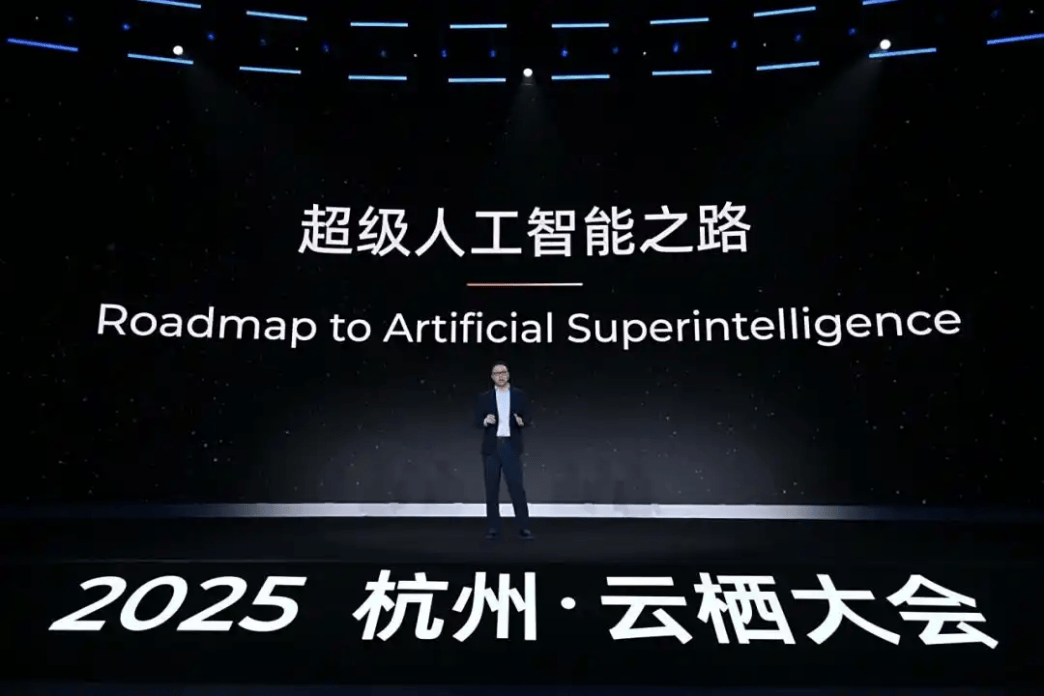
AI 时代,阿里云想当“安卓” ,那谁是“苹果”?
3 6 Ke· 2025-09-30 00:54
Core Viewpoint - Alibaba Cloud aims to position itself as the "Android platform" in the AI and cloud industry, seeking to create a strong ecosystem to gain market influence and compete effectively against other major players [1][9][12]. Group 1: Industry Positioning - The term "Android" is used to describe a platform that is open and accessible, which aligns with Alibaba's strategy of promoting open-source solutions to lower barriers for developers [10][18]. - The competition in the AI and cloud market is increasingly seen as a battle between major players, with Alibaba and its cloud services being positioned as a key contender [6][9][12]. - The market is evolving towards a potential two-polar structure, with Alibaba and Nvidia being significant players, indicating a shift from a multi-polar to a more centralized competitive landscape [6][8][12]. Group 2: Market Dynamics - The AI and cloud market is experiencing rapid growth, with IDC reporting a significant increase in the usage of large models, indicating a robust demand for AI services [17]. - The competitive landscape is characterized by a focus on building alliances and partnerships, as seen with Nvidia's collaboration with OpenAI and Oracle, which reflects a strategic move to enhance market positioning [8][9]. - The growth of AI is expected to create substantial opportunities in the coming decades, with a clear focus on AI and cloud as the core drivers of this growth [5][6]. Group 3: Competitive Strategies - Alibaba's strategy includes leveraging its existing market advantages and a strong open-source approach to attract businesses that need to innovate quickly [10][18]. - In contrast, Volcano Engine adopts a more closed approach at the foundational level while providing an open application layer, which is reminiscent of Apple's strategy of offering user-friendly products [20][21]. - The pricing strategy of Volcano Engine, which focuses on low-cost token sales, is aimed at increasing market penetration and attracting a broader user base [22][23].