
华为CloudMatrix 384超节点

Search documents
安徽第二城 又一个“起飞”机会已至?
Mei Ri Jing Ji Xin Wen· 2025-09-29 14:59
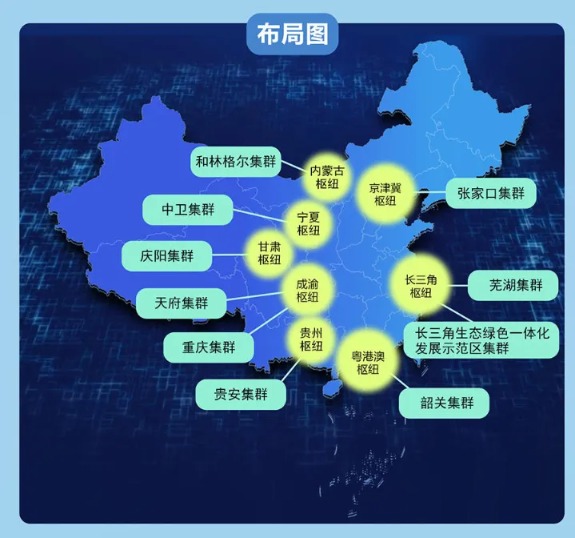
Core Insights - The article highlights the growing importance of computing power as a core infrastructure in the AI era, with Wuhu emerging as a significant player in China's computing power landscape [1][4]. Industry Overview - Wuhu is part of the national "East Data West Computing" project, designated as one of the ten major data center clusters, with the "Chinese Digital Island" being a key area for intelligent computing infrastructure development [1][4]. - The demand for computing power is increasing globally, driven by the AI wave, with Wuhu's computing power industry entering a "harvest period" as major enterprises invest in the region [3][12]. Recent Developments - Wuhu's computing power public service platform recently connected with four national platforms and added six new data centers, enhancing its capabilities [2]. - The Wuhu cluster has integrated 34 data centers, accumulating a total of nearly 640P of general computing power, 26,000P of intelligent computing power, 33.3P of supercomputing power, and 2,070 qubits of quantum computing power, making it a leader in the nation [3][10]. Strategic Importance - Wuhu's strategic location near the East China power grid and its energy sufficiency make it an attractive site for data centers, which require substantial energy resources [6][8]. - The region's low latency network infrastructure supports high-demand applications such as AI inference and e-commerce, positioning Wuhu as a preferred choice for industries in the Yangtze River Delta [9][10]. Economic Impact - Wuhu's GDP surpassed 500 billion yuan for the first time, with a growth rate of 6.4%, driven significantly by the automotive manufacturing sector, which has seen a 20% increase in value added [12]. - The city aims to diversify its economy beyond automotive manufacturing by developing new sectors, including digital economy and intelligent robotics, with the computing power industry at its core [12][13]. Competitive Landscape - Wuhu faces competition from other cities in the Yangtze River Delta, which are also ramping up their computing power initiatives, leading to an increasingly competitive environment [14][15]. - Despite its advantages, Wuhu must address challenges such as talent shortages and higher operational costs compared to western hubs, as well as improve inter-regional coordination in computing power utilization [15].

华为云新技术,超越英伟达
Guan Cha Zhe Wang· 2025-04-11 00:07
Core Insights - The recent news about the U.S. lifting restrictions on NVIDIA's H20 chip exports to China highlights the instability of external computing power supply, emphasizing the need for Chinese companies to secure a stable and sufficient computing power supply to ensure business continuity [1] Group 1: Industry Developments - The 2025 China Mobile Cloud Intelligence Conference emphasized the rapid growth of intelligent computing power in China, with a projected increase of over 2.5 times in the next three years and an annual compound growth rate of nearly 40% [1] - China Mobile plans to build large-scale "computing power factories" to expand intelligent computing centers significantly, with a focus on increasing the scale of reasoning computing power, which is expected to outpace training computing power growth [1] Group 2: Technological Innovations - Huawei announced significant advancements in AI infrastructure at the Huawei Cloud Ecosystem Conference 2025, introducing the CloudMatrix 384 super node, which surpasses NVIDIA's NVL72 in scale, performance, and reliability [2] - The CloudMatrix architecture allows for a transition from server-level to matrix-level supply of AI computing resources, enabling stable operation of large model training tasks for up to 40 days [2][7] Group 3: Competitive Landscape - The performance gap between top AI models in China and the U.S. has narrowed significantly, from 20% in 2023 to just 0.3% according to Stanford's 2025 AI Index report, indicating that Chinese models are rapidly catching up [8] - The demand for AI applications is expected to explode by 2025, with a call for rapid evolution of foundational models, inference services, and development tools to accelerate AI application deployment [9]

