南京新房

Search documents
全国第三!刚刚官方发布,南京房价涨了
Sou Hu Cai Jing· 2025-12-15 14:02
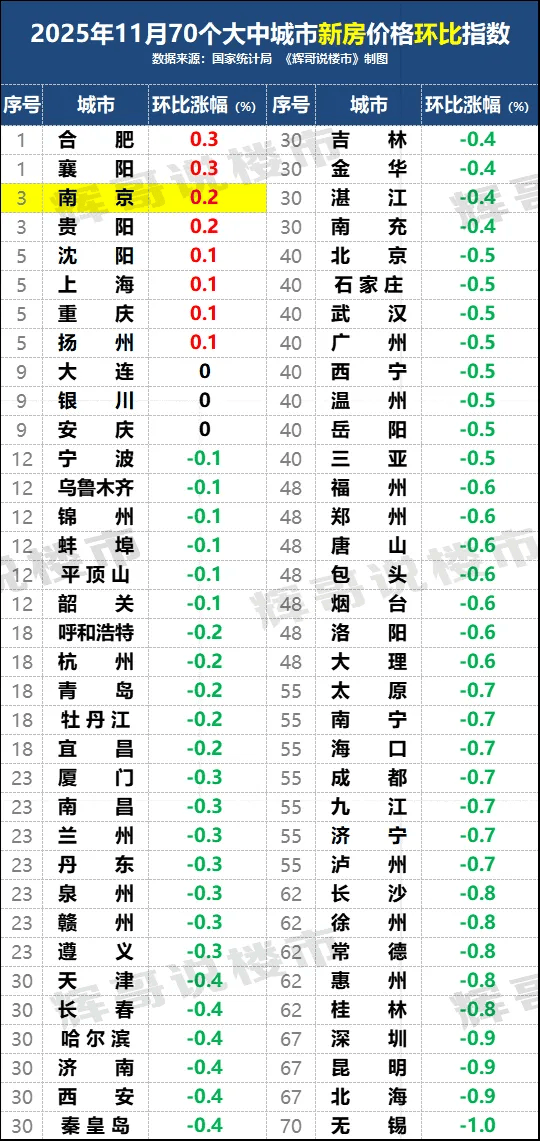
Group 1: Housing Policy and Market Trends - The housing interest subsidy policy is gaining attention, with expectations for its potential implementation to subsidize mortgage interest, achieving effects similar to interest rate cuts without compressing banks' net interest margins [1] - Since the end of 2023, several cities have piloted this policy, resulting in some cities experiencing new home transaction increases of over 15% month-on-month [1] - Nanjing's new home prices rose by 0.2% month-on-month in November 2025, ranking third nationally, following Hefei and Xiangyang, marking the end of a seven-month decline [2][14] Group 2: Nanjing Real Estate Market Performance - A new batch of residential projects in Nanjing has seen strong sales, with the Danjinyuan project achieving an 80% sales rate upon its first launch [2][11] - The second-hand housing market in Nanjing saw a month-on-month decline of 1% and a year-on-year decline of 7.3% [13] - In November 2025, Nanjing's new home prices showed a year-on-year decline of 1.9%, while second-hand home prices fell by 7.3% year-on-year [14] Group 3: Infrastructure Development - Nanjing is set to add two new cross-river passages in the coming year, with plans for five additional passages during the 14th Five-Year Plan period [18][20] - The second phase of the Metro Line 4 is expected to be completed ahead of schedule in 2026, enhancing connectivity between key urban areas [21][31] - The construction of the Jinwen Road cross-river passage is progressing, with plans for it to start in 2027, which will significantly improve transportation convenience in the region [32][47]

南京房价异动?71%刚需二手小区降价
3 6 Ke· 2025-09-18 02:42
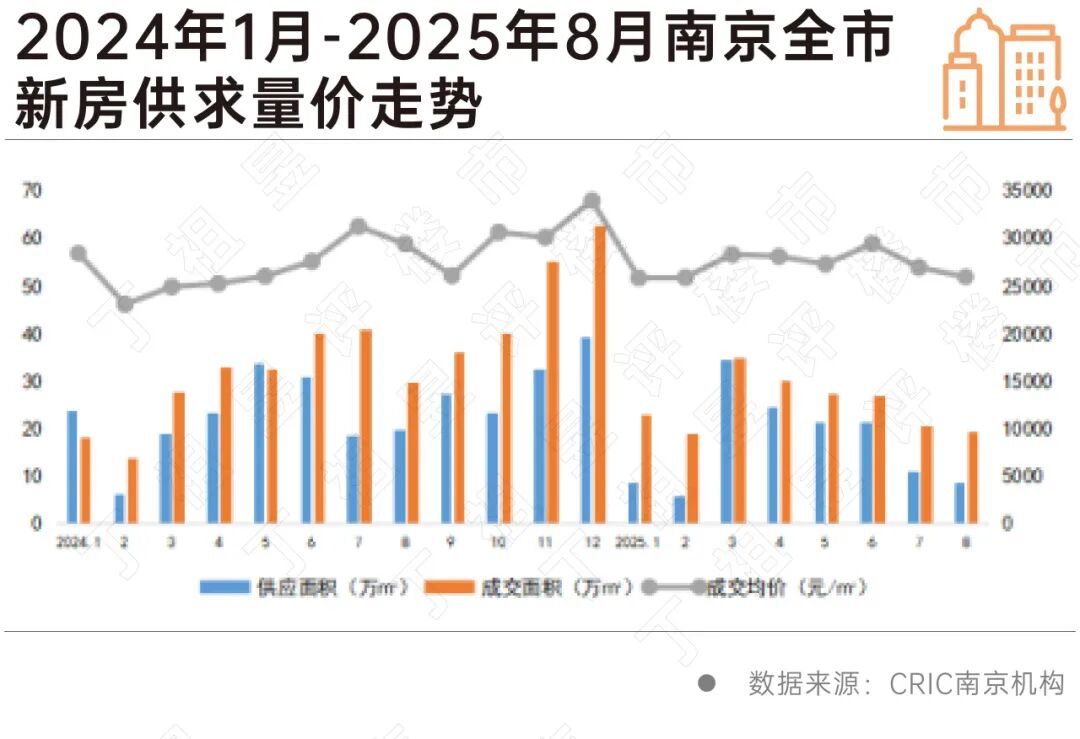
Core Viewpoint - The Nanjing real estate market has been experiencing a downward trend in both new and second-hand housing prices and transaction volumes since the second half of 2025, indicating a deep adjustment phase in the market [1][2][5]. New Housing Market - From January to August 2025, Nanjing's new residential supply totaled 136.82 million square meters, a year-on-year decrease of 22.53%, while total transactions reached 202.40 million square meters, down 14.40% year-on-year [1][2]. - In August 2025, the transaction volume for new residential properties was 17 million square meters, representing a month-on-month decline of 18% and a year-on-year decline of 44% [2]. - The average sales price index for new residential properties in Nanjing fell by 0.6% month-on-month and 1.3% year-on-year in August 2025, with an average cumulative decline of 1.9% from January to August [2]. Second-Hand Housing Market - In the first eight months of 2025, the total transaction volume for second-hand housing in Nanjing was 577 million square meters, a year-on-year decrease of 4% [5]. - In August 2025, the transaction volume for second-hand housing was 58 million square meters, down 12% month-on-month and 23% year-on-year [5]. - The average sales price index for second-hand residential properties fell by 0.7% month-on-month and 6.2% year-on-year in August 2025, with a cumulative average decline of 5.3% from January to August [5]. Price Adjustments - The proportion of second-hand housing communities with price reductions has been increasing, with 68% of high-frequency trading communities experiencing price declines in August 2025, marking a significant increase from the previous month [7]. - In August 2025, 77% of high-frequency trading communities had their listing prices reduced, the highest proportion in nearly a year, with an average decline of 10.3% compared to August 2024 [14]. - The downward price adjustment is particularly pronounced in the first-time buyer and improvement segments, with 71% and 65% of properties in these categories, respectively, experiencing price declines in August [16]. Market Dynamics - The core issue driving the continuous decline in Nanjing's housing prices is the pressure from inventory and high land supply [18]. - The narrow inventory digestion cycle is less than 20 months, but the broad inventory digestion cycle is approaching 10 years, leading to a significant amount of residential land becoming "dead stock" [18]. - To stabilize the market, it is suggested that authorities focus on supporting key trading segments and optimizing supply-side measures, while also linking land supply to broader inventory levels to alleviate long-term inventory pressures [18].