原拆原建服务

Search documents
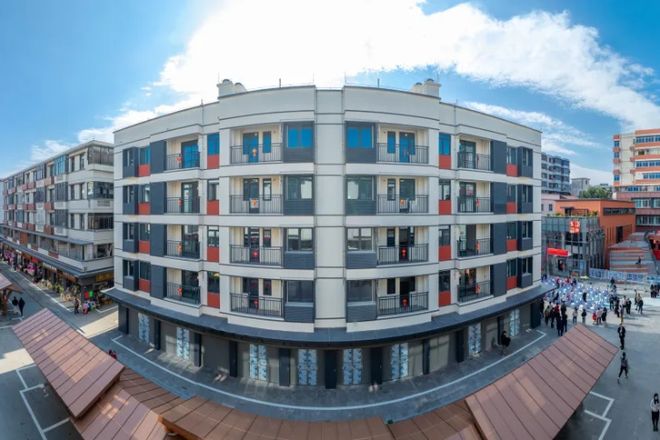
原拆原建,老房子“变身”好房子
Ren Min Wang· 2025-09-21 02:48
Core Viewpoint - The Chinese government has issued new guidelines to support the renovation and reconstruction of aging residential buildings, aiming to enhance urban quality and meet the needs of citizens for better living conditions [1][2]. Group 1: Policy Initiatives - The central government encourages "self-renovation and original demolition and reconstruction" of old housing to improve living standards and reduce financial burdens on local governments [1]. - Local governments are exploring various funding methods, such as establishing community renewal funds and issuing special local government bonds to finance these renovations [1]. Group 2: Implementation and Community Involvement - Different regions are adopting a framework of "resident autonomy + market participation + policy support" to facilitate the renovation process, with some areas allowing for negotiation and administrative mediation in case of disagreements [2]. - From 2019 to 2024, approximately 280,000 old residential communities are expected to undergo renovation, benefiting around 48 million households and over 120 million people [2]. Group 3: Community Impact - The renovation efforts include minor improvements such as pipeline upgrades, additional parking spaces, and elevator installations, which enhance the daily lives of residents [2]. - These initiatives not only improve living conditions but also foster community cohesion and strengthen neighborhood relationships, reflecting a people-centered approach to urban governance [2].
老旧住房自主更新原拆原建,期待更多探索
Nan Fang Du Shi Bao· 2025-08-29 16:10
Core Viewpoint - The recent publication of the "Opinions on Promoting High-Quality Urban Development" by the Central Committee and the State Council highlights the support for the self-renovation and original demolition and reconstruction of old housing, marking the first time such support has been explicitly stated in a significant document at the central level, reflecting strong public demand for this initiative [2] Group 1: Challenges and Experiences - The process of self-renovation faces numerous challenges, including cost-sharing, project management, and conflict resolution among homeowners, making successful replication of existing cases difficult [2] - A notable case in Nanjing involved the first "self-demolition and self-construction" project, which took nearly ten years to complete due to various policy obstacles, highlighting the importance of inter-departmental cooperation [3] - In Chengdu, a similar project faced significant hurdles, including the requirement for 100% homeowner agreement for government planning, leading to concerns about profitability and contractor reliability among homeowners [3] Group 2: Successful Models and Government Support - Guangzhou has successfully implemented a self-funded, original demolition and reconstruction project, demonstrating a new approach that balances government and market roles by following the principle of "who benefits, who invests" [4] - The local government in Guangzhou has provided support measures, including low-interest loans for financially constrained families and appropriate financial incentives, to facilitate the renovation process [5] - Industry experts emphasize the need to find a balance that encourages self-renovation while ensuring legality and fairness throughout the process, with hopes for more replicable experiences as central support is established [5]