厨易贷

Search documents
临淄农商银行:以金融力量赋能地方经济高质量发展
Qi Lu Wan Bao· 2026-01-28 06:59
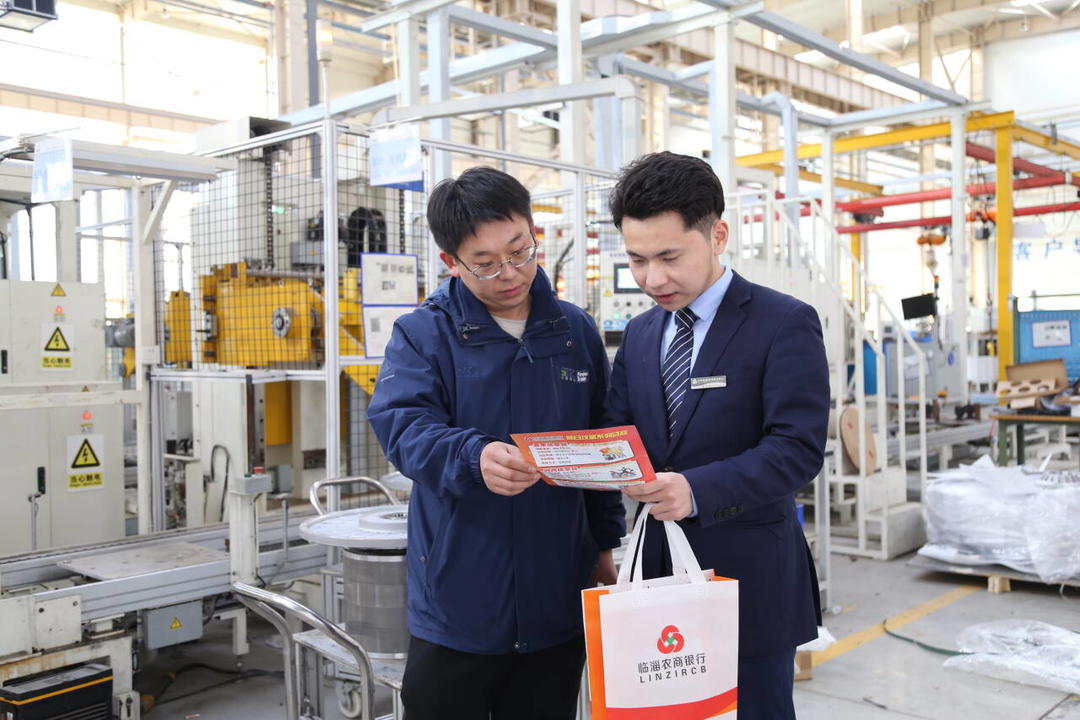
Core Insights - A profound transformation driven by financial innovation is taking place in Linzi, with Linzi Rural Commercial Bank playing a crucial role in providing funding and innovative services to support the high-quality development of the local economy [1] Group 1: Financial Products and Services - Linzi Rural Commercial Bank adopts a "one town, one product, one village, one feature" approach, conducting in-depth research on local industries to create a distinctive credit product system [3] - The bank has launched products like "Chef Easy Loan" and "Micro Loan" to support 189 clients in the kitchen equipment industry, disbursing loans totaling 96.89 million yuan [3] - In areas focused on vegetable cultivation, products such as "Planting Enjoyment Loan" provide timely financial support to greenhouse farmers, fostering a symbiotic relationship between finance and industry [3] Group 2: Support for Technology Enterprises - The bank targets technology enterprises characterized by "light assets and high growth," offering innovative financial products like "Technology Achievement Transformation Loan" and "Talent Loan" to meet their unique financing needs [4] - For Shandong Meiling Chemical Equipment Co., the bank provided over 9 million yuan through a "Technical Transformation Special Loan" to address funding gaps for their smart factory project, moving beyond traditional collateral requirements [4] - The outstanding loan balance for technology enterprises has exceeded 1.2 billion yuan, positioning the bank as an essential driver of regional technological innovation [4] Group 3: Collaborative Financial Ecosystem - Linzi Rural Commercial Bank collaborates with various departments, including the provincial agricultural guarantee company and agricultural rural bureau, to create strategic partnerships that address financing challenges [5] - The bank's collaborative model, which includes "bank + guarantee + supervisory department," effectively alleviates issues related to financing difficulties and high costs for agricultural operators and entrepreneurs [5] - Looking ahead, the bank aims to continue leveraging innovation to provide smarter and more precise financial services, contributing to the construction of a modern industrial system in Linzi [5]

小微金融托举致富梦想(深度观察·做好金融“五篇大文章”) ——对山东省博兴县普惠金融发展的调研
Ren Min Ri Bao· 2025-10-26 22:21
Core Viewpoint - The development of inclusive finance in China has made significant progress, establishing a multi-level supply structure that enhances financial service coverage, accessibility, and satisfaction for the public and small enterprises [1][4]. Group 1: Inclusive Finance Development - The implementation plan for high-quality development of inclusive finance aims to establish a comprehensive system within five years, optimizing service systems and improving credit and insurance frameworks [1][3]. - The focus is on meeting diverse financial needs of the public and the real economy, addressing issues like high loan costs and accessibility [1][4]. Group 2: Local Case Study - In Jinqiu Street, Shandong Province, the local rush grass weaving industry has flourished with the support of inclusive finance, with over 300 enterprises and more than 12,000 direct employees [1][2]. - The introduction of tailored loan products like "Liu Bian Loan" has helped small business owners like Zhang Huihua secure necessary funds quickly, often with same-day disbursement [2][3]. Group 3: Financial Products and Services - Various specialized loans have been developed, including "Greenhouse Loan," "Prawn Loan," and "Catering Loan," to cater to the specific needs of local industries [3][5]. - The "Family Affinity Loan" allows family members to act as guarantors, addressing the challenge of finding collateral in rural areas [5][6]. Group 4: Insurance Role - Insurance products such as employer liability insurance and property insurance have been introduced to protect small businesses and their workers from risks, ensuring stability in production [8][9]. - The plan emphasizes the need for diverse insurance offerings that are affordable and easy to understand, enhancing the security of small enterprises [9]. Group 5: Accessibility of Financial Services - Local banks have established service stations in villages, providing essential banking services and facilitating easier access to financial products for residents [10][11]. - Initiatives like "Financial Night School" have been launched to educate the community on financial literacy, enhancing the overall understanding of financial products and services [11].
小微金融托举致富梦想(深度观察·做好金融“五篇大文章”)
Ren Min Ri Bao· 2025-10-26 22:19
Core Viewpoint - The article highlights the significant progress in the development of inclusive finance in China, emphasizing its role in supporting small businesses and rural revitalization, particularly through tailored financial products and services [6][7][10]. Group 1: Inclusive Finance Development - Inclusive finance has made substantial advancements in China, establishing a multi-level supply structure that enhances financial service coverage, accessibility, and satisfaction [6]. - The implementation plan for high-quality development of inclusive finance aims to build a comprehensive system over the next five years, optimizing service systems and improving credit and insurance frameworks [6][10]. Group 2: Local Industry Support - In Bohxing County, the local grass willow weaving industry has flourished with over 300 enterprises and more than 12,000 direct employees, supported by inclusive finance initiatives [7][8]. - Financial institutions have introduced specialized loans like "Willow Weaving Loan" to meet the funding needs of small businesses lacking collateral [9][10]. Group 3: Financial Products and Services - The "Willow Weaving Loan" allows small business owners to apply for loans ranging from 30,000 to 200,000 yuan via mobile applications, often with same-day disbursement [9]. - Other tailored financial products include "Greenhouse Loan," "Prawn Loan," and "Catering Easy Loan," designed to cater to specific agricultural needs [9][10]. Group 4: Insurance and Risk Management - Insurance products such as employer liability insurance and property insurance have been developed to protect small businesses in the grass willow weaving sector from operational risks [14][15]. - The article emphasizes the importance of insurance in supporting the sustainability of traditional crafts and ensuring worker safety [14][15]. Group 5: Community Engagement and Education - Local banks have established 78 inclusive finance service stations to provide essential banking services directly to rural communities, enhancing accessibility [16][17]. - Financial literacy initiatives, such as "Financial Night Schools," have been launched to educate the public on financial management and fraud prevention, reaching over 100,000 individuals [18].

临淄农商银行:金融赋能,助力民营经济茁壮成长
Qi Lu Wan Bao Wang· 2025-05-29 09:38
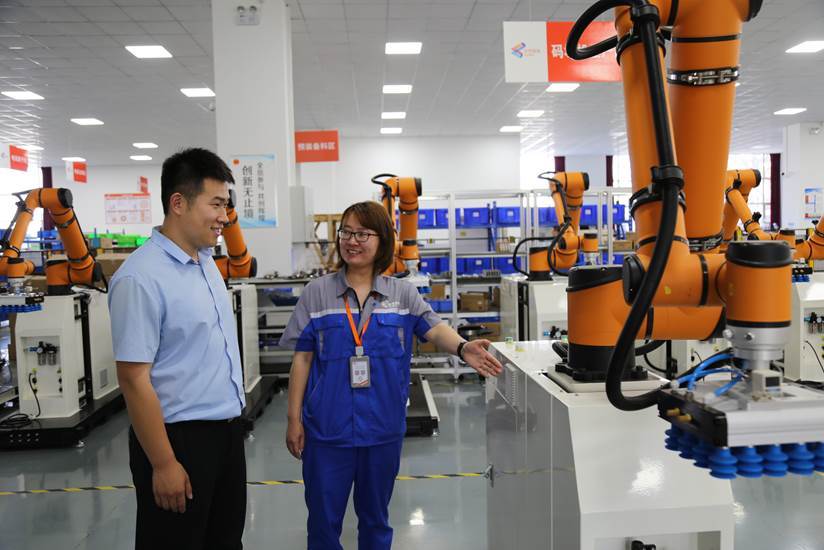
Core Viewpoint - Linzi Rural Commercial Bank has been actively supporting the high-quality development of the regional private economy through precise and efficient financial services, contributing to the revitalization of the real economy [1] Group 1: Personalized Financial Services - The kitchenware industry in Zhutai Town, Linzi District, has developed into a significant sector with an annual output value of 4 billion yuan, involving over 800 enterprises and nearly 10,000 employees [3] - The bank has tailored financial services for local businesses, exemplified by the support provided to Wang Xueyong, who transitioned from a worker to the owner of a kitchenware company, benefiting from the bank's assistance [3][4] - Linzi Rural Commercial Bank has launched specialized loan products such as "Chuyi Loan" and "Micro Loan" to support the kitchenware industry, with 189 loans issued totaling 96.89 million yuan [4] Group 2: Innovative Loan Products - Aobo (Shandong) Intelligent Robot Co., Ltd. has developed a smart coffee robot, showcasing the company's innovation in the robotics sector [5] - The company, established in 2015, has become a leading player in collaborative robots, with annual revenue reaching 340 million yuan and contributing over 1 million yuan in taxes [6] - Linzi Rural Commercial Bank has provided 280 million yuan in loans to Aobo, demonstrating its commitment to supporting technological enterprises and enhancing their growth potential [6]