参鸡汤

Search documents
杭州人的传统年货清单扩容了
Hang Zhou Ri Bao· 2026-02-03 03:35
Core Insights - The event "2026 'Ji Brand' Specialty Products National Tour Hangzhou Station" showcases a variety of high-quality products from Jilin province, enhancing the New Year shopping experience for residents in Hangzhou [1][2] - The exhibition features 35 exhibitors from Jilin, presenting hundreds of specialty products, including high-end health supplements and innovative food items [1][2] Group 1: Event Overview - The exhibition runs from February 2 to February 8, attracting significant public interest with a variety of products on display [1] - Featured products include rare deer antler series, ginseng liquor, and various health foods, which have become popular choices for New Year gifts [1] Group 2: Product Innovation - The event highlights the transformation of traditional ginseng products into modern snacks and beverages, appealing to younger consumers [2] - Innovative food items such as ginseng chicken soup and black ginseng coffee are introduced, breaking traditional consumption patterns [1][2] Group 3: Supply Chain and Partnerships - The Hangzhou Lianhua Huashang Group emphasizes its commitment to quality by sourcing products directly from Jilin, ensuring high standards [2] - A strategic supply chain agreement was signed between Lianhua Huashang Group and "Ji Brand" representatives, facilitating the regular entry of Jilin products into Lianhua's distribution channels [2]
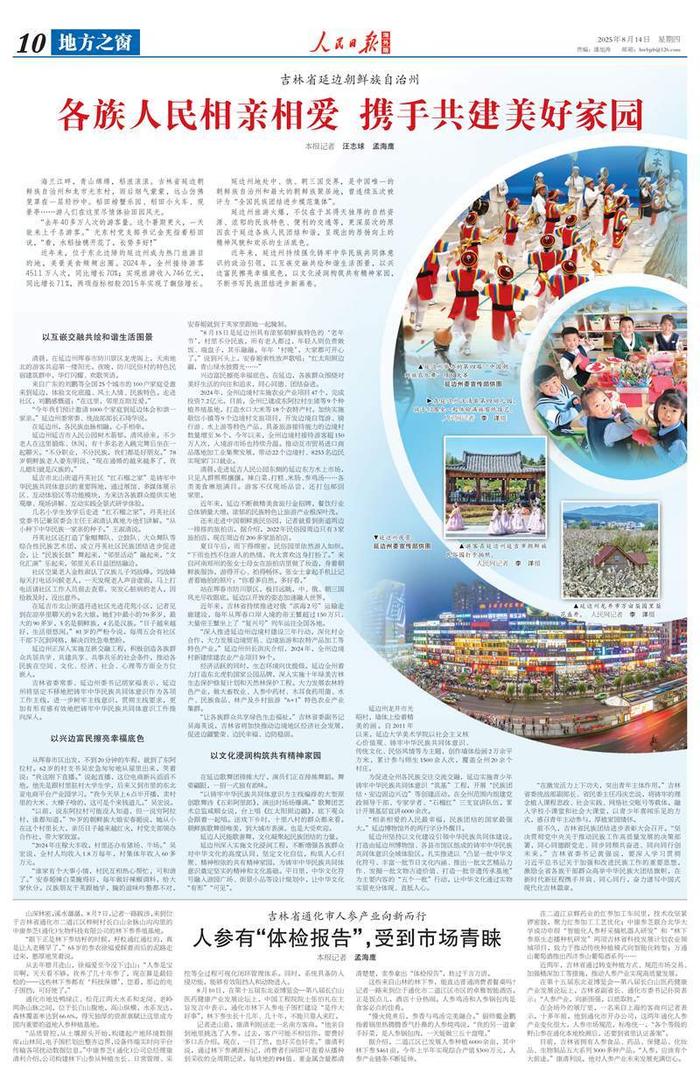
人民日报海外版整版聚焦吉林:各族人民相亲相爱 携手共建美好家园
Ren Min Wang· 2025-08-14 00:46
Group 1: Tourism Growth - In 2024, Yanbian Prefecture received 45.11 million tourists, a 70% increase year-on-year, and achieved tourism revenue of 74.6 billion yuan, up 71% from the previous year, with both metrics doubling since 2015 [7][12] - The region's appeal as a tourist destination is attributed to its unique natural resources, rich ethnic culture, and convenient transportation [7][8] - The local government plans to invite 1,000 families from across the country to experience the harmonious community life in Yanbian [8][9] Group 2: Cultural Integration - Yanbian promotes ethnic integration through community activities, fostering friendships across different ethnic groups, as seen in local community centers [8][9] - The "Red Pomegranate Home" initiative in Danying Community serves as a platform for cultural exchange and education, emphasizing the importance of unity among different ethnicities [8][9] - The region has implemented various cultural programs to enhance the sense of belonging and cultural confidence among its diverse population [14][15] Group 3: Economic Development - Yanbian has initiated 47 agricultural projects in border villages with an investment of 720 million yuan, enhancing local economic conditions [12] - The average annual income per person in East Alar Village is 18,000 yuan, with collective income exceeding 6 million yuan [11][12] - The region is focusing on developing border trade and tourism, with over 150,000 tourists visiting border villages this year [12][13] Group 4: Environmental and Cultural Initiatives - Yanbian is actively working on ecological protection and cultural promotion, including the establishment of the Northeast Tiger and Leopard National Park [13][14] - The local government is enhancing cultural identity through various artistic performances and community events, which have gained popularity among residents and visitors alike [14][15] - The province aims to integrate cultural education into youth programs to foster a sense of national unity and pride [15][16]

极端天气致韩国农产品价格上涨明显
Ren Min Ri Bao· 2025-08-13 21:50
Core Insights - The price of chicken soup in Seoul has increased from 16,000 KRW to 18,000 KRW due to rising costs of chicken and vegetables [1] - Extreme weather conditions in July, including heatwaves and heavy rainfall, have significantly impacted agricultural production and led to a sharp rise in food prices [2] - The Korean government has implemented measures to stabilize food prices, including increasing the supply of cabbage and accelerating chicken imports [3] Group 1: Price Increases - The price of meat chicken has risen by 25% year-on-year, reaching 1,954 KRW per kilogram [1] - Wholesale prices for watermelon have increased by 45.4% year-on-year, reaching 3,300 KRW per kilogram [1] - Retail prices for tomatoes have surged by 42.6% year-on-year, reaching 6,716 KRW per kilogram [1] Group 2: Impact of Weather - July experienced 13.5 days of extreme heat, more than three times the number from the previous year, leading to significant reductions in vegetable yields [2] - Heavy rainfall from July 16 to 20 affected over 29,000 hectares of farmland, severely damaging crops like watermelon and grapes [2] - The extreme weather resulted in the death of 1.24 million chickens and 160,000 ducks due to heat, and 1.57 million chickens and 180,000 ducks due to flooding [2] Group 3: Government Response - The Korean government plans to double the daily supply of cabbage to 200-300 tons to stabilize prices [3] - Price subsidies will be implemented for fruits and vegetables heavily impacted by extreme weather [3] - The government aims to expedite chicken import approvals, with an additional 4,000 tons expected by mid-August [3]

六月简直是东北最舒服,酒店最便宜的季节
Hu Xiu· 2025-07-01 04:43
Group 1 - The article describes the pleasant summer atmosphere in Shenyang, highlighting the enjoyment of outdoor barbecues and social gatherings [2][6][39] - Shenyang is characterized by its vibrant street life, with many food stalls and night markets contributing to a lively urban environment [19][39] - The cultural diversity in the Xita area is noted, with a mix of Korean and Chinese influences reflected in the local cuisine and community [24][31] Group 2 - The article mentions the ongoing renovations in Changchun, particularly on Xinmin Street, which is a significant historical area [48][50] - Changchun is depicted as a city with a unique blend of modern and traditional elements, with references to its first light rail line and the integration of university life into the urban fabric [75][64] - The article reflects on the nostalgic atmosphere of Changchun, with mentions of long-standing cafes and the city's evolution over the years [85][90]