
双氯芬酸

Search documents
行业洞察:国产新药迈入临床,癌痛治疗开辟新路径
Tou Bao Yan Jiu Yuan· 2026-01-13 12:13
Investment Rating - The report does not explicitly state an investment rating for the industry [1]. Core Insights - Adult cancer pain management is a systematic project aimed at achieving comprehensive pain control through standardized assessment, individualized treatment, and multidisciplinary collaboration [4]. - Cancer pain is a prevalent symptom among cancer patients, with a high incidence rate of 44.5%, and nearly one-third of patients suffer from moderate to severe pain [11]. - The adult cancer pain treatment market in China is expected to grow from 3.76 billion CNY in 2020 to 6.36 billion CNY by 2029, with a compound annual growth rate (CAGR) of 6.8% from 2020 to 2024 and 5.3% from 2025 to 2029 [20]. Summary by Sections Cancer Pain Management - Cancer pain management involves a comprehensive approach that includes pain screening, assessment, and management tailored to the patient's overall treatment goals [3][4]. - The management process is based on standardized screening and dynamic assessment, following principles of regularity, quantification, comprehensiveness, and dynamism [4]. Epidemiological Characteristics - Cancer pain has a high prevalence among patients, particularly in advanced stages, where over 80% experience pain [11]. - The main causes of cancer pain are tumor progression (over 90%) and treatment-related pain (approximately 20%) [11]. - Pain types include nociceptive pain (around 60%), neuropathic pain (19%), and mixed pain (20%) [11]. Treatment Medications - Common medications for cancer pain include weak opioids (e.g., codeine, tramadol), strong opioids (e.g., morphine, fentanyl), non-steroidal anti-inflammatory drugs (NSAIDs), and acetaminophen [15][16]. - There is a shift towards the development of non-opioid medications to provide safer and sustainable pain management options [16]. Market Outlook - The adult cancer pain treatment market is projected to expand significantly due to increasing clinical needs and the introduction of innovative non-opioid drugs [19][20]. - The treatment rate for cancer pain is expected to rise from approximately 70% to 90% by 2029, indicating a growing population receiving standardized treatment [20]. Innovation Trends - Treatment strategies are transitioning from reliance on opioids to a multimodal approach that includes NSAIDs and adjuvant analgesics [26]. - The focus on non-opioid innovative drugs is becoming a breakthrough direction in drug development [26]. - There is an emphasis on personalized medication management and the establishment of a comprehensive management network through medical alliances [26][27].
秃鹫濒危、流浪狗激增,印度爆发生态危机
Huan Qiu Shi Bao· 2025-11-30 22:48
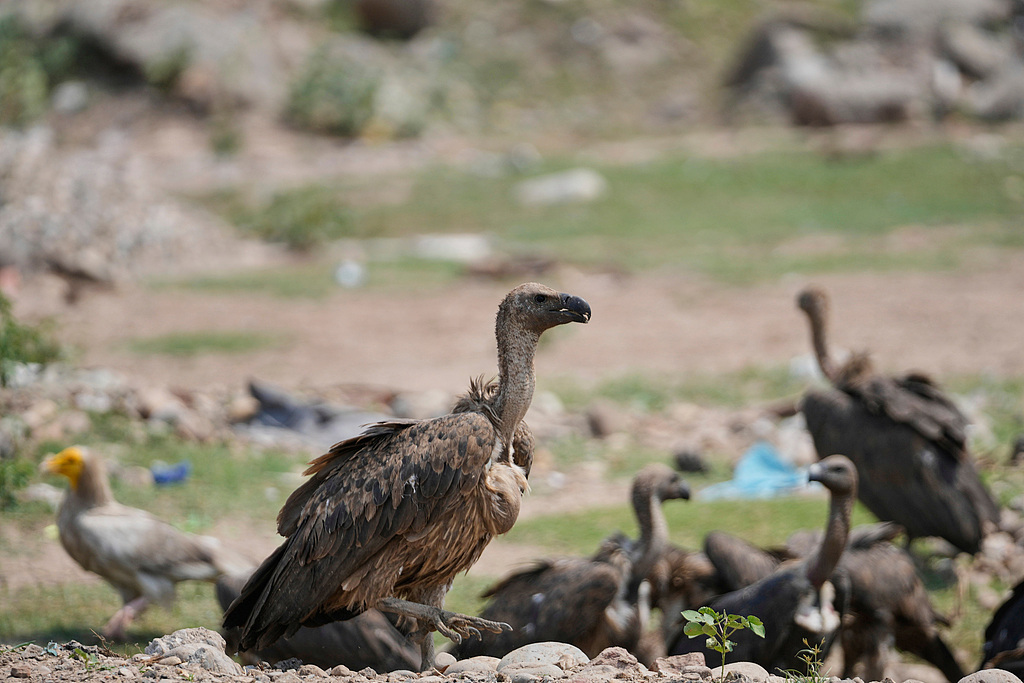
Core Insights - The disappearance of vultures in India is leading to an ecological crisis, with stray dogs rapidly proliferating and taking over the vultures' role as scavengers, resulting in a surge in rabies cases [1][3] Group 1: Vulture Population Decline - Vultures have disappeared from 72% of their historical nesting sites in India, with Central and Rajasthan states housing nearly two-thirds of the remaining nests, over 60% of which are located in protected areas [3] - From 1992 to 2007, the population of three vulture species—Long-billed, Indian, and White-backed vultures—plummeted from approximately 4 million to 32,000, a decline exceeding 99% [3] - During the same period, India saw an increase of about 5.5 million stray dogs and reported 38 million dog bite incidents, leading to over 47,000 rabies deaths [3] Group 2: Causes of Decline - The sharp decline in vulture populations is closely linked to the misuse of drugs in livestock, a chain reaction triggered by human activities that took a decade to confirm [3] - A study led by veterinary pathologist J. Lindsay Oaks found that 85% of deceased vultures suffered from visceral gout, a condition typically occurring in birds with kidney failure, with diclofenac identified as the primary cause of renal failure deaths among vultures [3] Group 3: Remedial Measures - The Indian government is implementing various remedial measures, including banning certain harmful chemicals used in livestock farming and establishing more comprehensive bird protection programs [4] - Environmentalists have set up "vulture restaurants" that provide safe food sources for vultures, such as cow carcasses [4] - The situation has escalated beyond a biodiversity crisis to a public health crisis directly caused by human activities, raising alarms for human survival and development [4]

痛经药物的春天还要再等等
3 6 Ke· 2025-07-07 23:11
Core Viewpoint - The recent failure of Organon's candidate drug OG-6219 in Phase II clinical trials highlights the challenges in developing effective treatments for endometriosis, a condition affecting approximately 190 million women globally, with significant implications for the company's innovation pipeline and the broader market for pain management in women’s health [1][2][9]. Group 1: Market Demand and Supply - Endometriosis is a high-prevalence disease that causes severe pelvic pain and can lead to infertility, affecting about 1 in 10 women of reproductive age [1]. - Despite the significant treatment demand, there is a scarcity of new drugs, primarily due to the unclear underlying mechanisms of the disease, which complicates research and development [2][4]. - The complexity of individual patient factors, such as hormonal levels and inflammation, further complicates the development of effective treatments, leading to a low conversion rate for new mechanism drugs [2][4]. Group 2: Challenges in Drug Development - Existing treatments, such as NSAIDs, provide temporary relief but do not address the root cause of endometriosis, creating a high barrier for new drugs to demonstrate superior efficacy [2][3]. - High costs and side effects associated with approved drugs, such as AbbVie’s Orilissa and Pfizer’s Myfembree, have limited market acceptance [3][4]. - The failure of Organon’s OG-6219, which was expected to be a breakthrough treatment, underscores the difficulties in drug development within this therapeutic area [7][8]. Group 3: Organon's Position - Organon, formed from Merck's spinoff, aimed to innovate in women's health through acquisitions, including the purchase of Forendo Pharma for $750 million, which included OG-6219 [6]. - The failure of OG-6219 has significantly impacted Organon's innovation pipeline, leaving it with limited options for future development in endometriosis treatment [7][8]. - Despite the setback, Organon has expressed intentions to explore new treatment options for endometriosis, although the high difficulty and long timelines in this field pose significant challenges [8][12]. Group 4: Future Outlook - While the failure of OG-6219 is disappointing, the potential for innovation in endometriosis treatment remains, with ongoing research into alternative pathways and new compounds [10][11]. - Current research efforts are primarily focused on traditional pathways, but there are emerging explorations into novel approaches, such as cannabinoid therapies and inflammation-targeting strategies [11]. - A significant shift in the treatment landscape may require breakthroughs in technology and a renewed commitment from the industry to address the unmet medical needs of millions of women suffering from endometriosis [12].
