古董

Search documents
贪官90件假古董卖了数千万贪官用古董买卖掩盖权钱交易
Xin Lang Cai Jing· 2026-01-11 15:08
Core Viewpoint - The former Minister of Agriculture and Rural Affairs, Tang Ranjian, is implicated in a scheme where he sold 90 pieces of "antiques" for tens of millions of yuan, most of which are modern crafts and not valuable, using this business to cover up corrupt transactions [1] Group 1 - Tang Ranjian sold 90 pieces of "antiques" to businessmen at high prices, totaling several tens of millions of yuan [1] - The majority of the items sold were modern crafts, lacking real value [1] - The antique business operated by Li Yong served as a facade for Tang Ranjian's corrupt dealings [1] Group 2 - Businessmen would purchase the "antiques" from Li Yong to facilitate the transfer of benefits to Tang Ranjian [1] - Li Yong acted as a financial intermediary, holding funds for Tang Ranjian and providing money when needed [1]
年度反腐大片开播,唐仁健腐败细节曝光!
Xin Lang Cai Jing· 2026-01-11 14:09
Core Viewpoint - The documentary highlights the intertwining of corruption and misconduct within the party, focusing on the case of Tang Rinjian, a former high-ranking official, whose actions exemplify the challenges in party discipline and anti-corruption efforts [1] Group 1: Misconduct and Corruption - Tang Rinjian's obsession with luxury and enjoyment led to a lifestyle of indulgence, ignoring party regulations even after the 18th National Congress [2] - His relationship with businessman Li Yong, who provided him with high-priced antiques, served as a facade for corrupt transactions, with Li acting as a financial facilitator for Tang [2] - Tang's decision-making was heavily influenced by a distorted view of power and performance, leading to the initiation of several impractical projects that ultimately failed [4][5] Group 2: Impact on Governance - The "Golden Chicken Industry" project, initiated under Tang's direction, faced significant operational challenges, resulting in seven out of eight projects being halted, leaving behind underutilized infrastructure [5] - Tang's actions created a detrimental political atmosphere within the Ministry of Agriculture, affecting the integrity and ethical standards of governance [7] Group 3: Legal Consequences - Following an investigation prompted by multiple reports, Tang was expelled from the party and public office, ultimately sentenced to death with a two-year reprieve for bribery [8] - The case has led to a broader initiative within the Ministry of Agriculture to address systemic issues revealed by Tang's misconduct, emphasizing the need for reform and accountability [8]
在隐蔽场所吃喝,项目有油水就捞,唐仁健贪腐细节曝光
Yang Shi Xin Wen· 2026-01-11 14:04
Core Viewpoint - The case of Tang Rinjian, former Minister of Agriculture and Rural Affairs, highlights severe corruption issues within the Chinese government, particularly in the agricultural sector, leading to his conviction for bribery and subsequent death sentence with a two-year reprieve [1][7]. Group 1: Corruption and Misconduct - Tang Rinjian was sentenced to death with a two-year reprieve for accepting bribes, reflecting the serious corruption issues within the government [1][7]. - His lifestyle was characterized by extravagant enjoyment and indulgence, often engaging in lavish gatherings despite warnings from the central government [2][6]. - Tang utilized his position to facilitate corrupt practices, including using a friend in the antique business to mask bribery through inflated sales of purported antiques [2][6]. Group 2: Abuse of Power - During his tenure, Tang Rinjian initiated several projects, such as the "Golden Chicken Industry" project, which were poorly planned and resulted in significant waste, with seven out of eight projects becoming inactive [4][6]. - He created a "Weekend Fun" WeChat group to organize gatherings with business owners, effectively using these events to solicit bribes under the guise of socializing [5][6]. - Tang's actions had a detrimental impact on the political climate within the Ministry of Agriculture, leading to a culture of corruption and misconduct [6][7]. Group 3: Legal Consequences and Reforms - Following investigations prompted by multiple reports, Tang was expelled from the party and public office, culminating in his conviction for bribery [7]. - The case has led to calls for reforms within the Ministry of Agriculture to address the systemic issues of corruption revealed by Tang's actions [7].
中纪委专题片剖析唐仁健案:酷爱古玩,古玩商成其“白手套”
Xin Lang Cai Jing· 2026-01-11 13:08
Core Viewpoint - The documentary series emphasizes the ongoing efforts of the disciplinary inspection and supervision agencies to combat corruption and promote integrity, highlighting the importance of addressing both misconduct and corruption in a unified manner [1][2]. Group 1: Corruption and Misconduct - The intertwining of misconduct and corruption is identified as a significant issue in the current anti-corruption efforts, necessitating a comprehensive approach to address both aspects simultaneously [2]. - The case of Tang Rinjian, former Secretary of the Party Leadership Group and Minister of the Ministry of Agriculture and Rural Affairs, exemplifies the typical trajectory of corruption, showcasing the connection between misconduct and corruption [2][3]. - Tang Rinjian's indulgence in extravagant enjoyment and socializing, even after repeated warnings from the central government, illustrates a persistent disregard for discipline and regulations [3]. Group 2: Mechanisms of Corruption - The documentary reveals that many of the bribery incidents involving Tang Rinjian occurred in social settings, such as dining and gambling, where informal agreements for favors and benefits were made [2][4]. - Businessman Wang Hui's relationship with Tang Rinjian highlights how personal connections were leveraged for mutual benefit, with Wang acting as a facilitator for corrupt activities [4]. - Tang Rinjian's use of the antique trade as a cover for corrupt transactions demonstrates the deceptive practices employed to mask illicit activities [5]. Group 3: Consequences and Reflections - The documentary features reflections from Tang Rinjian, acknowledging the consequences of his actions and the realization of the gravity of his misconduct too late [2][3]. - The narrative underscores the detrimental impact of indulgence on professional responsibilities, suggesting that such behavior can lead to a decline in work ethic and accountability [5].
马来西亚增税重构财政平衡
Jing Ji Ri Bao· 2025-07-02 22:03
Group 1 - Malaysia has implemented significant adjustments to the Sales and Service Tax (SST) starting July 1, imposing a 5% to 10% sales tax on non-essential and luxury goods, while expanding the service tax scope [1][2] - The new tax policy aims to broaden the tax base and increase fiscal revenue while selectively avoiding essential goods to mitigate the burden on the general public [1][4] - Luxury items such as imported salmon, high-end fruits, and truffles are taxed at 5%, while high-value collectibles like antiques and luxury cars are taxed at 10%, reflecting the government's consideration of consumer spending capacity [1][2] Group 2 - The expansion of the service tax includes sectors like leasing, construction, financial services, education, and beauty services, addressing long-standing gaps in the tax base [2][3] - The tax reform is part of the "Prosperous Economy" reform framework, emphasizing sustainable fiscal policies and social inclusivity while avoiding taxes on basic necessities [2][4] - Measures have been introduced to alleviate the impact on small and medium-sized enterprises (SMEs), including exemptions for those with rental income below 500,000 MYR (approximately 117,900 USD) [3][4] Group 3 - The additional tax revenue will be allocated to enhance public services, expand cash assistance, and improve infrastructure and healthcare resources, aiming to reduce the budget deficit from approximately 4.3% in 2024 to 3.8% in 2025 [4] - The tax reform is designed to maintain basic government operations while gradually building a more robust tax system, balancing moderate adjustments with progressive reforms [4] - The government asserts that the tax burden will not increase on essential goods for the general public, but higher-income individuals will contribute more to address future economic pressures [4]
巴黎美术与古董艺博会9月举行,欢迎中国艺术爱好者体验
Di Yi Cai Jing· 2025-06-13 07:43
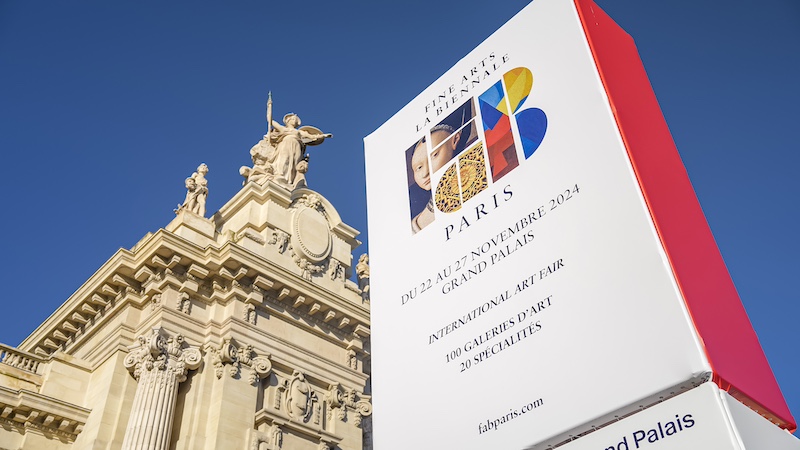
Core Insights - FAB Paris, a prestigious decorative arts fair, will take place from September 20 to 24 at the Grand Palais in Paris, welcoming art enthusiasts from China [1][3] - The fair is the only cross-category art and antique fair in Paris, featuring over twenty specialized fields including fine arts, furniture, antiques, and jewelry, established in February 2022 through the merger of two renowned art fairs [1][3] Industry Overview - The event will host 100 art and antique dealers from around the world under the iconic glass dome of the Grand Palais, emphasizing its international appeal [3] - An independent review committee composed of over 60 experts from various fields has been established to ensure the academic standards and professional credibility of the exhibited works, enhancing the fair's authority in the industry [3][5] Quality Assurance - The rigorous selection process for exhibited items has led to many artworks being collected or displayed by major institutions such as the Louvre, Musée d'Orsay, and the Museum of Modern Art in New York, underscoring the fair's reputation for quality [5] - FAB Paris aims to strengthen cultural exchanges between China and France, with aspirations to bring more exceptional cultural and artistic treasures to the Chinese market [5]