
只读存储器(ROM)

Search documents
一文看懂存储芯片
半导体行业观察· 2026-02-20 03:46
Core Viewpoint - The article emphasizes the importance of understanding various types of computer memory, including ROM, DRAM, SRAM, and flash memory, and their unique trade-offs in speed, cost, power consumption, and data persistence [2][3]. Group 1: Memory Types Overview - Computer memory is categorized into volatile and non-volatile types, with volatile memory requiring power to maintain data and non-volatile memory retaining data without power [6][7]. - Volatile memory includes DRAM and SRAM, while non-volatile memory includes ROM and flash memory [6][7]. Group 2: Memory Hierarchy - Modern computing systems utilize a hierarchical structure of memory types to balance speed, capacity, cost, and data persistence, with SRAM and DRAM serving as fast, temporary storage, and ROM and flash memory providing long-term storage [9][70]. - The memory hierarchy includes registers, cache, main memory (DRAM), and non-volatile storage, addressing the speed disparity between processors and memory [9]. Group 3: Key Memory Attributes - Key attributes defining memory technology include speed, latency, bandwidth, capacity, cost per bit, persistence, and energy consumption [10]. - No single memory type excels in all attributes, necessitating a combination of different memory technologies in modern systems [10]. Group 4: ROM Characteristics - ROM is a non-volatile memory type used to store firmware and essential data, with various subtypes like Mask ROM, PROM, EPROM, and EEPROM, each having distinct advantages and disadvantages [12][26]. - ROM is primarily used for firmware storage, with applications in embedded systems and early gaming cartridges [15][25]. Group 5: DRAM Characteristics - DRAM is the dominant form of main memory in computing systems, requiring periodic refreshing to maintain data, making it cost-effective for large capacity storage [27][28]. - DRAM is widely used in desktops, laptops, and servers, balancing performance and cost [31]. Group 6: SRAM Characteristics - SRAM is known for its speed and low latency, making it suitable for cache memory in CPUs and GPUs, despite its higher cost and lower density compared to DRAM [55][59]. - SRAM is utilized in performance-critical applications where speed is paramount [61]. Group 7: Flash Memory Characteristics - Flash memory is a non-volatile storage technology that retains data without power, with two main types: NOR and NAND, each suited for different applications [63][64]. - NAND flash is commonly used in SSDs and other storage devices due to its high density and cost-effectiveness, while NOR flash is used for firmware storage [66][68]. Group 8: Future Trends in Memory Technology - The semiconductor industry is exploring next-generation memory technologies, such as Z-axis memory, MRAM, ReRAM, and PCM, to address the limitations of current memory types and enhance performance, efficiency, and capacity [72][73][74][76].

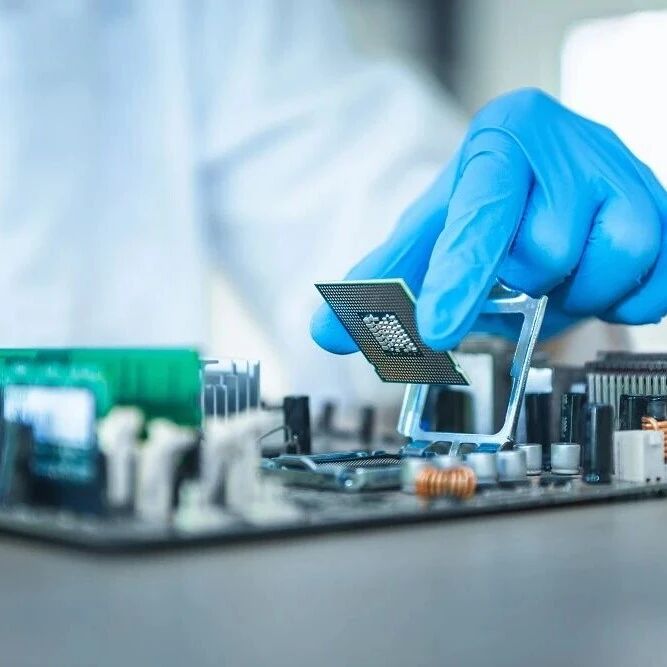
研判2025!中国只读存储器行业相关概述、市场规模、产量、竞争格局和发展趋势分析:随着数据量爆炸式增长,只读存储器行业需求不断扩大[图]
Chan Ye Xin Xi Wang· 2025-10-05 00:32
Core Viewpoint - The ROM (Read-Only Memory) industry in China is experiencing significant growth, driven by advancements in cloud computing, big data, and artificial intelligence, with the market size projected to increase from 120.84 billion yuan in 2020 to 170.68 billion yuan by 2024, representing a compound annual growth rate (CAGR) of 9% [1][7]. Industry Overview - ROM is a type of semiconductor memory that is crucial for data storage and processing, with its primary function being the high-speed and automated access to programs and data [3]. - The ROM market is categorized into various types, including MROM, PROM, EPROM, EEPROM, and Flash, each with distinct characteristics and applications [4][8]. Industry Chain - The upstream of the ROM industry involves suppliers of semiconductor materials, photoresists, and masks, which are essential for ROM manufacturing [5]. - The downstream applications of ROM are extensive, covering sectors such as computing, communications, consumer electronics, automotive electronics, and industrial control, all of which have high demands for performance and quality [6]. Current Industry Status - The global semiconductor memory market is expanding, with China playing a vital role in breaking the overseas monopoly through domestic technology advancements. The semiconductor memory market in China is expected to reach 426.7 billion yuan by 2024, growing by 8.22% year-on-year [6][7]. Competitive Landscape - Major global players like Samsung, Intel, and Micron Technology dominate the ROM market, leveraging strong R&D capabilities and advanced production technologies [9]. - In China, domestic companies such as Zhaoyi Innovation, Dongxin Technology, and Jucheng Technology are enhancing their competitiveness due to technological advancements and supportive policies [9]. Future Development Trends - The semiconductor industry is expected to rebound, with increasing demand for ROM driven by the growth of portable, intelligent, and networked devices [12]. - Customization of ROM solutions is anticipated to rise, allowing for tailored storage capacities and read/write speeds to meet specific application needs, particularly in niche markets like industrial control and medical devices [13].


