可机洗真丝面料

Search documents
从面料革新到产业升级 耐洗丝绸助国潮服饰热销(年味里的新质生产力)
Ren Min Ri Bao· 2026-02-24 22:19
Core Insights - The new Chinese-style clothing market, represented by "Guochao" fashion, is expected to exceed 220 billion yuan in 2024 and surpass 250 billion yuan in 2025, indicating a significant growth trend in consumer demand for this style [1] - The integration of technology into traditional fabrics has led to increased sales, with some stores reporting customization orders tripling compared to previous years [1] - Young consumers are increasingly favoring practical and easy-to-care-for fabrics, leading to innovations in silk materials that address common issues such as color fading and maintenance [2][4] Market Trends - The demand for new Chinese-style clothing is being driven by younger consumers, particularly those around 30 years old, who prioritize convenience in garment care [2] - The introduction of machine-washable silk and other innovative fabrics has opened new sales channels, with positive market feedback indicating a strong potential for these technological advancements [2][6] - The silk industry is experiencing a shift towards functional and practical materials, moving away from traditional luxury perceptions to more versatile, everyday use textiles [6][7] Technological Innovations - Companies are exploring advanced silk materials, such as machine-washable silk and "butterfly satin," which utilize AI weaving technology to create intricate patterns and improve durability [3][4] - The development of these innovative fabrics has resulted in a nearly 20% increase in sales for companies that have adopted these technologies [3] - The silk industry's innovation is focused on enhancing fabric functionality while maintaining the natural qualities of silk, addressing common consumer concerns [4][5] Industry Challenges - The silk industry is primarily composed of small to medium-sized enterprises that often lack sufficient research and development investment, which poses challenges for technological advancement [6][7] - The long development cycles and high investment requirements for new silk technologies can test the overall strength of companies in the industry [6][7] - There is a need for a collaborative innovation ecosystem that integrates the entire silk supply chain to effectively implement technological advancements [5]
时尚高地以“新”促“兴”
Jing Ji Ri Bao· 2025-04-23 22:11
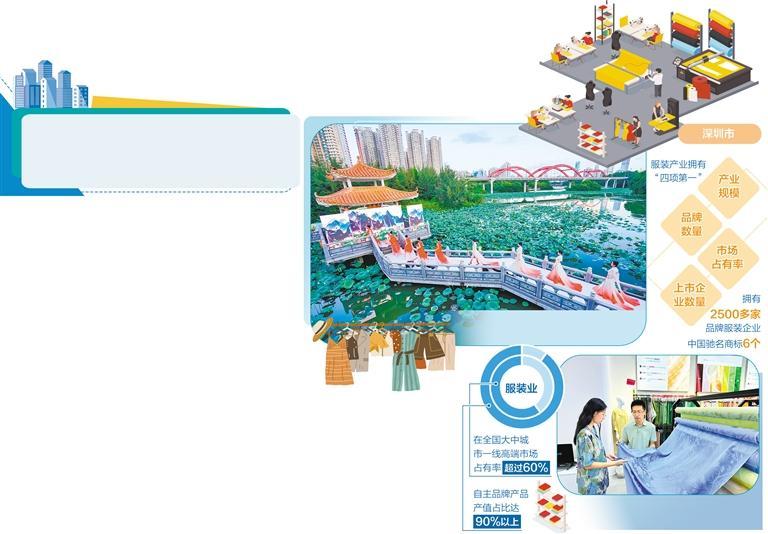
Core Insights - Shenzhen is recognized as one of the most developed cities in China's apparel industry, transitioning from OEM production to a hub for original brands, leveraging technological innovation to enhance value creation in the market [2][3] Industry Overview - The apparel market is currently in a "season change" mode, with retailers actively preparing for the new season, showcasing new collections and attracting consumers [2] - Shenzhen's apparel industry has evolved significantly, with a complete industrial chain and a notable increase in the proportion of self-owned brand products, rising from less than 5% in the early 1990s to over 90% today [3][4] Brand Development - Many traditional enterprises are shifting towards building their own brands to enhance product value and market competitiveness, leading to the emergence of well-known original designer brands [3] - Designers like Zhao Huizhou have successfully integrated traditional Chinese culture into their fashion lines, gaining international recognition at events like Milan Fashion Week [4] Material Innovation - The development of innovative fabrics is crucial for enhancing the quality of original apparel, with companies like Kai Xiya introducing advanced materials that address common issues associated with traditional silk [6][7] - The silk category in Shenzhen's apparel market holds a significant share, with over 50% of the national market, making it a key area for high-end silk and specialty silk distribution [5] Market Dynamics - The apparel consumption landscape is becoming increasingly diverse, with a focus on enhancing retail experiences and integrating online and offline sales channels [9][10] - Professional markets are adapting to consumer preferences by offering a variety of shopping experiences and collaborating with external supply chains and design institutions [11] Future Outlook - The industry is expected to continue evolving, with a focus on enhancing original design capabilities and brand influence, while also meeting the growing fashion consumption needs of the public [8][11]