吉利千里浩瀚

Search documents
2025 EDGE AWARDS 年度汽车科技榜单正式揭晓
Tai Mei Ti A P P· 2025-12-25 11:31
Core Insights - The automotive industry is shifting focus from mere electrification to a comprehensive system capability centered around "intelligence" [2][3] - The 2025 EDGE AWARDS emphasizes "implementation capability" as a core criterion, recognizing smart automotive products and technologies that have been validated in real user scenarios [3][4] Industry Trends - The competition in the automotive sector has entered a new phase, with rapid technological iterations and a shift in user focus from short-term concept chasing to long-term stability and experience [3][4] - Key areas of innovation include advanced intelligent driving, smart cockpit experiences, and the integration of hardware and software for overall vehicle intelligence [3][4] Award Categories - The awards are categorized into four main directions: Best Intelligent Driving, Best Intelligent Cockpit, Best Intelligent Model, and Innovative Dark Horse Product [4] - Evaluation criteria include technological maturity, scene coverage, user experience, and industry demonstration significance [4] Best Intelligent Driving - The award recognizes models or technologies with leading algorithm capabilities and real-world performance in intelligent driving [5][7] - Notable winners include: - Horizon's Journey series chips for enabling large-scale production of advanced intelligent driving [7] - Huawei's Kunlun ADS for its scalable and replicable industrial system [8] - Momenta for its data-driven approach and international expansion [9] Best Intelligent Cockpit - This category highlights innovative user experiences and the deep application of AI in cockpit technology [10][11] - Key models include: - The ZunJie S800, which integrates intelligent driving and cockpit capabilities for a refined user experience [11] - The Li Auto i6, focusing on reliable daily capabilities for family users [12] Innovative Dark Horse Products - This category celebrates products that achieve success through atypical paths, emphasizing innovation in design, technology, or business models [16] - Notable mentions include: - The Equation Leopard Ti7, which achieved significant sales shortly after launch [17] - The Galaxy V900, a flagship MPV with unique seating configurations and advanced energy management [18] - The Deep Blue L06, featuring advanced suspension technology for enhanced driving comfort [19] Market Impact - The launch of the Leap Lafa5 and the LeDao L90 signifies a trend towards high-quality, high-configuration electric vehicles, addressing market pain points and achieving rapid sales [20][22] - The LeDao L90 has set a record for the fastest delivery of large electric SUVs, indicating a strong market demand for this segment [22]

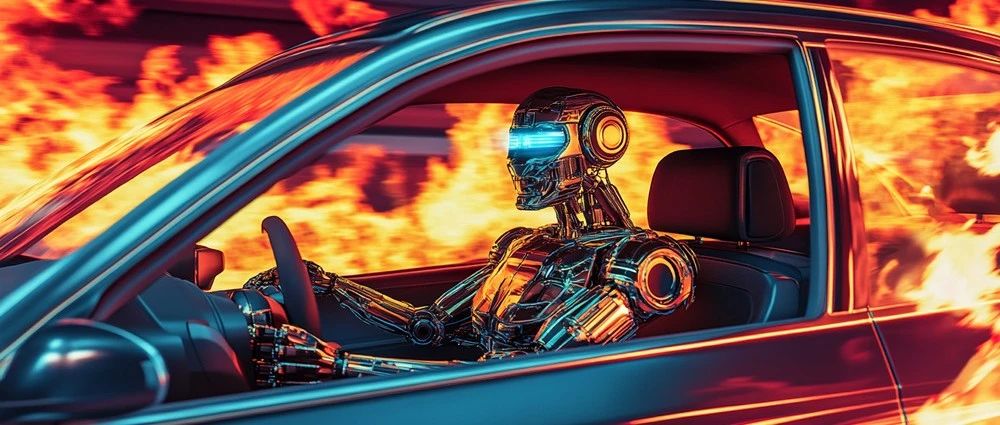
比亚迪们为了这事儿杀红了眼
虎嗅APP· 2025-03-23 03:43
Core Viewpoint - The "Smart Driving Equality" trend in the Chinese automotive industry has gained momentum, with major domestic brands participating, indicating a critical juncture where over 50% of domestic car sales will be involved in this competitive landscape [1][2]. Group 1: Market Dynamics - The urgency for car manufacturers to enter the smart driving market is driven by a narrowing window for smart technology adoption, where strategic positioning will determine future market share [2]. - A price war has intensified, with 28 models, including 20 electric vehicles, experiencing price reductions averaging 30,000 yuan, representing a 13% decrease [4]. - New electric vehicle models have seen significant price cuts, with average reductions of 39,000 yuan and a 17% drop, marking the highest in their respective segments [4]. Group 2: Competitive Strategies - The price reduction strategy is influenced by ongoing promotional tactics and the need for product updates due to the "smart driving" wave, leading to increased market competition [5]. - BYD's dual strategy of promoting both smart and non-smart versions of its vehicles has resulted in sustained sales growth, particularly in lower-tier cities [5][6]. - Other brands, such as Extreme Fox, have also engaged in aggressive pricing, with significant discounts on models to remain competitive [6]. Group 3: Technological Evolution - The "Smart Driving Equality" movement is reshaping the value system of smart driving technologies, with a focus on establishing a new product hierarchy and accelerating the elimination of non-smart vehicles [8][10]. - The emergence of a structured smart driving product hierarchy, akin to a pyramid, is evident, with varying levels of capabilities from basic to advanced features [9]. - The trend indicates a shift where high-level smart driving features are becoming more accessible, with prices for advanced models dropping significantly [13]. Group 4: Challenges and Opportunities - Traditional automakers face challenges in building a sustainable technology cycle for smart driving, requiring both foundational functionality and continuous upgrades to maintain competitiveness [14]. - Collaborations with leading smart driving technology suppliers can provide traditional manufacturers with a balance of efficiency and autonomy, although long-term cost pressures remain a concern [15]. - The transition to a software-driven model poses significant challenges for traditional manufacturers, necessitating organizational restructuring and talent development to adapt to smart driving technology [16].